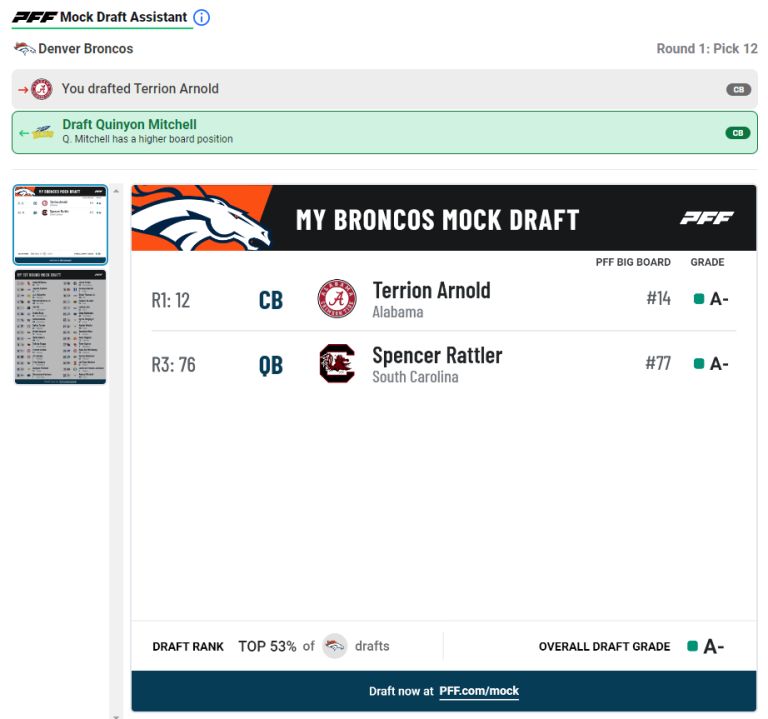
2024 NFL Mock Draft Showdown: PFF's Methodology Vs. The Reality Of Player Evaluation
2024 NFL Mock Draft Showdown: PFF's Methodology Vs. The Reality Of Player Evaluation
The annual NFL Draft is a high-stakes exercise in prophecy, where predictions of future stardom and busts collide with the unforgiving reality of a player's tape. Pro Football Focus (PFF) enters this chaotic arena with its meticulously crafted mock draft, blending analytics, scouting reports, and team needs to challenge conventional wisdom. This deep dive into PFF's 2024 process reveals how a data-driven organization navigates the treacherous waters of projecting the next generation of NFL talent.
For PFF, the mock draft is not merely an exercise in speculation; it is a rigorous distillation of hundreds of thousands of data points and countless hours of film study. The organization’s grade for a prospect is the culmination of a standardized evaluation system applied across the entire draft class, providing a consistent baseline for comparison. As the league landscape evolves with faster offensive schemes and positionless demands, PFF’s analytical lens becomes increasingly critical in separating hype from sustainable talent.
PFF’s mock draft is built upon a foundation of quantifiable metrics and qualitative insights that distinguish it from casual armchair quarterbacking. The organization’s proprietary grading system evaluates every snap a player takes, assigning a numeric grade that reflects their execution, impact, and consistency. This granular analysis extends beyond traditional statistics to dissect route efficiency, block win percentages, and coverage breakpoints.
The methodology is designed to create a universal language for player evaluation. By applying the same criteria to a edge rusher and a center, PFF aims to strip away positional bias and focus on raw football IQ and technique. This allows their mock draft to project not just who will be good, but why they will be good at the next level.
The process begins long before the actual draft, with PFF analysts compiling extensive databases on prospects. This involves tracking performance across different competition levels, from high school and college to the combine and private workouts. The goal is to build a comprehensive profile that accounts for scheme fit, competition strength, and physical tools.
* **Film Study as the Primary Source:** Analysts spend thousands of hours breaking down game tape to assess in-game decision-making and reactions to complex defensive looks.
* **Combine and Pro Days Validation:** Measurables and drills are not just numbers; they are indicators of athletic potential and motor function that are tested against on-field performance.
* **Positional Norming:** Grades are adjusted for the position being evaluated, acknowledging that a tackle in the offensive line and a linebacker have vastly different skill sets and responsibilities.
This systematic approach allows PFF to assign a draft grade that reflects a prospect's current ceiling and floor. Their mock draft then attempts to place these graded players within the correct team's system, considering both the team's needs and the player's skill set.
One of the most significant challenges in any mock draft is the unpredictable nature of trades. The NFL Draft is a chess game where teams maneuver past their original pick to acquire the specific talent they covet. PFF’s model must account for the fluidity of the market, where a team's desperation or surplus at a position can dramatically alter the landscape.
PFF analysts utilize trade chart algorithms and market sentiment analysis to project where value will shift on draft day. They understand that a team with a pressing need at quarterback might move up significantly, while a team laden with surplus picks might be willing to deal down for additional assets. This dynamic element forces their mock draft to be a living document, updated right up until the official selection.
The impact of PFF's evaluations extends beyond the mock draft itself, influencing the broader conversation around prospects. Scouts and general managers often reference PFF’s grades when assessing a player's worth, making the organization a de facto gatekeeper of information. A high PFF grade can solidify a prospect's status as a first-rounder, while a critical review can relegate them to a later round or undrafted free agent status.
This influence creates a feedback loop where PFF’s initial projections help shape the draft order, which in turn validates or questions their initial grades. Their mock draft, therefore, is not just a prediction but a powerful tool that contributes to the narrative of the entire draft class.
Looking ahead to the 2025 draft cycle, the methodologies employed by PFF will continue to evolve. The integration of advanced tracking data and artificial intelligence promises even deeper insights into player movement and decision-making. The next generation of PFF mock drafts will likely incorporate more biomechanical analysis and real-time situational modeling.
The objective remains constant: to provide the most accurate, data-backed projection of NFL success possible. In an era where every snap is analyzed and every mistake is magnified, PFF's commitment to objective evaluation offers a necessary counterpoint to the subjective noise of the draft. Their mock draft stands as a testament to the belief that, while football remains a game of inches, its evaluation can be approached with scientific precision.
Related Post
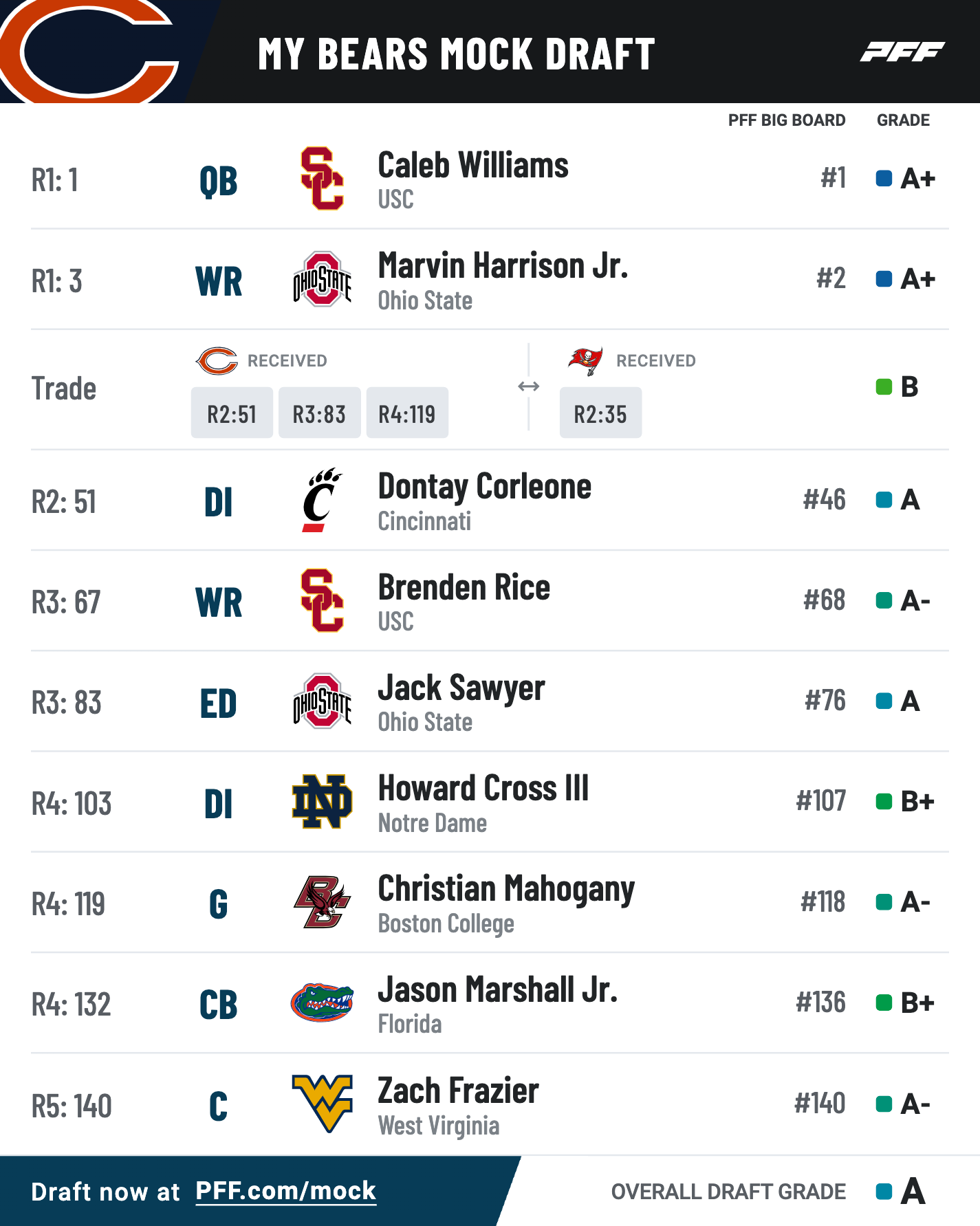
PFF Mock Draft 7 Rounds Free: Expert Analysis and Breakdown
PPFR Mock Draft Madness: Unlocking the Secrets of the NFL's Top Draft Picks
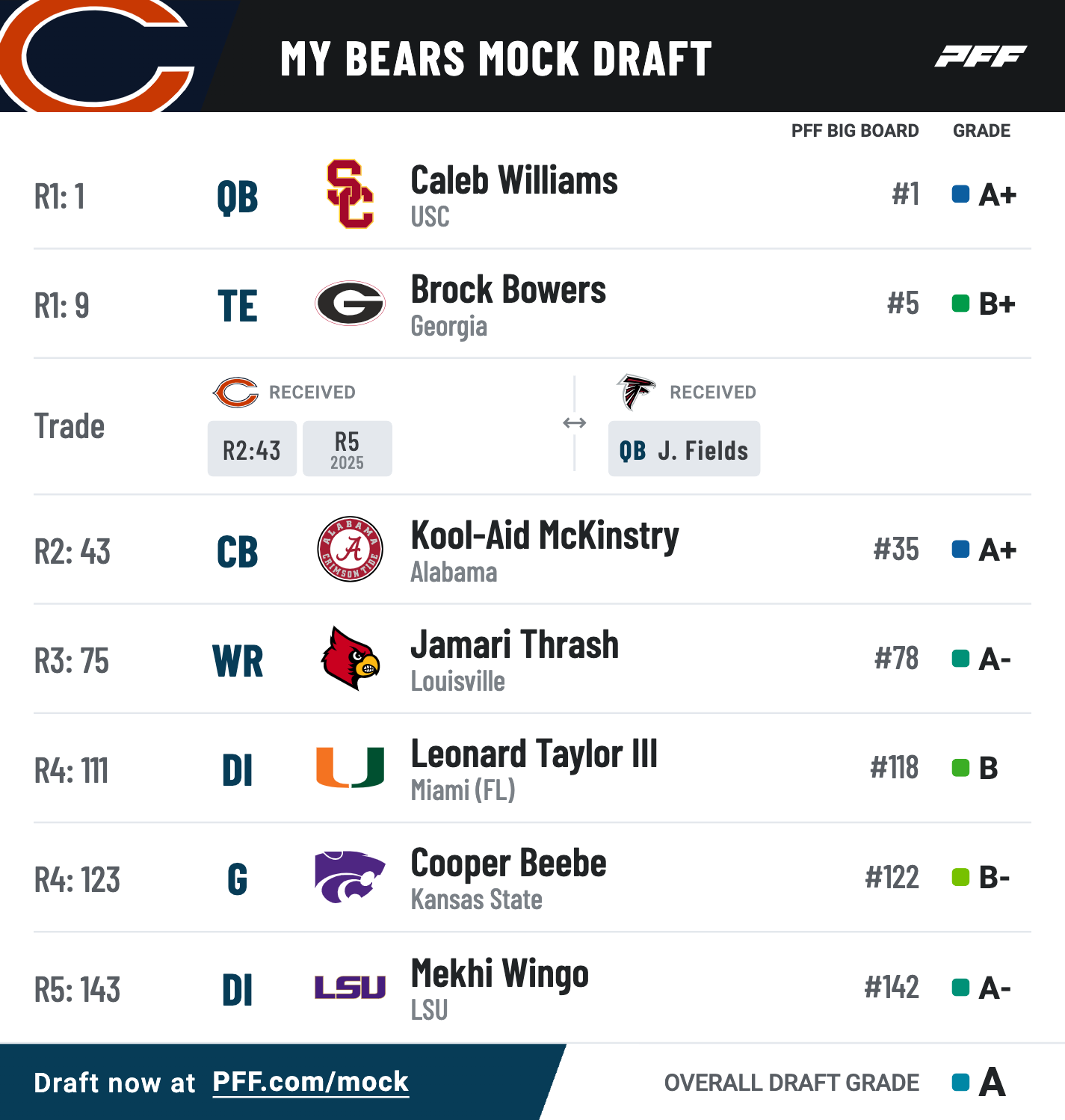
PFF Mock Draft: Unlocking the NFL's Hidden Gems