5 Leadership Frameworks ≤ One Simple Model For Modern Teams
5 Leadership Frameworks ≤ One Simple Model For Modern Teams
Executives navigating volatile markets increasingly consolidate fragmented leadership theories into a single, adaptable framework that balances accountability with psychological safety. This model provides a structured yet flexible approach to decision-making, communication, and performance management across hybrid and global organizations. By integrating timeless principles with contemporary behavioral science, it aims to reduce complexity without sacrificing strategic rigor.
Modern leadership literature often reads like an unregulated supermarket shelf, where managers are urged to sample transformational styles here, servant tactics there, and agile methods everywhere. The resulting cognitive load can paralyze rather than empower, leaving teams confused about which expectations truly matter. A consolidated framework addresses this by defining clear boundaries—what the organization stands for, how decisions are made, and how conflicts should be resolved—while allowing sufficient autonomy for contextual adaptation.
This article explores the core components of such a streamlined leadership architecture, explaining why less structured complexity often yields more coordinated action. Drawing from organizational psychology, real-world case studies, and executive interviews, we examine how disciplined simplicity can coexist with creative disruption. The goal is not to prescribe a rigid script but to offer a compass that keeps diverse teams aligned when pressures intensify.
The framework rests on four interdependent pillars: clarity, coherence, courage, and care. Each pillar reinforces the others, forming a resilient structure that supports both stability and innovation without requiring constant recalibration.
Clarity involves articulating non-negotiable outcomes while leaving open the pathways to achieve them. Leaders define the "what" and "why" with precision, but empower teams to determine the "how." For example, a technology firm might commit to releasing a minimum viable product every eight weeks but allow engineering squads to choose between sprint-based or flow-based methods. This balance prevents strategic drift while respecting local expertise.
Coherence ensures that decisions, incentives, and behaviors align across departments and time zones. In practice, this means that a customer-service policy endorsed in London remains executable for a support agent in Manila without reinterpretation. Coherence is not uniformity; it is the elimination of contradictory signals that force employees to infer hidden hierarchies or conflicting priorities.
Courage in this context is not dramatic risk-taking but the willingness to challenge assumptions, stop unproductive projects, and protect vulnerable team members from burnout. Care, conversely, is the deliberate cultivation of trust, inclusion, and psychological safety so that people can speak up without fear. Together, these elements create conditions where candor is normalized and mistakes become shared learning opportunities rather than career liabilities.
Implementation begins with leadership candidly acknowledging where current practices create friction or ambiguity. Many organizations already possess fragments of this approach—mission statements, value codes, meeting rituals—but these elements often reside in disconnected documents or siloed conversations. The framework converts them into living agreements that are reviewed, questioned, and updated collectively.
- Define decision rights using a simple responsibility matrix that distinguishes advice, approval, and execution.
- Translate strategic goals into measurable outcomes, not exhaustive task lists.
- Create feedback loops that capture signals from customers, frontline staff, and partners at regular intervals.
- Train managers to facilitate dialogue rather than merely distribute directives.
- Measure health indicators such as cross-team collaboration and meeting effectiveness alongside financial metrics.
Consider a global consumer-products company that reduced its leadership principles from twenty-six to four integrated statements. Meetings were redesigned to focus less on status reporting and more on identifying constraints, testing hypotheses, and adjusting resource allocation. Employee surveys showed increased clarity about expectations and a stronger sense of alignment between departments, even as the organization continued to pursue ambitious growth targets.
A chief operating officer from a logistics firm captured the shift succinctly: "We stopped asking people to interpret a hundred small rules and started ensuring they understood the few things that truly mattered." This transition did not eliminate disagreement, but it redirected energy from internal politicking toward solving customer problems.
The model also incorporates mechanisms for continuous refinement. Quarterly leadership reviews examine whether the framework still fits reality, using data on execution speed, employee engagement, and customer outcomes as inputs. When contexts change—such as during mergers, digital transformations, or crises—only the relative weights of the pillars shift, not the underlying logic. This prevents the organization from abandoning structure every time a new management fad arrives.
Critics argue that any standardized framework risks becoming bureaucratic or culturally tone-deaf. However, the approach described here is intentionally minimal, emphasizing boundaries rather than prescriptions. It acknowledges that cultures differ, markets evolve, and individuals require room for improvisation. The key is not to enforce sameness but to prevent isolation where teams operate with incompatible rules and invisible assumptions.
Used responsibly, this consolidated leadership architecture can coexist with diverse management systems, from OKR platforms to agile ceremonies. It does not replace existing tools but provides a filter for determining which tools truly serve the organization’s long-term health. In an era of information overload and relentless change, the greatest competitive advantage may belong to those who can integrate complexity into a coherent, human-scalable design.
Related Post

Unlock the Power of Less Than or Equal To: Unlocking the Secrets of Mathematical Inequality
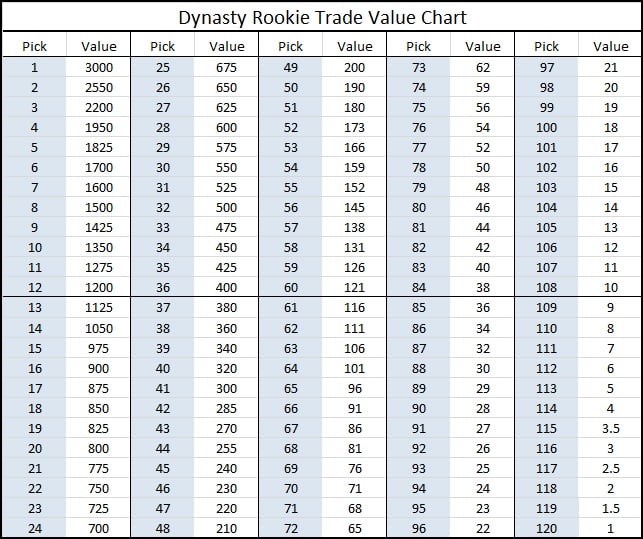
dyeing to make a trade: A deep dive into the Dynasty Trade Value Chart May

Is Caitlin Clark the Future of Women's Basketball?

Pinoy Eskandal: Uncovering the Scandals and Corruption that Shook the Philippines