Almighty Vice Lord: The Untold Story of a Street Empire’s Rise and Resonance
Almighty Vice Lord: The Untold Story of a Street Empire’s Rise and Resonance
The Almighty Vice Lord Nation, one of the oldest and most complex street organizations in the United States, emerged from the poverty-stricken corridors of Chicago’s North Lawndale in the late 1950s. What began as a neighborhood youth club designed to offer safety and structure evolved into a sprawling street empire known for its strict codes, community activism, and pervasive criminal operations. This article examines the historical roots, organizational structure, cultural influence, and ongoing controversies surrounding the Almighty Vice Lord Nation, separating myth from documented fact.
The story of the Almighty Vice Lord Nation is inseparable from the lived realities of Black youth in mid-20th century America. Displaced by urban renewal projects and trapped in cycles of poverty and unemployment, young men sought belonging and protection. The organization’s evolution reflects a tension between its community-serving origins and its engagement in illicit activities that have drawn the sustained attention of law enforcement and social workers alike.
Roots in the Projects: Formation and Early Years
The Almighty Vice Lord Nation was founded in 1958 by a group of teenagers in Chicago’s Southside, though some accounts place the initial gatherings in the North Lawndale neighborhood. According to historical records maintained by the Chicago Police Department and academic studies, the founders were young Black males frustrated by the lack of opportunities and the pervasive violence in their communities.
* **Age of Founders:** The original members ranged in age from early teens to late teens, with Jerry “The Great” Hairston often cited as a primary founder.
* **Motivation:** The group was initially formed as a response to attacks from other gangs and a desire for mutual protection.
* **Early Activities:** Early operations included petty theft, numbers running, and guarding local businesses for “protection” money.
Unlike many gangs that faded after high school, the Vice Lords formalized their structure, creating a constitution and bylaws. They established chapters, or “sets,” across Chicago, each led by an Elder. This early organization allowed them to survive and expand during the tumultuous 1960s and 1970s, a period marked by civil unrest and economic decline in industrial cities.
The Code and the Culture: More Than Just Criminals
One of the defining characteristics of the Almighty Vice Lord Nation is its emphasis on discipline and a distinct cultural identity. Members adhere to a strict code of conduct that dictates behavior both within the organization and in the broader community.
**Core Tenets of the Vice Lord Code:**
1. **Loyalty:** Absolute allegiance to the Nation and its leadership.
2. **Respect:** Earned through action and adherence to the law of the street.
3. **Protection:** The safeguarding of members and, often, the surrounding neighborhood.
4. **Profit:** Generating revenue through organized criminal enterprises.
Beyond the criminal elements, the Vice Lords have long been involved in community activism. During the 1960s, they played a role in the Black Panther movement, and in the 1970s, they initiated social programs. Former members and community leaders often speak of the duality of the organization.
> “You can’t understand us unless you understand the environment we came from. We were abandoned by the city. The Vice Lord Nation was the only family some of us had,” stated a former member who wished to remain anonymous, citing ongoing legal concerns. “We ran the streets, but we also fed the kids and protected the elderly from other predators.”
This duality is further expressed through their distinctive fashion and artwork. Members often wear specific colors, though not as rigidly as Bloods or Crips, and utilize intricate hand signs. The aesthetic is deeply embedded in hip-hop culture, influencing album art and lyrical themes for decades.
Organizational Structure and Operations
The Almighty Vice Lord Nation operates with a military-like hierarchy designed to ensure secrecy and efficiency. Understanding this structure is key to understanding how the organization has endured for decades.
1. **The Council of Elders:** The supreme governing body, usually composed of the oldest and most respected members. They make final decisions on warfare, alliances, and major business ventures.
2. **National Council:** Representatives from major sets across the United States who communicate the Elders' directives.
3. **Set Leaders:** Each geographical territory, from Chicago to Atlanta to California, is controlled by a local set leader who reports up the chain of command.
4. **Soldiers and Associates:** The foot soldiers who carry out operations, and associates who support the organization financially and logistically without being full members.
Their revenue streams are as diversified as their structure.
* **Drug Trafficking:** Primarily the distribution of marijuana, cocaine, and opioids.
* **Illegal Gambling:** Operating underground casinos and sports betting rings.
* **Extortion:** “Taxing” local businesses, a practice that has existed since their early days.
* **Legitimate Fronts:** They have historically used barbershops, record stores, and restaurants as laundering points for illicit money.
Conflict and Cooperation with Law Enforcement
The Almighty Vice Lord Nation has been the subject of intense law enforcement scrutiny since the 1960s. The FBI has monitored the group for years, often designating them as a major organized crime threat. High-profile raids and federal indictments have punctuated their history.
In the 1990s, the U.S. Department of Justice launched “Operation Legend,” resulting in the indictment of over 50 members on charges of drug conspiracy and murder. These operations have undoubtedly disrupted the organization, but they have also solidified the narrative of the Vice Lords as permanent, untouchable adversaries of the state.
However, there are moments of nuance. Some sociologists argue that the heavy-handed policing of the Vice Lords has sometimes exacerbated the very violence the police sought to quell. The cycle of arrest, imprisonment, and return has created a leadership vacuum that often leads to increased aggression among younger members trying to prove their worth.
Modern Era and Public Perception
Today, the Almighty Vice Lord Nation remains active, though its public profile has shifted. The rise of social media has allowed former members to tell their stories, humanizing the organization in ways traditional media rarely did. Documentaries and books have explored the legacy of the Vice Lords, moving the conversation beyond simple criminality.
The challenge for the organization in the 21st century is balancing old-world rules with a new world. As Chicago and other cities evolve, the economic opportunities for street organizations are changing. The Almighty Vice Lord Nation continues to adapt, leveraging technology for communication and distribution while still clinging to the foundational principles of loyalty and protection that defined Jerry Hairston’s original crew. Their journey from desperate youth to a storied empire remains a complex chapter in the American story of race, poverty, and survival.
Related Post
Almighty Vice Lord Nation: Decoding the History, Structure, and Modern Impact of a Chicago Street Powerhouse
Decoding the Almighty Vice Lord Nation Literature: Street Poetry, Power, and the Blueprint of the Blackstone Rangers
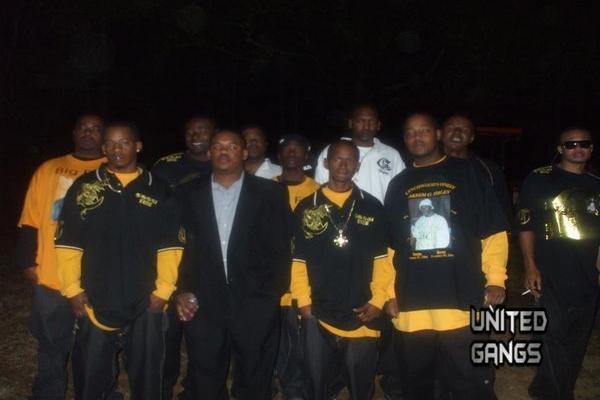
Uncovering the Mystique of Almighty Vice Lord: A Look at One of America's Most Powerful Street Gangs

Halle Berry and Gabriel Aubry’s Daughter: A Rare Blend of Hollywood Glamour and Private Motherhood