Amanda Tapping: From Living Room Hero to Genre-Defining Auteur Behind the Camera
Amanda Tapping: From Living Room Hero to Genre-Defining Auteur Behind the Camera
Amanda Tapping, a name synonymous with resilience and quiet strength on screen, has spent two decades translating those very qualities into a formidable career behind the camera. Best known for her roles as the steadfast Helen Magnus in "Sanctuary" and the tough-as-nails Samantha Carter in the "Stargate" franchise, Tapping has successfully pivoted to become a respected director and producer. This is a journey marked by a deliberate shift from performing to creating, demonstrating a deep commitment to storytelling that empowers characters often overlooked by mainstream media.
The trajectory from actor to director is a path many in the industry dream of, but for Tapping, it was less a sudden epiphany and more a calculated evolution driven by a desire for greater creative control. She began her career with a string of television appearances in the late 1990s, quickly establishing herself with a no-nonsense professionalism that made her a reliable and compelling presence. Her breakout science-fiction roles provided the platform and the insider knowledge necessary to understand the technical and narrative complexities of television production. This unique dual perspective—as both the person performing the story and the person ultimately responsible for telling it—has become her greatest professional asset, allowing her to direct with an actor's sensitivity and a producer's pragmatism.
Her directorial work, particularly within the science-fiction and drama genres, is characterized by a focus on character-driven narratives and a clear, unobtrusive visual style. She doesn't direct for spectacle alone; she directs for the emotional truth of the scene. This approach has earned her the trust of both actors and writers, leading to a prolific career that spans some of the most successful genre shows in recent history. She has become a powerful advocate for diversity and representation, both in front of and behind the camera, using her position to elevate voices and stories that might otherwise go unheard.
### A Foundation in Performance
Tapping’s journey began not with a directorial dream, but with the foundational work of an actor. Like many successful directors, her time in front of the camera provided an indispensable education. She learned the language of film from the actor’s perspective, understanding pacing, motivation, and the collaborative nature of set dynamics. This on-set literacy is crucial for a director, as it allows for clear communication with actors and a genuine understanding of the challenges of a shoot.
Her early roles were often in Canadian television, a hotbed of genre production. She appeared in series like "The Odyssey" and "The Immortal," but it was her role as Samantha Carter in the long-running military sci-fi epic "Stargate SG-1" that brought her widespread recognition. Portraying a brilliant, no-nonsense astrophysicist and military officer, Tapping brought a grounded strength to the character. She wasn't a damsel in distress; she was a capable, integral part of the team. This established a pattern in her career: portraying women who were intelligent, capable, and resilient without being defined solely by their relationships to male characters.
This depiction of strength in vulnerability and competence in compassion became a hallmark of her public persona and later, her directorial philosophy. When she transitioned to directing, this focus on authentic character portrayal remained central. "What I always appreciated about Amanda as an actor was her ability to find the strength in vulnerability," notes writer and producer Joseph Mallozzi, a frequent collaborator from her "Stargate" days. "That same depth translates directly to her directing. She draws out performances that are honest and powerful."
### The Shift to the Director’s Chair
The move from actor to director is rarely simple. It requires a fundamental shift in identity, from being a vessel for a character to being the primary creative force responsible for an entire vision. For Tapping, this shift was propelled by a desire to have a greater impact on the stories being told. She began by observing, asking questions, and soaking up as much knowledge as possible from the directors she worked with. Her first foray into directing was an episode of the series "The Dead Zone" in 2007, a significant milestone that marked the beginning of a new chapter.
Her directorial debut was not a leap into the unknown but a natural progression. She had already spent years on set, learning the craft intimately. "You learn a lot as an actor, but there's a moment where you start seeing the gears turning," Tapping has reflected in past interviews. "You see the machinery of filmmaking, and you start to think, 'I could do that. I could piece this together.'" This curiosity evolved into a serious ambition. She sought out script submissions from trusted colleagues and began the deliberate process of building a portfolio, one carefully directed episode at a time.
Her early work as a director was met with enthusiasm, validating her instincts and work ethic. She quickly discovered that her background as an actor was a distinct advantage. "Acting experience gives you a huge leg up," she has stated plainly. "You know what it’s like to be on the other side of the lens. You know how to cooperate, but also how to advocate for a performance when it’s not landing." This dual understanding allowed her to foster a collaborative and respectful environment on her sets, where actors felt supported and empowered to deliver their best work.
### A Focus on Genre and Representation
A significant portion of Tapping’s directorial portfolio lies within the science-fiction and fantasy genres. Shows like "Stargate Universe," "Sanctuary," and "Travelers" have become modern genre classics, and her work on them has been instrumental in their success. Her direction in these shows is notable for its emphasis on ensemble casts and intricate character dynamics. She understands that science-fiction is, at its core, a genre that uses futuristic or intergalactic settings to explore very human concerns—loyalty, sacrifice, morality, and the nature of humanity itself.
Tapping’s commitment to representation extends beyond the stories she tells to the people she hires on set. She has been a vocal champion for diversity in the industry, actively seeking out opportunities for women and underrepresented groups both in front of and behind the camera. Her tenure as a director on the long-running series "Supernatural" is a case in point. Breaking into a traditionally male-dominated genre like action-fantasy, she notonly held her own but thrived, directing numerous episodes over several seasons. Her work on "Supernatural" demonstrated that her skillset was not genre-specific but rather universally applicable to compelling storytelling.
Her production company, Mythtee Productions, which she runs with her partner, is a testament to this philosophy. The company is focused on developing and producing content that pushes boundaries and offers fresh perspectives, particularly in the sci-fi and horror genres. Through Mythtee, Tapping has been able to cultivate new talent and bring projects to life that align with her vision for inclusive and thought-provoking television.
### The Legacy of a Quiet Force
Amanda Tapping’s career is a masterclass in adaptability and quiet determination. She has successfully navigated two distinct and demanding roles in the entertainment industry, emerging as a leader in both. Her legacy is not just a list of episodes she has directed or characters she has played, but a tangible shift in the landscape of genre television. She has proven that strength comes in many forms—whether it’s the physical prowess of a soldier or the emotional fortitude of a creator—and that intelligence and empathy are powerful tools in any creative endeavor.
From the living room hero of "Stargate" to the genre-defining auteur behind the camera, Amanda Tapping has consistently redefined what it means to be a force in television. Her work continues to inspire, not just for the adventures it presents, but for the example it sets for aspiring filmmakers everywhere. She stands as a testament to the idea that with skill, dedication, and a clear vision, one can not only participate in the storytelling process but truly shape it.
Related Post
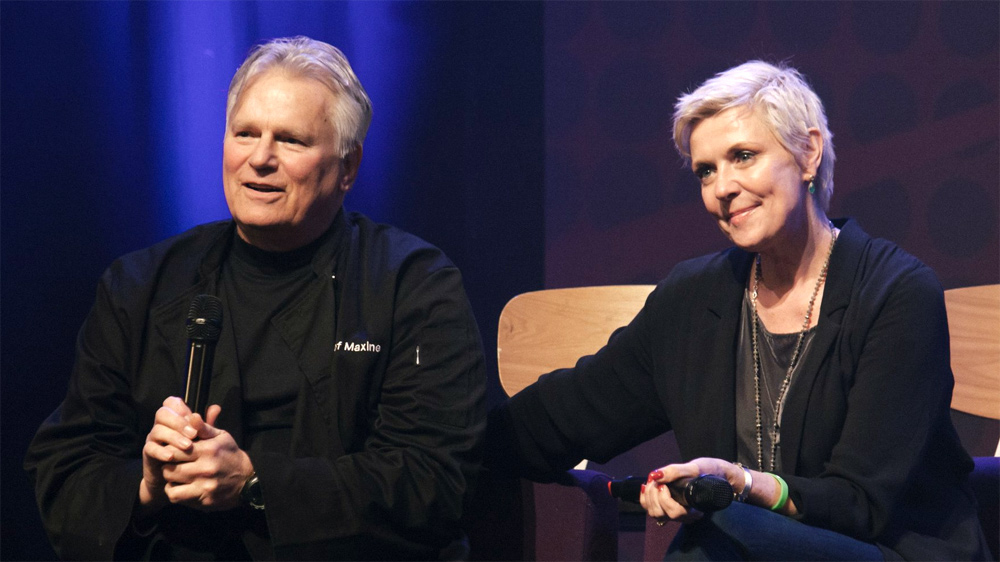
From Stargate to Sanctuary: The Enduring Bond of Amanda Tapping and Richard Dean Anderson
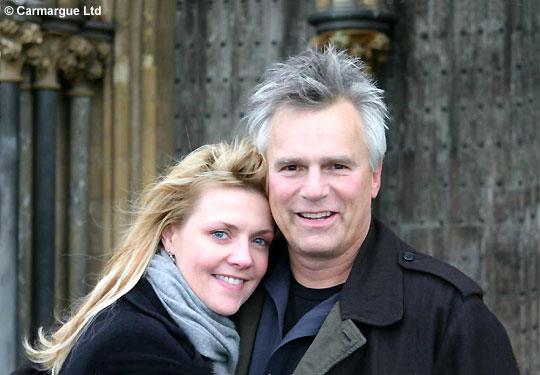
Amanda Tapping and Richard Dean Anderson: The Unexpected Crossfire That Redefined Modern Action Stars

A Deep Dive Into Amanda Tapping And Richard Dean Anderson’s Timeless Bond

Uncovering the Hidden Life of Amanda Tapping: From Actress to Wife of Richard Dean Anderson