Auto Train To Florida: The Ultimate Guide To Hassle-Free Sunshine State Travel
Auto Train To Florida: The Ultimate Guide To Hassle-Free Sunshine State Travel
The Auto Train to Florida represents a unique solution for travelers seeking to transport both themselves and their vehicles across the country without the fatigue of driving. This service, operating between the Mid-Atlantic and Central Florida, offers a blend of passenger rail comfort and automotive logistics. For families, snowbirds, and road-trippers, it transforms a potentially grueling multi-day drive into a manageable and comfortable journey.
For decades, the concept of traveling by rail while simultaneously moving a personal vehicle has held a specific appeal. It caters to a demographic that values convenience and efficiency, particularly when the destination is a major vacation spot or a permanent relocation. The Auto Train eliminates the need for wearying hours behind the wheel, allowing passengers to arrive in Florida rested and ready to enjoy their destination.
The service is a niche player in the complex world of passenger rail, filling a gap that commercial airlines and standard rail lines often overlook. It is a pragmatic choice for the modern traveler who wishes to merge the romance of rail travel with the practical necessity of having a car upon arrival. This article explores the operational mechanics, historical context, and enduring relevance of this distinctive mode of transportation.
The Mechanics Of An Auto Train Journey
The Auto Train operates on a straightforward principle: passengers board a passenger car while their vehicles are secured in specialized autoracks. The process is designed for efficiency and safety, creating a seamless transition from road to rail and back again. Understanding this process is key to appreciating the service’s unique value proposition.
The journey begins at Lorton, Virginia, a suburban community just south of Washington, D.C., and terminates in Sanford, Florida, located just north of Orlando. This specific routing avoids the congestion of downtown terminals and connects travelers directly to the heart of the Florida tourist corridor. The total distance is approximately 855 miles, with a scheduled travel time of roughly 17 to 18 hours.
Upon arrival at the terminal, travelers have the option to utilize the terminal’s storage for their vehicle if they are not accompanying it, though most choose to travel with it. The process for loading vehicles is methodical. Drivers proceed to a staging area where their vehicles are inspected for safety and condition.
* Vehicles are driven onto specialized multi-level railcars designed to maximize capacity and stability.
* Each vehicle is secured with heavy-duty straps to prevent movement during transit.
* Passenger cars are coupled behind the autoracks, creating a train composed of both transportation methods.
* The conductor performs a final safety check before the train departs.
This logistical ballet ensures that thousands of vehicles are transported safely each week. The autoracks themselves are engineered with ventilation systems to mitigate the buildup of exhaust fumes, a critical feature for passenger comfort and safety. Inside the passenger cars, the amenities are comparable to a high-end hotel.
Passenger accommodations range from coach seats to private bedrooms and family suites. The train offers a dining car serving hot meals and snacks, as well as a lounge car for socializing and relaxation. Unlike an airplane, the Auto Train provides passengers with the space to walk around, stretch their legs, and enjoy views of the passing American landscape. This environment fosters a sense of community among travelers that is often missing from other forms of long-distance transport.
A Brief Historical Context
The concept of the Auto Train is not entirely new, though the current incarnation operated by Amtrak is the most well-known version. The history of this service is a story of adaptation, reflecting the evolving relationship between Americans, their cars, and the rail network. The original Auto-Train Corporation pioneered the idea in the 1970s.
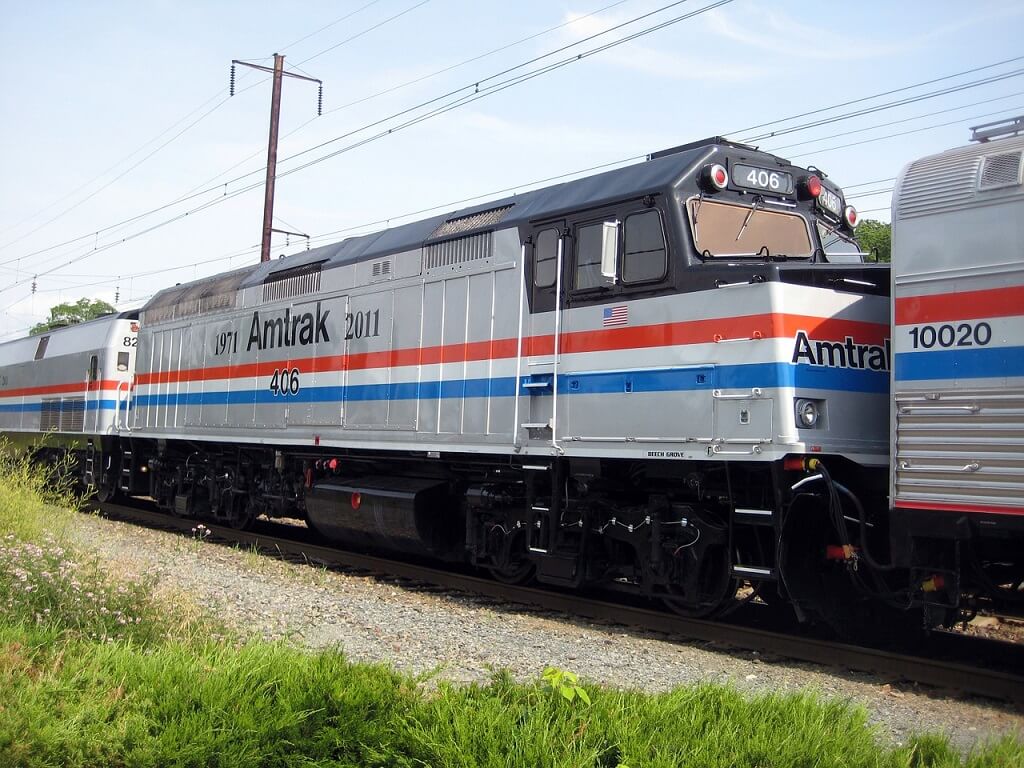
The original Auto-Train Corporation launched its service in 1971, the same year Amtrak was formed. It was the brainchild of a former railroad executive who identified a gap in the market for travelers who needed to move their cars from the Northeast to Florida. The service was an immediate success, proving that there was a significant demand for this type of travel. However, the original company faced financial difficulties and ceased operations in 1981.
The legacy of the original venture was not lost on Amtrak. Recognizing the value and popularity of the service, the national passenger rail agency revived the Auto Train in 1983. This resurrection signaled a formal acknowledgment by Amtrak of a viable and profitable niche in the passenger rail market. The modern service has remained largely consistent since its relaunch, a testament to the original concept's durability.
Over the years, the Auto Train has weathered changes in the transportation landscape. The rise of low-cost carriers made air travel more accessible, yet the Auto Train has persisted. Its resilience is due to the unique combination of services it provides. It is not merely a way to get from point A to point B; it is a travel experience that includes lodging, meals, and scenic transit.
Target Demographics And Use Cases
The primary users of the Auto Train can be broadly categorized into several groups, each with distinct motivations for choosing this mode of transport. The service is particularly well-suited for families, retirees, and those embarking on long-term relocations. Each group finds specific value in the ability to travel with a vehicle.
Families with children benefit immensely from the Auto Train. The ability to bring along a minivan or SUV loaded with gear—strollers, coolers, toys, and suitcases—eliminates the need for cumbersome baggage fees and rental cars at the destination. Children can move around safely in the dedicated play areas, and parents can supervise them from the comfort of the passenger cars. The journey itself can become a part of the vacation adventure.
Snowbirds, or retirees who migrate south for the winter, represent another significant portion of the clientele. For these travelers, the Auto Train is a lifeline. It allows them to transport a cherished possession, their primary residence on wheels, without the stress of driving hundreds of miles. The savings on fuel, vehicle wear and tear, and the reduced driver fatigue are substantial. One frequent traveler, quoted in a travel blog, stated, "After driving 20 hours, I'm exhausted. On the Auto Train, I can read, sleep, and watch the scenery go by. I arrive in Florida ready to enjoy my vacation, not recover from the drive."
Individuals and families relocating to Florida also utilize the service. Whether moving for retirement, a new job, or a lifestyle change, the Auto Train offers a practical solution for transporting personal belongings. The cost of shipping a container by sea or air can be exorbitant, and the logistics are complex. Driving a personal vehicle on the Auto Train is often the most economical and straightforward method of relocation for those who are not moving their household goods via freight.
Comparative Analysis: Auto Train vs. Alternatives
Choosing how to travel to Florida is a decision based on a variety of factors, including cost, time, convenience, and personal preference. The Auto Train exists in a competitive landscape, and understanding how it stacks up against other modes of transport is essential for potential passengers.
Compared to driving, the Auto Train offers a significant advantage in terms of passenger comfort. On a 17-hour journey, a driver would be responsible for the entire operation of the vehicle. An Auto Train passenger can sleep, eat, and relax while the train handles the miles. However, this convenience comes at a cost, as ticket prices can be higher than the cost of gas for a personal vehicle.
When compared to flying, the trade-offs are different. A flight is undoubtedly faster, taking only a few hours. However, it lacks the freedom and flexibility of having a personal vehicle at your disposal upon arrival. With a car on the Auto Train, you bypass the baggage claim area, the rental car counter, and the potential for flight delays that could disrupt your entire itinerary. For the traveler with a large group or extensive equipment, the Auto Train can also be a more cost-effective option than purchasing multiple airline tickets and renting multiple vehicles.
Here is a simple comparison of the primary travel options:
1. **Driving:**
* *Pros:* Flexibility, freedom to stop as desired, no additional cost for the vehicle.
* *Cons:* High driver fatigue, wear and tear on the vehicle, potential for traffic incidents, significantly longer time commitment.
2. **Flying:**
* *Pros:* Fastest travel time, no driver fatigue.
* *Cons:* No personal vehicle at destination, potential for lost luggage, costly rental cars, fees for checked baggage.
3. **Auto Train:**
* *Pros:* Passenger comfort, vehicle transported simultaneously, no rental car needed, predictable travel time.
* *Cons:* Less flexible than driving, fixed schedule, can be more expensive than driving alone.
The Enduring Appeal In A Changing World
In an era of increasing air travel uncertainty and traffic congestion, the Auto Train to Florida continues to hold a distinct appeal. Its value proposition is simple: it solves a specific problem for a specific group of people. For those who possess a car and value their own space, the offer is compelling. The train provides a moving sanctuary where the journey is as much a part of the destination as the Florida sunshine itself.
The operational reliability of the service is a cornerstone of its success. Punctuality and the safe transport of both passengers and vehicles are paramount. The dedicated staff who manage the autoracks and attend to passenger needs are trained to handle the unique demands of this service. This professionalism ensures that the experience remains smooth from boarding to disembarkation in Sanford.
As travel patterns continue to evolve, the Auto Train adapts. It remains a vital link between the nation's capital region and one of its most popular retirement and tourism destinations. It is a symbol of a bygone era of rail travel, cleverly updated for the modern traveler. For those who plan their trips around its schedule, the Auto Train is not just a mode of transport; it is a key component of a stress-free Florida vacation.
Related Post
Amtrak Auto Train To Florida Your Complete Guide Save Time, Drive Less, Arrive Refreshed
Auto Train To Florida: The Seamless Cross-Country Journey to the Sunshine State
<span style="font-family:Arial, sans-serif;">Making Your Way to the Sunshine State: A Comprehensive Guide to Amtrak Auto Train to Florida</span>

Aishah Hasnies Peels Back the Curtain: Who Lies Behind News Anchor Scott?


