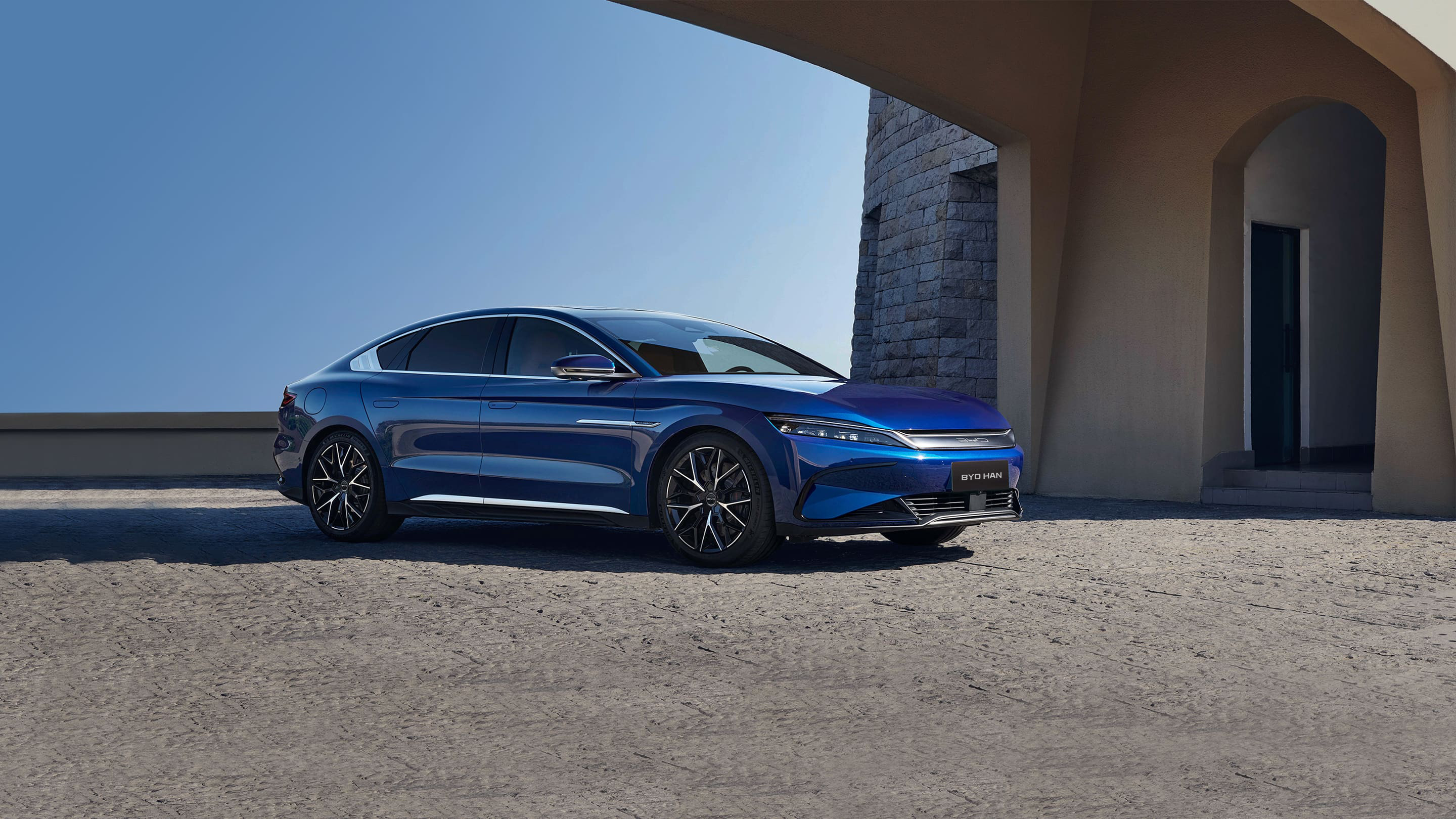
Byd Cars: How the Chinese Titan is Accelerating the Global Electric Revolution
Byd Cars: How the Chinese Titan is Accelerating the Global Electric Revolution
BYD has transitioned from a niche manufacturer to the world’s largest electric vehicle seller, leveraging vertical integration and aggressive global expansion to challenge established automotive powers. The company’s rise represents a fundamental shift in the center of gravity for the automotive industry, moving it toward technology-centric manufacturing hubs in Asia. This article examines the engineering philosophy, market strategy, and technological innovations that have propelled BYD to the forefront of the mobility landscape.
The story of BYD begins not with cars, but with batteries. Founded in 1995 in Shenzhen, China, the company initially focused on nickel-metal hydride and later lithium-ion batteries for mobile phones and laptops. This deep-rooted expertise in battery technology became the bedrock upon which the automotive empire was built. BYD’s leadership recognized early that controlling the battery supply chain was the key to mastering electric vehicle production. By integrating battery production directly into vehicle manufacturing, the company achieved a level of cost control and quality assurance that competitors struggled to match. This vertical integration model, rare in the automotive industry, allows BYD to optimize every component from the chemical composition of the cathode to the final assembly line.
The Technology Stack: Blade Battery and Beyond
At the heart of BYD’s engineering prowess is the Blade Battery, an innovation that redefined safety and space utilization in electric vehicles. Unlike traditional cylindrical or prismatic battery cells, the Blade Battery is a long, flat cell that is installed directly into the vehicle chassis. This design eliminates the need for complex modules, increasing pack density and freeing up interior space. More importantly, it addresses the critical issue of thermal runaway. Independent tests, including the demanding nail penetration test, have shown the Blade Battery to be significantly safer than conventional lithium-ion batteries. The battery’s structural role also contributes to the vehicle’s rigidity, potentially enhancing handling and longevity.
BYD’s technological arsenal extends far beyond the battery. The company has developed its own silicon carbide (SiC) power semiconductor devices, which improve the efficiency of the electric drivetrain. SiC components reduce energy loss as heat, thereby increasing range and reducing charging times. Furthermore, BYD’s proprietary DM-i (Dual Mode intelligent) and DM-p (Performance) hybrid powertrains have disrupted the market. The DM-i system, in particular, focuses on efficiency for daily driving, using a highly efficient engine to generate electricity rather than direct mechanical propulsion. This approach allows for extended pure-electric ranges in urban environments while eliminating range anxiety. The intelligence behind these systems is managed by sophisticated vehicle control units that continuously optimize performance based on driving style and conditions.
Global Ambition: From Local Supplier to International Contender
For years, BYD operated primarily within the Chinese market, supplying components to global giants and selling its own vehicles domestically. The turning point came in the early 2020s, as the company began a deliberate and aggressive push into export markets. This strategy was not a shot in the dark but a calculated response to slowing domestic growth and a desire to test products against international standards. The pivot was remarkably successful. BYD became the top-selling passenger car brand in Europe in several months, surpassing legacy manufacturers in key markets like Norway and Germany. This success was not limited to passenger cars; the company is also making significant inroads into the bus and truck segments, particularly in Latin America and Southeast Asia.
The company’s international strategy is multifaceted. In Europe, BYD has focused on premium segments with vehicles like the Atto 3 (a compact SUV), directly challenging established German and Scandinavian brands. In Latin America, the strategy has been more volume-oriented, introducing affordable compact cars and buses that address specific infrastructure needs. Partnerships are also part of the playbook. A landmark agreement with Daimler to co-develop battery-electric vans is a significant validation of BYD’s technology. These moves signal a shift from being a contract manufacturer to a brand-owning competitor willing to engage in complex industrial collaborations.
Navigating the Competitive Landscape and Scrutiny
BYD’s rapid ascent has not been without challenges. The company operates in an intensely competitive global market, facing established players transitioning to electric and nimble startups. Price competition is fierce, and margins in the automotive industry are notoriously thin. However, BYD’s vertical integration provides a crucial buffer against cost volatility. Unlike competitors dependent on third-party battery suppliers, BYD can manage raw material costs and production efficiency from within. The company’s massive scale allows it to absorb margin pressures that would cripple smaller firms.
Geopolitical tensions also cast a long shadow. As a Chinese company, BYD faces scrutiny regarding data security, supply chain resilience, and industrial subsidies. European regulators have launched investigations into state support, while some politicians have raised concerns about the company’s ownership structure. BYD’s response has been to emphasize its technology leadership and customer focus. The company maintains that its success is based on engineering excellence and market demand, not on non-market advantages. This delicate balancing act requires sophisticated navigation of trade policies and diplomatic relations, a challenge that all Chinese multinationals now face.
The Road Ahead: Innovation and Sustainability
Looking forward, BYD shows no signs of slowing down. The company is investing heavily in next-generation technologies, including sodium-ion batteries, which use abundant materials instead of lithium, and solid-state batteries, which promise higher energy density and safety. These efforts are aimed at further reducing costs and overcoming the limitations of current lithium-ion technology. Sustainability is also becoming a core part of the BYD narrative. The company is exploring closed-loop recycling for battery materials and is optimizing manufacturing processes to reduce carbon footprint. As governments around the world tighten emissions regulations, the demand for BYD’s zero-emission vehicles is expected to grow. The company’s future is intrinsically linked to the global transition to sustainable mobility. Its ability to innovate at scale and execute on its global ambitions will determine whether it evolves from a formidable challenger into the dominant force in the automotive world.
Related Post