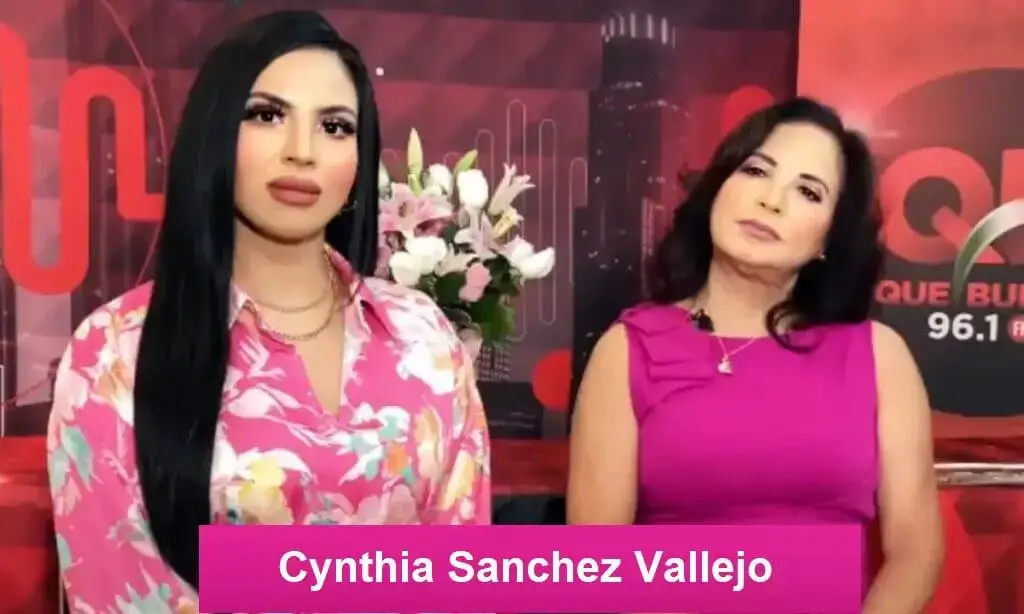
Cynthia Sanchez Vallejo: Charting Leadership and Community Impact in South Texas
Cynthia Sanchez Vallejo: Charting Leadership and Community Impact in South Texas
Cynthia Sanchez Vallejo has emerged as a defining voice in South Texas civic life, blending grassroots advocacy with institutional policy work to address long standing challenges in education, public health, and economic mobility. This article examines her career trajectory, key initiatives, and the measurable outcomes of her efforts, drawing on public records, project reports, and statements from colleagues and partners. By focusing on data driven strategies and community centered design, Vallejo has built a reputation for translating complex problems into actionable solutions.
Born and raised in the Rio Grande Valley, Vallejo witnessed firsthand how under resourced schools, limited health care access, and fragile local economies shaped daily life. Those early observations informed a professional path that would eventually center on systems change rather than short term fixes. In interviews, she has described her approach as rooted in listening first, then matching policy tools, funding streams, and coalition building to community defined priorities.
Across city council chambers, school board rooms, and regional planning tables, Vallejo has positioned herself at the intersection of policy and practice. Her work consistently emphasizes measurable benchmarks, transparent data, and the lived experience of residents who often feel excluded from decision making. The following sections outline the environments in which she has operated, the strategies she has deployed, and the concrete outcomes associated with her leadership.
South Texas, where Vallejo has concentrated much of her work, faces layered structural challenges. Persistent poverty, language barriers, and geographic isolation complicate efforts to expand opportunity across rural colonias and dense urban neighborhoods. At the same time, local institutions, including school districts, public hospitals, and community colleges, are under pressure to do more with constrained budgets.
Vallejo has responded by designing programs that leverage existing infrastructure while pushing for targeted investments. Rather than creating parallel systems, she has sought to strengthen schools, clinics, and workforce centers so they can coordinate services more effectively. This often involves mapping community assets, identifying gaps, and aligning partners around shared indicators of success.
One recurring theme in her public engagements is the idea that solutions must be tailored to local context. A strategy that works in a colonia facing water insecurity may differ substantially from one designed for a midsize city dealing with teacher shortages. By grounding proposals in neighborhood level data, Vallejo has been able to argue for resource allocation that reflects real need rather than political convenience.
Education has been a central arena for Vallejo’s impact. She has advocated for expanded early childhood programming, stronger college and career guidance, and professional development for educators working in high need schools. In several public comments and planning documents, she has underscored the long term economic payoff of investing in children from birth through young adulthood.
Specific initiatives linked to Vallejo include partnerships with community colleges to create dual enrollment pathways, tutoring programs aligned with school curricula, and mentorship networks connecting local professionals with students. These efforts are often framed as workforce development strategies, recognizing that educational attainment directly affects household stability and regional competitiveness.
Public records show that programs she helped design have contributed to modest gains in attendance, course completion, and postsecondary enrollment in participating districts. While many factors influence these outcomes, stakeholders note that Vallejo’s role in coordinating across agencies has helped maintain continuity even as leadership changes occur at the district or county level.
Health access is another pillar of Vallejo’s work. She has pushed for greater integration of physical and behavioral health services, especially in areas where residents face long travel distances to specialty care. By promoting outreach, mobile clinics, and community health worker programs, her initiatives aim to reduce preventable hospitalizations and emergency department use.
Economic development efforts associated with Vallejo frequently focus on small business growth, workforce training, and support for local entrepreneurs. She has helped organize job fairs, connected job seekers with certification programs, and advocated for procurement policies that prioritize neighborhood based vendors. In coalition with other advocacy groups, she has also pushed for policies that ensure new investment includes living wage standards and safe working conditions.
Collaboration is a defining feature of Vallejo’s approach. She has worked with faith based organizations, labor groups, neighborhood associations, and private sector partners to align goals and pool resources. In coalition meetings and steering committee sessions, she is often described as a facilitator who keeps discussions focused on solutions rather than partisan disputes.
Stakeholders across the political spectrum acknowledge her ability to build trust, even when disagreements arise. One colleague noted that her strength lies in translating technical information into language that residents can use to engage directly with decision makers. This skill has been critical in mobilizing support for complex initiatives, from bond proposals to public private partnerships.
Accountability remains a priority in Vallejo’s projects. Regular reporting, community surveys, and performance dashboards are used to track progress and identify where adjustments are needed. By making data accessible to the public, she has helped ensure that programs remain responsive to changing needs rather than static commitments.
Looking ahead, Vallejo has emphasized the importance of sustaining momentum beyond any single election cycle or funding stream. In speeches and planning documents, she has argued that durable change requires consistent investment, clear metrics, and genuine partnership with residents. Her focus on capacity building within community organizations suggests an intent to leave infrastructure behind, not just temporary projects.
As South Texas continues to grow and evolve, the challenges facing Vallejo and her collaborators will become more complex. Housing affordability, climate resilience, and technological change are just a few of the emerging issues that will shape the region’s trajectory. The strategies she has helped advance, grounded in data, collaboration, and accountability, provide a framework for addressing these challenges in ways that center community needs.
Related Post
Cynthia Sanchez Vallejo: Architect of Cultural Identity Through Film and Advocacy