David Carradine: The Paradox of a Peaceful Wanderer in a Violent World
David Carradine: The Paradox of a Peaceful Wanderer in a Violent World
David Carradine navigated a career defined by the stark contrast between his on-screen persona as a lethal kung fu master and his off-screen identity as a contemplative spiritual seeker. His journey, marked by profound personal turmoil and artistic ambition, reflected a man constantly negotiating between violence and enlightenment. This is the story of an actor who became an icon of counter-culture cinema while remaining deeply entangled in the very forces he sought to transcend.
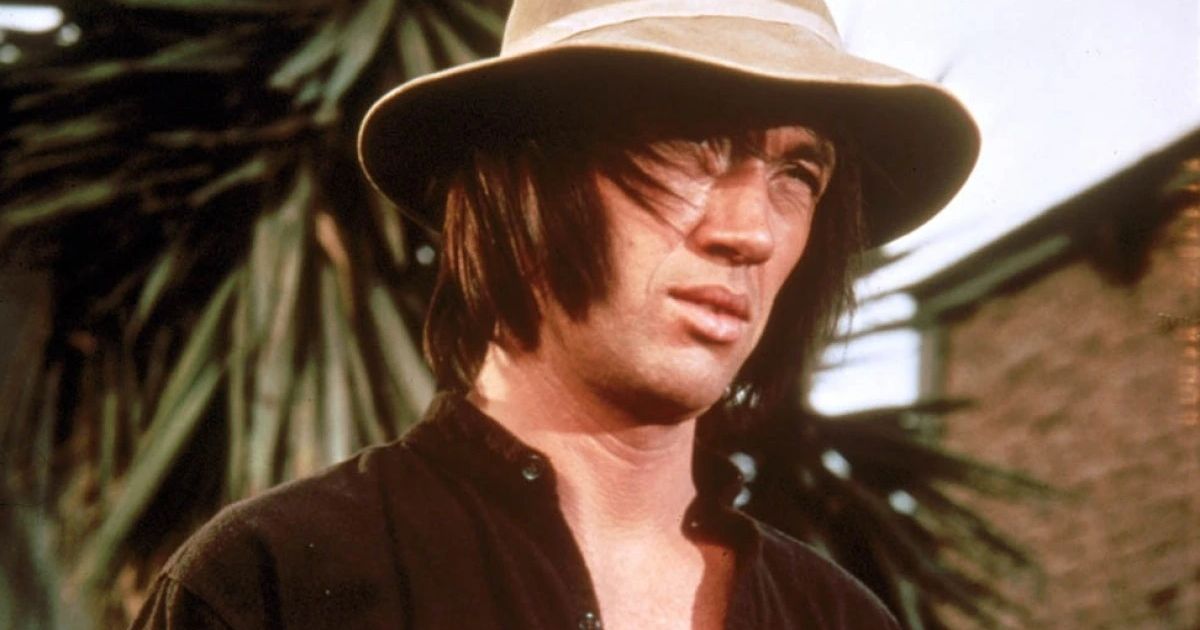
Carradine’s most enduring legacy is inextricably linked to a role that fused physical prowess with philosophical depth. Portraying Kwai Chang Caine in the television series *Kung Fu* (1972-1975) established him as a cultural touchstone, embodying the "Man from Shiloh" with a quiet intensity that contrasted sharply with the era's typical action heroes. The character, a half-Chinese, half-American Shaolin monk traveling the American West, was a walking paradox—a healer who could disarm multiple attackers with breathtaking speed, yet whose core philosophy centered on harmony and inner peace. The show's success was not merely a fluke of television scheduling; it tapped into a burgeoning interest in Eastern philosophy and martial arts within the West, with Caine serving as a conduit for these ideas into mainstream living rooms. As Carradine himself reflected on the character's appeal in a 1998 interview, "Caine was a metaphor for the wanderer, the seeker. He was a outsider who used his skills not for conquest, but for survival and a kind of moral navigation."
This navigation often occurred far from the studios of Hollywood, as Carradine's personal life frequently mirrored the turbulent narratives he sometimes portrayed. Born into the famous acting dynasty of John Carradine, he was steeped in performance from birth, yet deliberately chose a path that diverged significantly from his father's more traditional Hollywood roles. His early adulthood was a period of intense exploration and hardship. He spent time traveling, sometimes performing odd jobs, and immersing himself in the burgeoning folk music scene of the 1960s. He even found himself in a communal setting in Tennessee, cultivating marijuana on a farm—a decision that led to a brief, but significant, legal entanglement. As he recounted in his autobiography, *Endless Highway*, this period was one of "searching, not for fame, but for a foothold on reality." He was, in many ways, rejecting the gilded cage of his lineage in favor of a more authentic, albeit unstable, existence.
His foray into film began with roles that showcased a raw, rebellious energy, most notably in Roger Corman's *The Trip* (1966). However, it was his collaboration with director Jack Starrett that proved pivotal. Starrett recognized a unique physicality in Carradine and cast him in the exploitation film *The Carey Treatment* (1972). This was a turning point, demonstrating Carradine's willingness to work outside the mainstream system and hone his craft in gritty, low-budget environments. His collaboration with director John Carpenter on the seminal horror film *Assault on Precinct 13* (1976) further cemented his versatility. While not a leading role, his portrayal of the menacing gangster Anthony Franklin provided a chilling counterpoint to the film's desperate heroes, proving his capacity for embodying pure, unpredictable menace. As Carpenter would later note about working with Carradine, "He had a stillness about him. You felt the violence coiled inside, ready to spring, but there was also a deep intelligence there."
The balancing act between his artistic pursuits and personal demons became increasingly complex. Carradine achieved significant financial and critical success with his starring role in the Vietnam War drama *Boxcar Bertha* (1972), produced by Roger Corman and directed by Michael Karbelnikoff. His performance as a drifter who becomes involved with a union-busting gangster was lauded for its gritty realism. Yet, this period was also shadowed by tragedy. In 1978, his marriage to fellow actor Susan Snyder ended in a murder-suicide that sent shockwaves through Hollywood. Snyder killed their two children before taking her own life. While Carradine was not physically present at the scene—he was filming *Heaven with a Gun*—the psychological trauma was immense and publicly acknowledged. He spoke sparingly about the event, but its impact was evident in the turbulence that followed, leading to a highly publicized arrest for possession of marijuana and hashish, a stark fall from the serene image of Caine.
Perhaps the most dramatic and consequential event of his life occurred in 1994 in Thailand. Carradine was found dead in a hotel room, tangled in a rope he had secured to a ceiling beam. The official cause of death was ruled accidental, a result of asphyxiation during a consensual autoerotic asphyxiation practice. The revelation sparked immediate controversy and sensationalism, reducing a complex life to a tabloid headline. Yet, for those who studied his work and his words, the tragedy echoed themes of isolation and self-destruction that had long haunted his personal narrative. Director John Carpenter, who had worked with him decades earlier, offered a poignant perspective that captures the enduring mystery of the man: "You never quite knew who David Carradine was. He was always a mystery to me. Was he the actor? Was he the mystic? Were they the same person? I think he was trying to fuse those two selves, and in the end, that proved to be the most dangerous role he ever played."
Carradine’s final film role, appearing alongside his son, actor Justin Carradine, in the 2008 comedy *Cloud 9*, served as a poignant full-circle moment. It was a reminder of a lineage and a legacy that extended beyond the iconic wanderer of *Kung Fu*. His career, spanning decades and genres, is a testament to an actor who consistently sought roles that challenged him, that explored the dark and light within the human condition. He was, in his own often-conflicted way, a student of the human journey—someone who used the violent language of cinema to ask quiet questions about peace, identity, and the search for meaning in a chaotic world. The paradox of the peaceful wanderer who was ultimately undone by inner turmoil remains his most compelling and tragic story.
Related Post

The Unforgettable David Carradine: A Martial Arts Legacy

David Carradine Son: The Icon Who Defied Conventions and Redefdefined Hollywood’s Eastern Mystique

Unleashing the Grail: David Carradine's Journey as an Actor and Martial Artist
Unveiling The Complex Web Of David Carradine’s Relationships