Decoding DNA: The Critical Battle Between Coding Strand Vs Template Strand In Gene Expression
Decoding DNA: The Critical Battle Between Coding Strand Vs Template Strand In Gene Expression
The molecular machinery of life relies on a precise text copied in a specific direction, where one strand provides the instructions and the other serves as the physical blueprint. Understanding the distinction between the coding strand versus the template strand is fundamental to grasping how genetic information is stored, accessed, and transformed into functional proteins. This article will dissect the roles, differences, and biological significance of these two antiparallel partners in the dance of deoxyribonucleic acid.
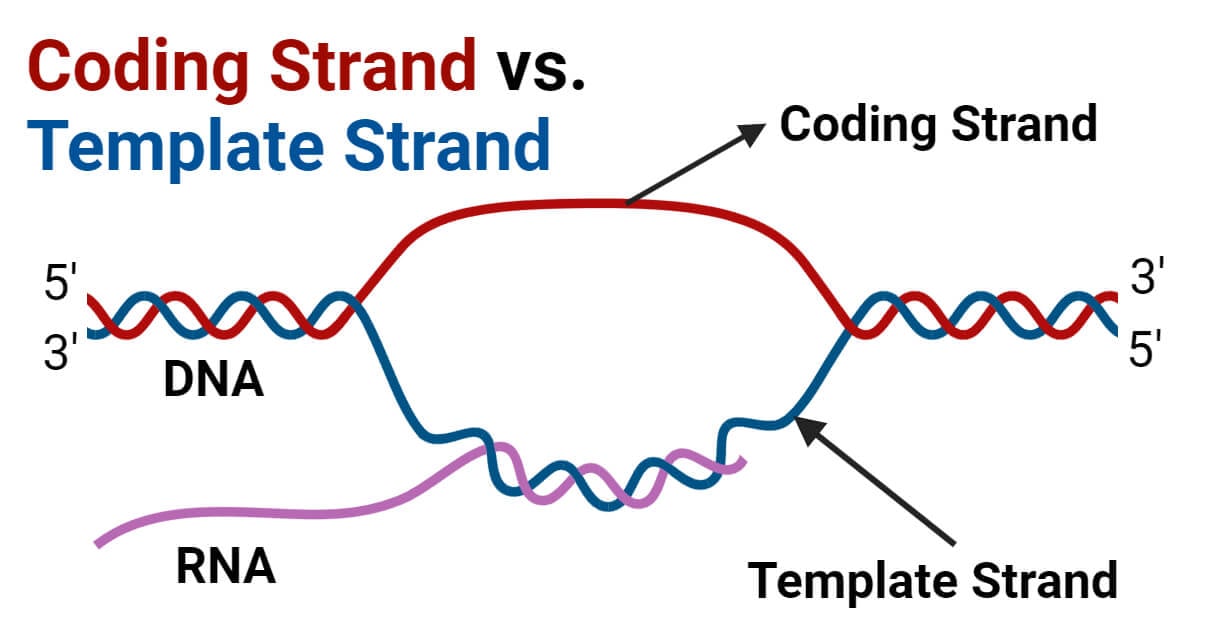
To the uninitiated, the double helix of DNA appears to be a symmetrical ladder, but biological processes treat the two sides with radical asymmetry. While the molecule is chemically complementary, only one strand—the template strand—is directly read by enzymes to synthesize RNA during transcription. The other, the coding strand, mirrors the RNA sequence (with thymine replaced by uracil) and is often misleadingly called the "sense" strand. Confusing these roles leads to a fundamental misunderstanding of molecular biology.
**The Mechanics of Transcription: Reading the Blueprint**
Transcription is the process by which the genetic code is copied from DNA to messenger RNA (mRNA). This process is mediated by the enzyme RNA polymerase, which does not float aimlessly but seeks a specific starting signal. The promoter region, located upstream of a gene, acts as the binding site for this enzyme. The choice of which strand to transcribe determines the identity of the RNA molecule produced.
When RNA polymerase binds to the promoter, it unwinds the DNA double helix. It then uses one strand, the **template strand** (also known as the antisense or minus strand), as a guide. The enzyme moves along this strand in the 3' to 5' direction, synthesizing a complementary RNA strand in the 5' to 3' direction. Because RNA uses uracil (U) instead of thymine (T), the RNA sequence is a copy of the template strand with T replaced by U.
* **The Template Strand (Antisense):** The strand that is transcribed. It serves as the direct template for RNA synthesis.
* **The Coding Strand (Sense):** The strand that has the same sequence as the resulting RNA (except for T/U). It is not used as a template during transcription.
**The Functional Divide: Sense vs. Antisense**
The distinction between the coding and template strands is not merely academic; it dictates the polarity and functionality of the genetic message. The coding strand is often described as the "sense" strand because its sequence matches the codons that will be read by the ribosome during translation. If you were to transcribe the coding strand into RNA without modification, you would produce a sequence identical to the mRNA, barring the T/U difference. This consistency makes it the visual reference for geneticists when writing sequences in textbooks.
Conversely, the template strand is "antisense" because it is the opposite of the coding sequence. While it may seem counterintuitive that the cell uses the "wrong" strand to make RNA, this mechanism is crucial for regulation. For example, some genes are encoded on the opposite strand of the DNA molecule, running in the opposite direction. This overlapping arrangement, known as antisense transcription, allows for complex regulatory networks where one gene can control the expression of another simply by being transcribed from the opposite strand.
**The Biological Significance: Why the Distinction Matters**
Misidentifying which strand is which can lead to a fundamental error in interpreting genetic data. Consider a gene responsible for producing insulin. The sequence of the coding strand will read `ATG GCT ...` (representing the start codon and subsequent amino acids). The template strand, however, will read `TAC CGA ...`. If a researcher mistakenly uses the template strand sequence as if it were the coding sequence, they would predict the wrong amino acids, leading to a non-functional protein.
Furthermore, the concept is vital in molecular diagnostics and genetic engineering. When designing primers for PCR (Polymerase Chain Reaction) or CRISPR gene editing, scientists must know whether they are targeting the coding or template strand to ensure the machinery binds correctly and amplifies or edits the intended location. As molecular biologist James Watson noted in the foundational texts of the field, the structure implies a copying mechanism, and understanding which strand leads the process is essential to harnessing that mechanism.
**Regulatory Elements and the Strand Wars**
DNA is not just a static code; it is a dynamic battlefield of regulation. Promoters, enhancers, and silencers can exist on either strand relative to the gene they control. The **template strand** is not a passive participant; its sequence dictates the accessibility of the gene. Certain sequences on the template strand can signal the polymerase to slow down, speed up, or even detach.
Moreover, non-coding RNAs often originate from the template strand. These regulatory molecules do not code for proteins but instead silence genes or modify chromatin structure. The battle between the strands is thus a battle for cellular resources. The strand that wins the transcription battle determines the protein output of the cell for that specific gene.
**Evolutionary Perspective**
From an evolutionary standpoint, the conservation of the template strand versus the coding strand varies across the genome. The template strand is often under strong purifying selection because errors in transcription directly affect the protein product. However, the coding strand is not free of pressure; mutations here can affect the stability of the mRNA molecule itself. Regions of the coding strand rich in G-C bonds can form stable secondary structures that influence how easily the RNA polymerase can detach the mRNA from the DNA, thereby affecting the efficiency of protein production.
**Summary of Key Differences**
To solidify the concepts, here is a comparative breakdown:
1. **Definition:**
* **Coding Strand:** The strand of DNA that has the same sequence (with T) as the mRNA transcript. It is also called the "Sense" strand.
* **Template Strand:** The strand of DNA that is used as a template during transcription to build the mRNA. It is also called the "Antisense" or "Minus" strand.
2. **Directionality:**
* **Coding Strand:** Runs 5' to 3' in the same direction as the RNA product.
* **Template Strand:** Runs 3' to 5' relative to the RNA product.
3. **Function:**
* **Coding Strand:** Provides the visual "recipe" for the protein. It is not used enzymatically to build RNA.
* **Template Strand:** Is physically read by RNA polymerase to assemble the RNA molecule base by base.
4. **Location:**
* Both strands occupy the same physical location on the chromosome, but different genes may use different strands as their template. This means that one strand can be the coding strand for one gene and the template strand for an overlapping gene running in the opposite direction.
Understanding the roles of the coding strand and the template strand transforms a static diagram of a double helix into a dynamic map of cellular activity. It reveals that DNA is not just a library of instructions, but a medium of active transcription where polarity and precision are paramount. The next time one encounters a DNA sequence, the silent question remains: Is this the code, or is this the mold?
Related Post
Coding Strand Vs Template Strand: Key Differences Exposed

Wanda Smith’s Net Worth: Profile of a High-Achieving Entrepreneur and Cases of Wealth Building

Krista Neumann Breaks Barriers: Now Directing with Vision and Authority
/bollyy/media/media_files/2025/03/06/5TDXeeIso0jPt8xCUiss.jpg)
Talia Jackson: Hollywood’s Rising Star Redefining Talent and Promise