Decoding The Definition Of Line In Math Terms: From Geometry To Real-World Applications
Decoding The Definition Of Line In Math Terms: From Geometry To Real-World Applications
In mathematics, a line is formally defined as an infinitely long, one-dimensional figure with no width, consisting of an infinite set of points extending endlessly in two opposite directions. This fundamental geometric concept serves as the backbone for coordinate systems, equations, and spatial reasoning across countless scientific and engineering disciplines. The following article explores the precise definition of a line, its representation in different mathematical systems, and its practical significance in modern applied contexts.
The classical Euclidean definition of a line, articulated over two thousand years ago, describes it as having length but no breadth. Euclid’s Elements, one of the most influential works in the history of mathematics, defines a line as "breadthless length" and a straight line as "a line which lies evenly with the points on itself." This abstract characterization strips away physical properties such as thickness, focusing purely on the idea of collinearity and infinite extension. In modern terms, a line in a two-dimensional plane can be thought of as the path traced by a point moving in a constant direction without deviation.
In analytical geometry, the definition of a line is translated into algebraic language, allowing geometric shapes to be described using equations. The most common form is the slope-intercept equation, y = mx + b, where m represents the slope and b the y-intercept. This formula encapsulates the essential property of linearity: a constant rate of change between variables. For example, a line with a slope of 2 and a y-intercept of 3 follows the equation y = 2x + 3, meaning that for every unit increase in x, y increases by exactly 2 units. This predictability is what makes linear relationships so useful in modeling phenomena where change occurs at a steady pace.
There are several standard ways to express the definition of a line in mathematical terms, each suited to different contexts. These representations are not merely symbolic variations but reflect deeper geometric and algebraic principles.
- Two-point form: A line can be uniquely determined by two distinct points, (x₁, y₁) and (x₂, y₂), with the equation derived from the consistent slope between them.
- Point-slope form: If a point on the line and its slope are known, the equation can be written as y - y₁ = m(x - x₁), directly applying the definition of slope as rise over run.
- General form: The equation Ax + By + C = 0 offers a universal format that includes vertical lines, which cannot be expressed in slope-intercept form due to division by zero.
These forms demonstrate how the intuitive notion of a straight path adapts to the rigorous demands of formal mathematics. As mathematician Ian Stewart once noted, "The concept of a line is at once the simplest and most profound idea in geometry," highlighting its dual nature as both an elementary visual intuition and a sophisticated theoretical tool.
Beyond abstract theory, the definition of a line in math terms underpins technologies that shape contemporary life. In computer graphics, lines are rendered as sequences of pixels calculated using algorithms such as Bresenham’s line algorithm, which approximates straight paths on a discrete grid. Civil engineering relies on linear equations to design roads, railways, and drainage systems, ensuring that gradients and alignments follow precise geometric rules. Even in economics, linear models help forecast trends by assuming a constant relationship between variables like supply and demand, provided external conditions remain stable.
The concept also extends into higher dimensions and more abstract spaces. In three-dimensional geometry, a line is defined by a point and a direction vector, describing an infinite trajectory through space. In linear algebra, the idea generalizes to linear subspaces, where the notion of "straightness" is preserved under addition and scalar multiplication. These advancements reinforce that the core definition—a set of points aligned in a single, unchanging direction—remains robust even as its applications grow increasingly complex.
Understanding the definition of a line in math terms is essential not only for solving textbook problems but for interpreting the world through a quantitative lens. Whether mapping the trajectory of a satellite or optimizing the layout of a warehouse, the line serves as a foundational model for efficiency and precision. Its enduring relevance across centuries and fields is a testament to the power of abstract thought to illuminate practical reality.
Related Post
Decoding The Abstract: Definition Of Line In Math Terms Explained
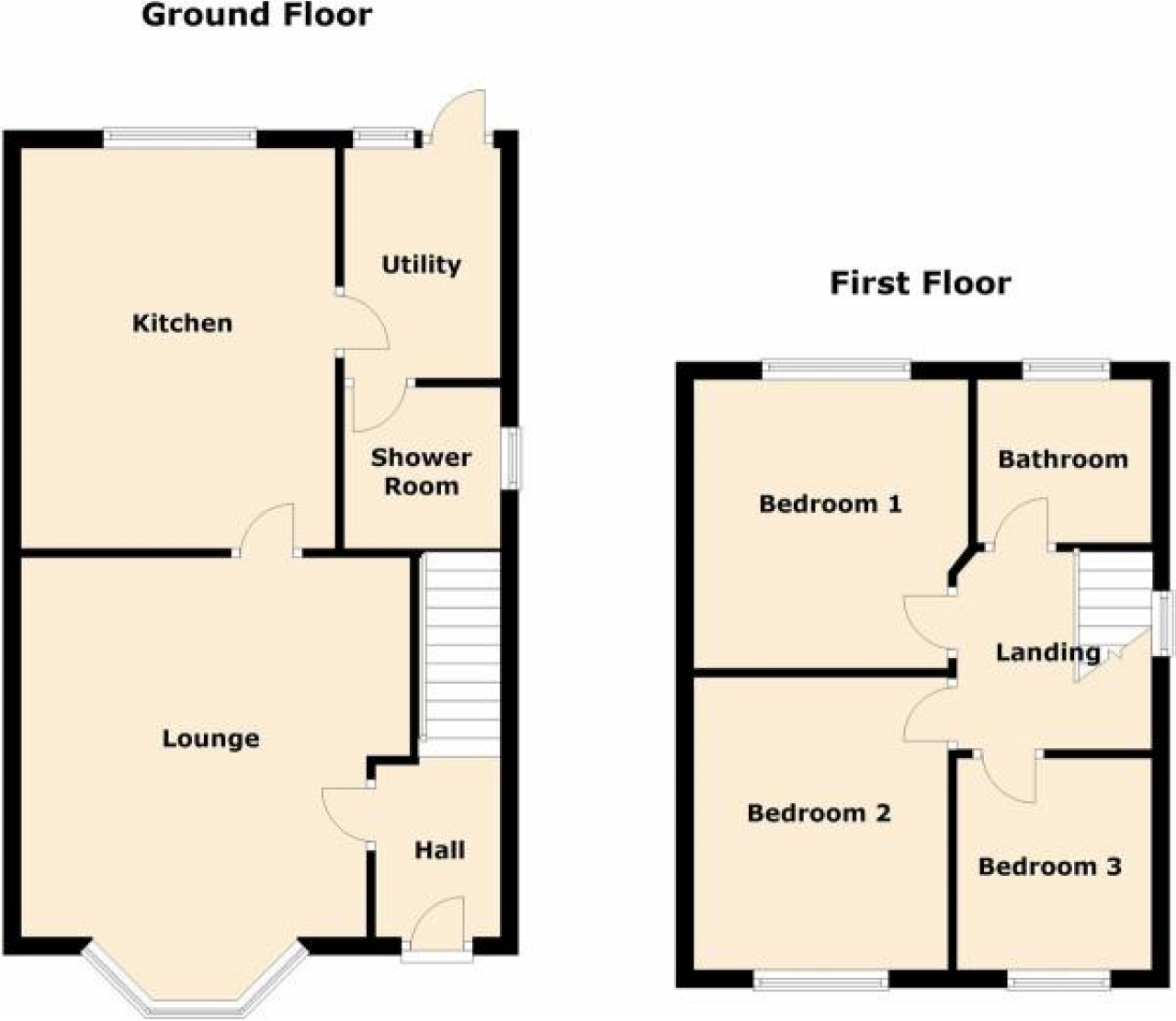
UNBELIEVABLE 3 BEDROOM SEMI DETACHED HOUSE FOR RENT: EVERYTHING YOU NEED TO KNOW

Unveiling the Mystique of Virgos Born on September 14: Unlocking the Secrets of this Dynamic Zodiac Sign

Unpacking Britney Griner's Gender Identity: A Complex and Intricate Maze