EBT Alabama: How the Electronic Benefit Transfer System Feeds Millions and Faces Ongoing Reform
EBT Alabama: How the Electronic Benefit Transfer System Feeds Millions and Faces Ongoing Reform
Across Alabama, more than 660,000 residents rely on an invisible bridge between government assistance and grocery shelves, hospital pharmacies, and household pantries. The Electronic Benefit Transfer, or EBT, system administers a patchwork of federally funded programs—primarily SNAP, or food stamps, along with TANF cash assistance—through a single plastic card. For advocates and officials, EBT Alabama represents both a lifeline for vulnerable households and a test of how technology can streamline social safety nets without sacrificing integrity or access.
At its core, EBT is not a welfare program but a delivery mechanism. It replaces paper vouchers and checks with a secure, computerized network that allows approved benefits to be accessed at point-of-sale terminals and, in some cases, withdrawn as cash at authorized ATMs. The system, overseen by the U.S. Department of Agriculture at the federal level and managed locally by the Alabama Department of Human Resources (DHR), has transformed how low-income Alabamians meet basic needs. Whether viewed as an emblem of empowerment or a symbol of dependency, EBT has become central to the state’s social contract, especially in rural communities where banks and grocery stores are sparse.
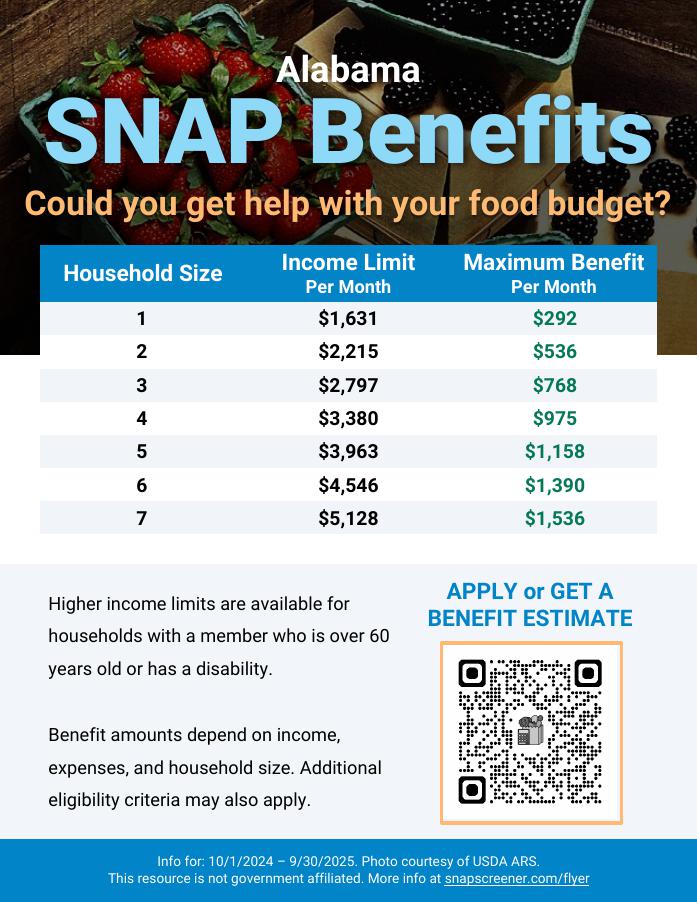
The foundation of EBT in Alabama is the Supplemental Nutrition Assistance Program, commonly known nationwide as food stamps. Administered by DHR’s Bureau of Nutrition Services, SNAP benefits are loaded monthly onto an ACCESS card, the state’s official EBT card. When a recipient shops at a supermarket, farmers’ market, or participating retailer, they slide the card through a terminal, enter a personal identification number, and the cost of eligible items is deducted from their balance in real time. The process is swift, often taking just seconds, yet behind the scenes it involves coordination among federal, state, and private partners.
TANF, or Temporary Assistance for Needy Families, is another key program routed through EBT. Unlike SNAP, which can only be used for food, TANF benefits can be used for a broader range of expenses, including clothing, transportation, and childcare. In Alabama, TANF is both a financial support and a work-focused initiative, built around time-limited assistance and employment requirements. The state’s TANF benefits are typically issued on the same ACCESS card, though rules and eligibility differ significantly from SNAP. Some households draw on both programs, using SNAP to cover groceries and TANF to manage other essential costs.
From a technological standpoint, the EBT network in Alabama is a sophisticated system that balances speed, security, and interoperability. When a card is swiped, transaction data travels through a chain of systems: point-of-sale terminals, payment processors, state databases, and federal clearinghouses. The Alabama EBT system interfaces with the federal Equity and Accountability Statewide Electronic Benefit Transfer (EBT) network, a shared infrastructure that standardizes transactions across all 50 states. This interoperability ensures that benefits can be used not only in Alabama but also when residents travel or temporarily relocate. According to DHR spokespeople, the system processes millions of transactions each month with a reported accuracy rate above 99 percent.
Security is a paramount concern for any system handling public funds, and EBT is no exception. Each ACCESS card is protected by a unique PIN, and transactions are encrypted to prevent unauthorized use. Lost or stolen cards can be deactivated within minutes through a dedicated customer service line. Fraud is monitored through automated systems that flag unusual patterns—such as repeated attempts to use a card at non-authorized locations—and referred for investigation. Still, the system is not immune to abuse. Nationally, there have been cases of trafficking, where benefits are exchanged for cash or non-eligible goods, and Alabama has seen its share of investigations. The challenge, as officials see it, is striking the right balance between surveillance and accessibility, ensuring that anti-fraud measures do not create barriers for legitimate users.
The rollout and modernization of EBT in Alabama have not been without bumps. In the early 2000s, the state transitioned from paper vouchers to electronic cards, a shift that promised efficiency but required significant infrastructure investment. Retailers had to install new point-of-sale devices, train staff, and adapt to new procedures. Over time, the system matured, but questions about usability and equity persisted. For example, beneficiaries in remote counties have sometimes reported longer transaction times or connectivity issues, particularly at small mom-and-pop stores that lack robust internet service. In response, DHR has worked with private vendors to upgrade hardware and expand broadband access where possible.
Beyond the machine and the network, EBT is a story of human impact. Consider the case of a single mother in Montgomery who uses her ACCESS card to stretch a modest SNAP allocation across the month. For her, EBT is not just a payment system but a tool that offers predictability in an uncertain world. She knows that as long as she qualifies, she can rely on the card to buy milk, bread, and fresh produce. In rural counties like Lowndes or Wilcox, where grocery stores are few, EBT can mean the difference between making it through the week or going without. “It’s not a handout; it’s a way to keep the lights on and the fridge full,” says one community organizer in Selma, who asked not to be identified to protect her clients’ privacy.
Farmers’ markets have emerged as a vital frontier for EBT in Alabama. Through programs like Market Match and the Senior Farmers’ Market Nutrition Program, EBT users can double their purchasing power at local stands, promoting both nutrition and local agriculture. These initiatives have helped reconnect urban benefit recipients with rural producers, turning EBT into a tool for economic development as well as assistance. Mobile EBT units now travel to underserved areas, and during harvest season, it is not uncommon to see stands adorned with bright signs announcing “EBT accepted here.” The expansion has been gradual but steady, reflecting a broader recognition that food access is not just about eligibility but about usability.
Yet EBT in Alabama also exists within a political and policy crossfire. Debates over work requirements, benefit levels, and eligibility rules often frame the system as a zero-sum game between fiscal responsibility and compassion. Critics argue that the system can create disincentives to work and that fraud or misuse drains public resources. Supporters counter that for every dollar spent on SNAP, the broader economy sees a multiplier effect, as benefits are spent immediately at local businesses. Research from the U.S. Census Bureau and academic institutions consistently shows that SNAP lifts millions out of poverty each year, and Alabama is no exception. According to 2022 USDA data, SNAP alone lifted approximately 70,000 Alabamians above the poverty line annually, with children comprising a disproportionate share of those beneficiaries.
The digital divide remains a quiet but significant hurdle for EBT’s evolution. As states explore online purchasing and mobile app-based account management, Alabama faces the same challenge many rural states do: ensuring that residents without reliable internet or smartphones are not left behind. Some beneficiaries rely on library computers or community centers to check balances or replace cards, while others depend on phone-based support. For the elderly or disabled, navigating automated systems can be daunting. DHR has introduced customer service improvements, including multilingual support and extended hours, but advocates say more needs to be done to meet people where they are. “Technology should serve people, not the other way around,” notes a policy analyst with Alabama Arise, a nonprofit advocacy group.
Looking ahead, EBT in Alabama is poised at the intersection of innovation and tradition. Pilot programs are testing online grocery ordering with EBT, while states like Alabama weigh the costs and benefits of expanding cash benefits accessibility through digital channels. There is also growing interest in data-driven approaches—using anonymized transaction data to better understand food deserts, target nutrition education, and improve program efficiency. None of these advances will matter, however, if the system does not remain trustworthy, reliable, and accessible to those who depend on it most. As one DHR official puts it, “Our job isn’t just to move money; it’s to move people toward stability.”
In a state where poverty rates and food insecurity remain stubbornly high, EBT Alabama is more than a transaction system. It is a reflection of how a modern society chooses to care for its most vulnerable citizens. For every technical glitch resolved or policy debate navigated, there are thousands of quiet moments when a card swipe translates into a meal on the table. The challenge for Alabama—and for the nation—is to ensure that this quiet, unglamorous machinery of care keeps running smoothly, equitably, and humanely for years to come.
Related Post
EBT Alabama: How the Electronic Benefits Transfer System Supports Low-Income Households in 2024

Ebt Alabama: Understanding the Food Assistance Program in the Yellowhammer State