Electron Geometry Decoded: How Quantum Shapes Dictate Molecules and Materials
Electron Geometry Decoded: How Quantum Shapes Dictate Molecules and Materials
Electron geometry governs the three‑dimensional arrangement of atoms in molecules by dictating how electron pairs repel and organize around a central atom. This framework, rooted in VSEPR theory and refined by quantum mechanics, explains why water bends, methane is tetrahedral, and complex catalysts adopt specific shapes that determine reactivity. Understanding electron geometry is essential for predicting molecular behavior, designing new materials, and rationalizing chemical processes across biology, chemistry, and materials science.
The geometry of electron clouds is not a philosophical abstraction but a measurable, calculable feature of matter that determines polarity, bonding strength, and interaction with light and other molecules. At its core, electron geometry describes the spatial distribution of bonding and nonbonding electron pairs around a central atom, minimizing repulsion to achieve a stable arrangement. This organization emerges from the quantum mechanical nature of electrons, which occupy orbitals with specific shapes and energies that collectively sculpt the molecule’s overall form.
Early attempts to systematize molecular shapes date to Gilbert N. Lewis, who emphasized electron pairs in bonding, but the modern treatment crystallized with Ronald Gillespie and Ronald Nyholm in the mid‑20th century. Their work extended VSEPR theory into a more general model applicable to main‑group compounds, providing a practical tool for predicting geometries from Lewis structures. Today, electron geometry is seamlessly integrated with molecular orbital theory and computational chemistry, allowing scientists to simulate structures with remarkable precision before synthesizing them in the lab.
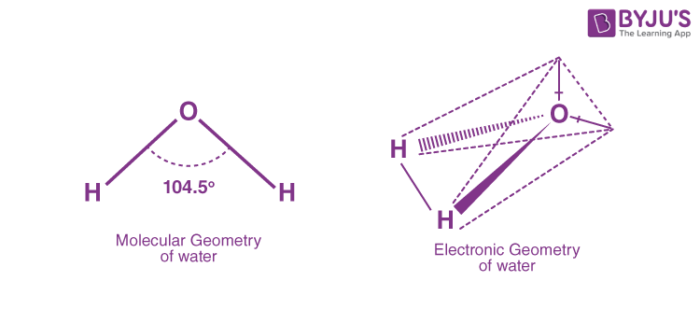
To understand electron geometry, it is helpful to distinguish it from molecular geometry. While molecular geometry considers only the positions of atomic nuclei, electron geometry includes all electron pairs, whether involved in bonds or sitting as lone pairs. For example, in water (H₂O), the electron geometry is tetrahedral because there are four electron domains around oxygen—two bonding pairs and two lone pairs—yet the molecular geometry is bent because only the nuclei define the shape. This distinction is critical, as lone pairs exert greater repulsion than bonding pairs, distorting angles and influencing reactivity.
Let us consider some canonical examples drawn from simple molecules to complex ions. Each case illustrates how electron domains arrange to minimize repulsion, following principles that can be predicted with a few straightforward rules.
- Methane (CH₄): Carbon with four single bonds adopts a tetrahedral electron geometry, with bond angles close to 109.5 degrees, reflecting four equivalent bonding domains.
- Ammonia (NH₃): Nitrogen with three bonds and one lone pair also has a tetrahedral electron geometry, but the molecular shape is trigonal pyramidal, with bond angles compressed to about 107 degrees due to lone‑pair repulsion.
- Water (H₂O): With two bonds and two lone pairs, oxygen’s electron geometry remains tetrahedral, while the molecular shape is bent, producing a bond angle of roughly 104.5 degrees, a key factor in water’s unique solvent properties.
- Boron trifluoride (BF₃): Boron has three bonding domains and no lone pairs, resulting in a trigonal planar electron and molecular geometry with 120-degree bond angles.
- Sulfur hexafluoride (SF₆): Sulfur surrounded by six fluorine atoms exhibits an octahedral electron geometry, with all bond angles at 90 degrees, demonstrating high symmetry and chemical inertness.
In more complex species such as sulfate (SO₄²⁻) or phosphate (PO₄³⁻), electron geometry helps rationalize the tetrahedral arrangement of atoms around the central atom, despite the presence of double bonds. Advanced techniques like X‑ray crystallography and electron diffraction validate these predictions, showing remarkable agreement with models based on electron domain counting. Computational methods further refine our understanding by accounting for subtle effects such as orbital hybridization and relativistic influences in heavy elements.
Beyond academic interest, electron geometry has profound practical implications. In drug design, the three‑dimensional arrangement of atoms determines how a molecule fits into a biological target, making accurate shape prediction essential. Catalysts rely on specific geometries to position reactants in space, lowering activation barriers and steering reactions toward desired products. Materials science exploits electron‑driven architectures to engineer semiconductors, polymers, and nanomaterials with tailored electronic and optical properties. As one computational chemist noted, “Geometry is the language through which electrons speak to atoms, and understanding that language lets us design the molecules we need rather than stumbling upon them by chance.”
Experimental validation remains the gold standard for confirming electron geometries. Techniques such as nuclear magnetic resonance spectroscopy, infrared spectroscopy, and electron diffraction provide complementary data that align with or challenge theoretical predictions. Discrepancies sometimes arise in molecules with delocalized electrons or unusual magnetic environments, prompting refinements in models and highlighting the limits of simplified rules. Nevertheless, the core principle—that electron pairs organize to minimize repulsion—remains a robust and widely applicable concept.
Looking ahead, advances in quantum computing and machine learning promise to expand the reach of electron geometry predictions. Algorithms that can rapidly explore conformational space and identify low‑energy geometries will accelerate the discovery of new compounds and materials. In education, modern visualization tools allow students to interact with molecular models in three dimensions, deepening intuitive understanding beyond two‑dimensional drawings. As these tools become more accessible, the ability to intuitively grasp and manipulate electron geometry will become an increasingly valuable skill for scientists and engineers alike.
In summary, electron geometry is a foundational concept that bridges abstract quantum principles with tangible molecular architecture. By organizing electron pairs to minimize repulsion, it dictates the shapes of molecules and materials, influencing their chemical and physical properties. From water’s bent structure to the symmetric elegance of sulfur hexafluoride, these geometric patterns emerge naturally from the quantum behavior of electrons, offering a powerful lens through which to understand and manipulate the molecular world.
Related Post
Decoding Molecular Architecture: How Electron Geometry Dictates Molecular Shape And Function
The Hidden Geometry of Molecules: How Electron Shapes Dictate the World
Electron Geometry vs Molecular Geometry: The Atomic Shape Revolutionizing Reactivity and Function