General Milley: The Architect of Military Diplomacy in a Volatile Era
General Milley: The Architect of Military Diplomacy in a Volatile Era
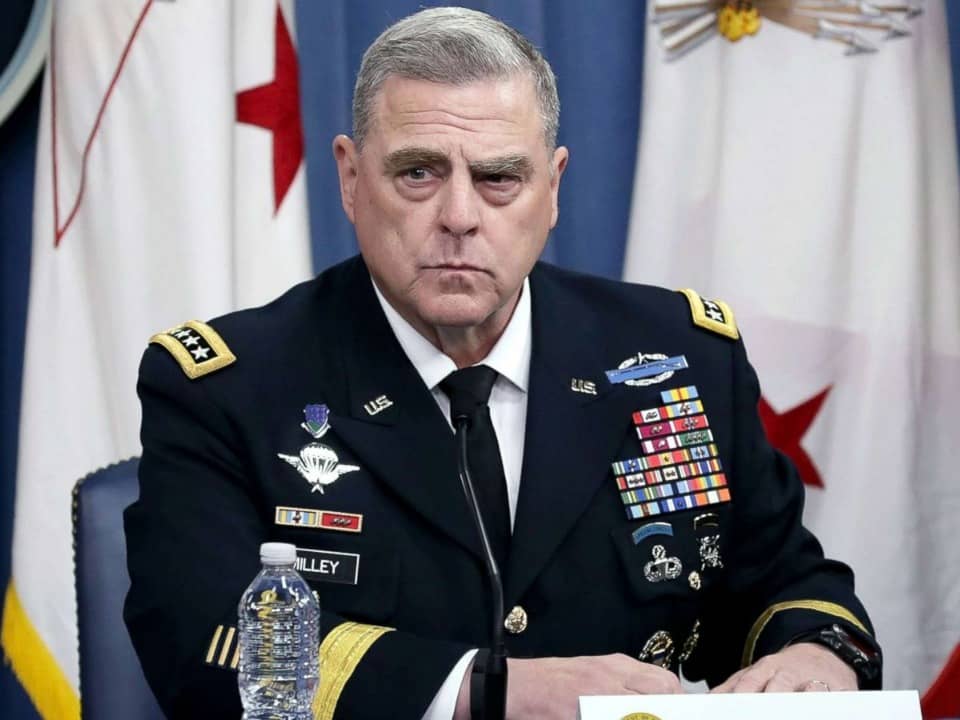
General Mark A. Milley, as Chairman of the Joint Chiefs of Staff from 2019 to 2025, stood at the nerve center of American military power during a period of profound global instability. His tenure oversaw the complex management of great power competition with China and Russia, the chaotic withdrawal from Afghanistan, and persistent threats from rogue states. This article examines Milley's role in shaping contemporary U.S. defense strategy and his direct engagement with the highest levels of global leadership.
The Institutional Weight of the Chair
The Chairman of the Joint Chiefs of Staff is not the commander-in-chief of the military, but rather the principal military advisor to the President, the National Security Council, and the Secretary of Defense. General Milley’s authority was derived from the trust placed in him by multiple presidential administrations and his capacity to synthesize immense operational data into coherent strategic counsel. His office served as the critical bridge between political objectives and military capabilities.
Within the Department of Defense, the Chairman’s influence is substantial but abstract. The role grants access to the President and involves a constant balancing act between advocating for military resources and executing presidential directives. Milley’s background as a Special Forces officer and his experience commanding at the tactical level provided him with a unique perspective that blended operational realism with strategic necessity.
Engagement with Adversaries: The Taiwan Strait and Beyond
Perhaps the most scrutinized aspect of Milley’s tenure was his direct communication with Chinese counterparts. In a 2021 interview with NPR, Milley defended his outreach, stating, The United States and China should not be drifting into a situation that leads to confrontation, a conflict, or an overdrive of tensions that leads to miscalculation.
This stance reflected a commitment to crisis management even as geopolitical tensions escalated over Taiwan and other flashpoints.
These direct lines of communication are standard practice to prevent miscalculation, yet they became politically charged. Critics argued that such dialogue legitimized a repressive regime, while proponents maintained that candid military-to-military contact was essential to prevent accidental conflict. Milley found himself navigating a narrow corridor between deterrence and de-escalation.
- China: Managing military activity in the Taiwan Strait and the militarization of the South China Sea.
- Russia: Deterring aggression leading up to and during the invasion of Ukraine in 2022.
- North Korea: Countering missile threats and nuclear proliferation efforts.
The Afghanistan Withdrawal
In 2021, General Milley was the military’s public face of the withdrawal from Afghanistan. The chaotic scenes from Kabul airport were a stark reminder of the limits of American power. In congressional testimony, Milley acknowledged the failure to predict the speed of the Taliban’s advance, admitting that the collapse was faster than anticipated. He emphasized that the core mission of evacuating U.S. citizens and Afghan allies was ultimately successful, though the optics were devastating.
This event tested the Chairmanship like no other. Milley had to coordinate with a fractured Afghan military and a rapidly evolving political situation in Washington. The image of him standing before maps and briefing the nation humanized the immense logistical and moral weight carried by the military’s highest officer.
The January 6th Capitol Incident
When a mob attacked the U.S. Capitol on January 6, 2021, the role of the military was immediately considered. General Milley worked closely with then-Secretary of Defense Christopher Miller to ensure that the deployment of troops did not violate the principle of civilian control of the military. According to subsequent reports, Milley ensured that the troops were prepared to respond to threats but remained under strict legal constraints to avoid turning the military into an occupying force in the nation’s capital.
This incident highlighted the Chairman's role as a guardian not only of the nation but also of constitutional order. His actions that day reinforced the subordination of the military to civilian authority during a moment of domestic crisis.
Legacy and the Transfer of Authority
Milley retired in September 2025 after a decades-long career. In his final address, he warned of a new era of "persistent conflict" and urged national leaders to rebuild the diplomatic and economic tools necessary to complement military strength. His farewell message was a stark reminder that the military cannot win wars that are not rooted in coherent national strategy.
General Charles Q. Brown Jr. succeeded Milley, inheriting a force in the midst of a modernization push to counter near-peer adversaries. Milley’s legacy is likely to be defined by his management of unpopularity—wars without clear victories and a withdrawal perceived as a defeat. He provided the steady hand required to navigate these treacherous waters, ensuring that the U.S. military remained prepared for the conflicts of the future.
Related Post
Inside the Height of Success: The Unrivaled Career of General Mark Milley

Unveiling the Height of a High-Ranking Officer: General Mark Milley's Stature Revealed


