Halfway Between Two Cities: Finding the Perfect In-Between Location for Work and Life
Halfway Between Two Cities: Finding the Perfect In-Between Location for Work and Life
Modern geography offers a unique problem: we are more connected than ever, yet many find themselves pulled between professional hubs and personal sanctuaries. This article explores the practical, financial, and lifestyle implications of choosing a home located precisely halfway between two cities, examining the concept as a solution for the bi-commuting professional. From calculating true midpoint locations to assessing the viability of this arrangement, we dissect whether living in the middle is a strategic masterstroke or a logistical compromise.
The Allure of the In-Between
The rise of hybrid work models has transformed the traditional commute. What was once a daily, single-destination trek is now often a flexible arrangement that allows individuals to split their time between a primary office and a secondary location, be it a home office or a regional branch. For some, this evolution leads to an intriguing question: why choose between two vibrant centers of activity when you can position yourself equidistantly? The appeal lies in the promise of balance—access to the amenities and opportunities of two distinct urban centers without the daily grind of traversing the full expanse between them.
This strategy is particularly attractive for dual-career couples where each partner is anchored in a different city. It also appeals to digital nomads and consultants who require a stable base from which to service clients across a region. The concept transcends mere convenience; it represents a recalibration of personal geography, placing equal value on professional opportunity and personal preference.
Calculating the Geographic Center
Determining the literal halfway point between two locations is a deceptively complex task, largely due to the curvature of the Earth and the method of measurement. On a flat map, the midpoint can be found by averaging the latitude and longitude coordinates of the origin and destination. However, for precise real-world application, more sophisticated geodesic calculations are required to account for the planet's spherical shape.
Consider the example of New York City and Philadelphia. The straight-line (as the crow flies) midpoint falls somewhere in the rural landscapes of central New Jersey. Driving distance, however, introduces variables like road networks and traffic patterns, shifting the practical midpoint slightly. Digital tools and mapping services are invaluable for this process, offering geodesic calculators that provide the exact coordinates and often suggest the nearest town or suburb to that theoretical center point.
Key Factors in Pinpointing the Halfway Point:
- Transportation Mode: The midpoint for a driver differs from that of a high-speed rail passenger.
- Geographic Reality: Oceans, mountains, and political borders can render a pure geographic midpoint inaccessible or impractical.
- Infrastructure: The presence of an airport, major highways, or rail lines at the midpoint is crucial for viability.
Take the case of San Francisco and Los Angeles. The geographic center lies in the agricultural Central Valley. While not a major metropolis, towns like Paso Robles or Hanford offer a quieter, more affordable existence while remaining within a reasonable driving distance of either coast for a weekend trip or a periodic work visit.
Lifestyle and Practical Considerations
While the mathematical midpoint is a useful starting point, the true measure of a halfway location's success lies in its ability to support a fulfilling lifestyle. This requires a deep dive into the specific offerings of the chosen town or city.
Housing is often the most compelling advantage. Major metropolitan areas typically command exorbitant prices and limited space. A location halfway between two economic hubs frequently offers the square footage and quality of life associated with smaller communities at a fraction of the cost. This allows residents to invest in a genuine home with a yard, rather than a cramped apartment.
The Daily Rhythm of a Midpoint Resident
- The Commute: Assess the realities of travel. Is it a feasible 2-hour drive? A 90-minute train ride? The cost in time and money must be justified by the lifestyle benefits.
- Access to Amenities: Does the location have sufficient grocery stores, healthcare facilities, schools (if applicable), and recreational options for daily life, or does it require regular trips to one of the anchor cities?
- The Social Fabric: Building a community is easier in a stable town than in a transient hub. Consider the existing social and cultural environment.
"People are beginning to realize that quality of life isn't exclusively found in the downtown core of a major financial center," says urban planner and author, Anya Sharma. "They are seeking environments where they can breathe, have space, and still maintain a professional foothold in a dynamic economy. The halfway point is a pragmatic solution for the mobile professional who refuses to sacrifice access for affordability."
Navigating the Challenges
This arrangement is not without its drawbacks. The primary challenge is the loss of spontaneity. Impromptu after-work drinks, last-minute dinner reservations, or attending a midday event become logistically difficult or prohibitively expensive. The lifestyle leans toward planned weekends and structured schedules rather than organic, day-to-day living.
Furthermore, a sense of detachment can arise. You may not feel fully integrated into either city, potentially leading to a feeling of being an outsider in both locations. Professional networks can be harder to cultivate and maintain when you are not physically present in the office on a consistent basis.
Is the Halfway Point for You?
Choosing to live halfway between two cities is a personal decision that hinges on individual priorities and career demands. It is a powerful tool for those who value equilibrium, have flexible work arrangements, and possess a high tolerance for logistical planning. It is less suitable for those who thrive on immediate, in-person interaction and the unstructured nature of a single-city life.
Ultimately, the concept of the halfway point is less about geography and more about intentionality. It represents a conscious choice to design a life that bridges two worlds, leveraging the strengths of each while mitigating their respective weaknesses. For the right person, the perfect location isn't in one city or the other—it's precisely in the space between.
Related Post
Calculate Halfway Between Two Cities: The Definitive Guide to Finding the Exact Middle Point
Halfway Between Two Cities: The Geography of Compromise in Modern Life
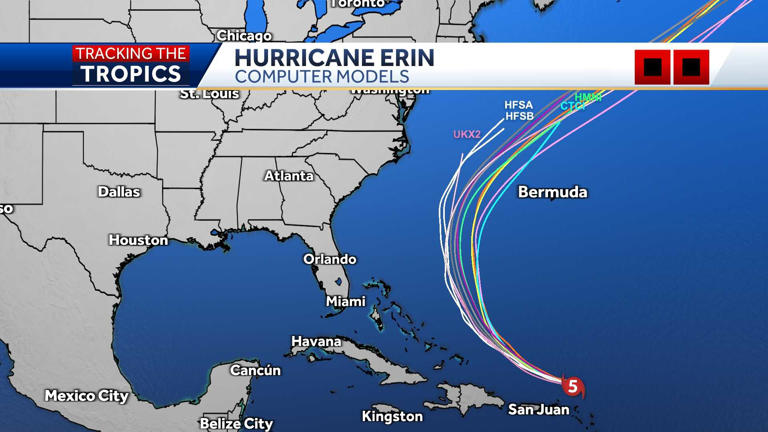
alog Ella be Gone: The Cutting-Edge World of Hurricane Erin Tracking Models And Spaghetti Forecasts

Meet the Secret to Jason Garrett's Success: Meet Stephanie McManus, the Woman Behind the Coach