Hans Albert Einstein: The Quiet Force Behind Modern Hydraulics and the Legacy of a Reluctant Genius
Hans Albert Einstein: The Quiet Force Behind Modern Hydraulics and the Legacy of a Reluctant Genius
The son of a household-name physicist, Hans Albert Einstein chose the obscurity of applied mathematics over theoretical fame. As a pioneering hydraulic engineer, he fundamentally reshaped our understanding of sediment transport and river dynamics. His quiet, rigorous work provided the bedrock for modern civil engineering projects worldwide, a legacy far removed from the spotlight of his famous father.
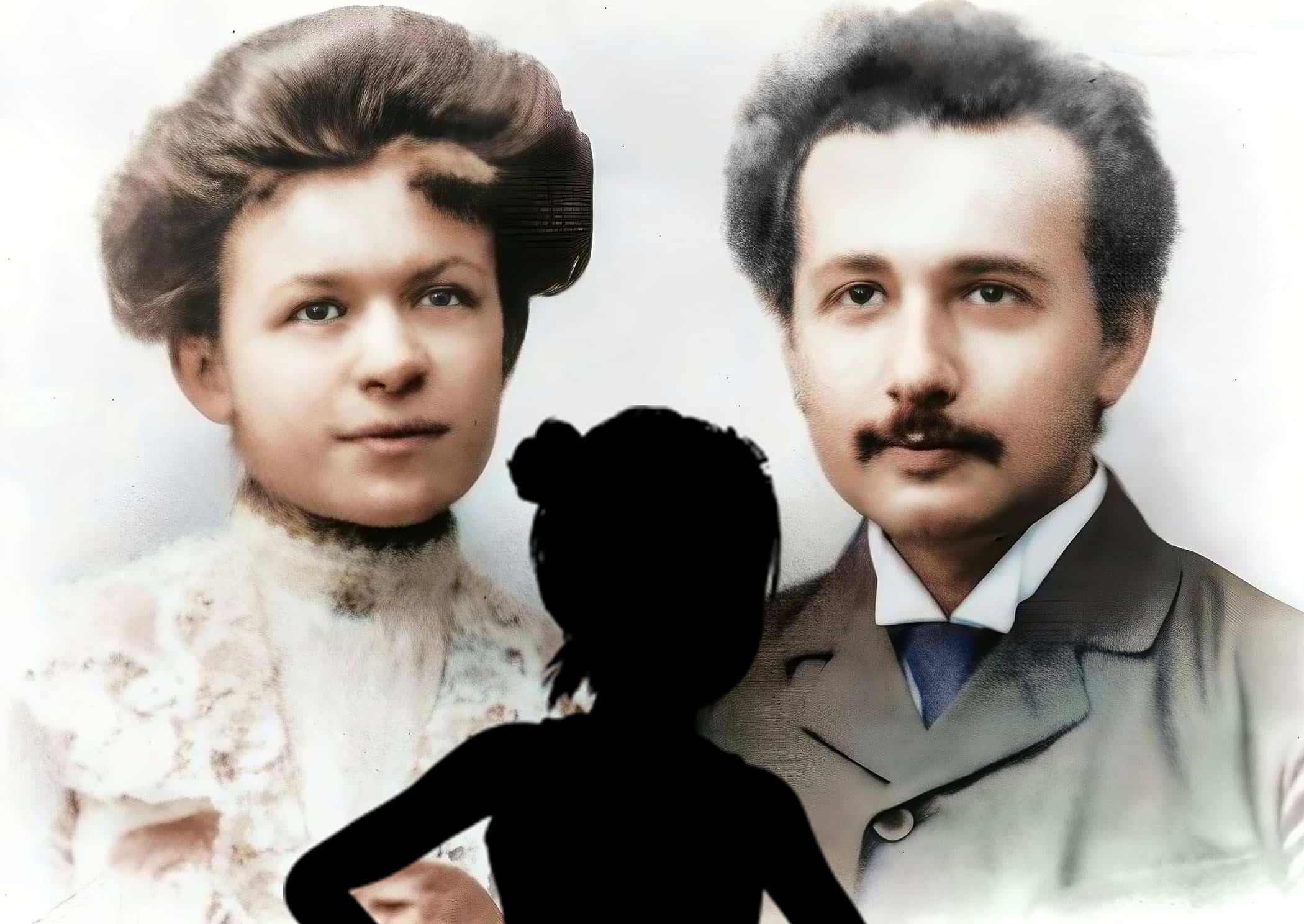
Hans Albert Einstein, born in 1904 in Bern, Switzerland, was the only child of Albert Einstein and his first wife, Mileva Marić. While popular imagination often fixates on his father’s revolutionary theories, Hans Albert forged his own formidable path. He became the preeminent American hydraulic engineer of the 20th century, a meticulous scientist who transformed a chaotic natural force into a quantifiable discipline. His career, spent primarily at the University of California, Berkeley, was defined by an unwavering commitment to empirical data and practical solutions.
Unlike his father, who battled philosophical questions about the nature of the universe, Hans Albert grappled with the tangible physics of water and sediment. His groundbreaking work in sedimentation and river hydraulics solved critical engineering problems that plagued dam construction and river management for decades. He possessed an uncanny ability to visualize complex flow patterns and translate them into elegant mathematical models. This practical genius earned him widespread respect, even if his name remains unfamiliar to the general public.
His influence is not confined to academic journals; it is embedded in the physical landscape. Dams, bridges, and irrigation systems across the American West stand as testaments to his analytical prowess. He did not merely improve existing methods; he created entirely new frameworks for understanding how water interacts with earth. The quiet murmur of a controlled river today is, in part, a tribute to his lifelong intellectual pursuit.
The path to his expertise was neither linear nor easy. Hans Albert’s early life was marked by the displacement and turmoil of Europe in the 1930s. As the political climate in Germany darkened under the Nazi regime, the Jewish Einstein family faced increasing danger. He severed his academic post at the prestigious Technical University of Berlin and accepted a position at the University of Iowa in 1938. This relocation proved to be a pivotal career move, thrusting him into the center of American hydraulic research.
His transition from a European theoretical background to an American applied focus was profound. In Iowa, he had the intellectual freedom and resources to conduct experiments that were previously unimaginable. He established a revolutionary laboratory where he could physically model sediment flow in flumes. This hands-on approach became the cornerstone of his methodology. He believed that observable reality must always anchor theoretical calculation.
Hans Albert’s major contribution to the field was his work on sediment transport, specifically the phenomenon of "bed load." Before his research, engineers relied on imprecise and often inaccurate empirical formulas. He meticulously documented how grains of sand and gravel move along the bottom of a watercourse. He distinguished between rolling, sliding, and saltating (hopping) particles, creating a dynamic picture of riverbeds in motion. This work culminated in what is now known as the Einstein-Brown formula, a cornerstone of modern sediment transport theory.
His findings were not derived from abstract thought experiments but from thousands of hours of observation and measurement. He treated the riverbed as a dynamic system, constantly in flux. As he once noted in his characteristic understatement, the goal was to move from descriptive approximations to a more fundamental understanding. He sought the underlying physical laws that governed this chaotic natural process.
Beyond his formulas, Hans Albert was a dedicated educator who shaped generations of engineers. At Berkeley, he built a world-renowned hydraulics laboratory that became a pilgrimage site for professionals and students alike. His teaching style was demanding but deeply instructive. He insisted on a rigorous foundation in mathematics and physics before any engineering application could be considered.
His pedagogical approach emphasized clarity and logic. He expected his students to defend every variable and question every assumption. This method produced engineers who were not just skilled technicians but thoughtful problem-solvers. They carried his philosophy into dam designs, flood control projects, and environmental restoration efforts across the globe. His intellectual DNA persists in the infrastructure of the modern world.
Hans Albert’s personal life reflected the same quiet intensity he brought to his work. He was a man of few words, preferring the company of a good book or a data set to social gatherings. His marriage to Frieda Knecht produced two daughters, Helen and Beverly, but his professional pursuits often consumed his personal time. He maintained a strict separation between his family life and his relentless intellectual drive.
His awards and honors, while significant, never seemed to inflate his ego. He received the prestigious Albert Medal in 1958 and the John Fritz Medal in 1960, yet he remained largely indifferent to public acclaim. His satisfaction came from solving a difficult equation or validating a physical model. He viewed his profession as a solemn responsibility, one that required absolute integrity and precision.
The legacy of Hans Albert Einstein is a testament to the power of applied science. He demonstrated that theoretical brilliance could be harnessed for tangible, beneficial ends. His work allows us to manage water resources with a sophistication his predecessors could not have imagined. He turned the destructive potential of floods into a manageable variable in an engineering equation.
Today, as climate change intensifies weather patterns and raises sea levels, his contributions are more relevant than ever. Modern engineers designing resilient coastal infrastructure or restoring eroded riverbanks rely on the principles he established. They work within the conceptual framework he helped build. His story is a powerful reminder that behind every great technological achievement is often a figure of quiet, relentless dedication.
In a world that often celebrates the loudest voices, Hans Albert Einstein stands as a monument to the power of the analytical mind. He chose the lab over the lecture hall, data over drama, and complex reality over simple theory. His life’s work, though invisible to most, is a fundamental pillar of the civilized world we inhabit. He proved that genius can wear a quiet, unassuming face and still change the physical world in profound ways.
Related Post

Hans Albert Einstein’s Son: A Quiet Genius Who Defied the Shadow of Genius
Hans Albert Einstein: The Quiet Architect of Modern Hydraulics


