How Google Translate Revolutionizes Global Communication: A Deep Dive into Technology and Impact
How Google Translate Revolutionizes Global Communication: A Deep Dive into Technology and Impact
In an era defined by digital interconnectedness, the barrier of language has been significantly diminished by advanced translation technologies. Google Translate, launched in 2006, has emerged as a pioneering force in this domain, utilizing sophisticated algorithms and machine learning to bridge linguistic gaps across the globe. This article explores the intricate workings, evolution, and profound societal impact of this ubiquitous tool, offering insights into how it has reshaped cross-cultural communication and information access.
Since its inception, Google Translate has evolved from a rudimentary text-based service into a complex ecosystem encompassing voice translation, image scanning, and real-time conversation features. Its development reflects a broader shift in artificial intelligence, moving from rule-based systems to neural machine translation. Understanding this journey requires examining the core technologies, the strategic shifts in product development, and the tangible effects on users worldwide, from travelers navigating foreign streets to businesses expanding into new markets.
The Genesis and Evolution of Machine Translation
The concept of automated translation is not new, with research dating back to the 1950s. Early systems were largely rule-based, relying on extensive dictionaries and grammatical rules defined by linguists. These "rule-based" or "statistical" translation methods, while groundbreaking for their time, often produced translations that were stilted and inaccurate, struggling with context, idioms, and nuances. The fundamental challenge lay in capturing the fluidity and complexity of human language.
Google’s initial foray into translation leveraged statistical models. It analyzed massive datasets of existing translated texts, such as UN documents and EU parliamentary proceedings, to identify patterns and probabilities. The system would deconstruct a sentence, translate its components, and then reconstruct it in the target language based on learned correlations. While this approach improved speed and scale, it still lacked true understanding.
The pivotal transformation arrived with the advent of Neural Machine Translation (NMT).
Launched in November 2016, Google’s NMT represented a paradigm shift. Instead of dissecting sentences word-by-word, NMT uses artificial neural networks modeled loosely on the human brain. These networks learn to recognize patterns in entire sentences and contexts, allowing for more fluent and accurate translations that better capture the meaning and tone of the original text. As Google Translate team lead, Isaac Caswell, noted in a 2016 interview, "Neural networks allow the system to learn from data in a way that mimics how humans learn, leading to more natural-sounding translations."
Core Technologies Powering the Platform
The efficacy of Google Translate hinges on several interconnected technological pillars. These work in concert to process, translate, and deliver language conversion with remarkable speed and accuracy.
- Neural Machine Translation (NMT): As described, this is the engine of modern Google Translate. It processes entire sentences or phrases, considering context to predict the most likely translation.
- Tensor Processing Units (TPUs): Google’s custom-developed ASICs are crucial for handling the immense computational demands of NMT, enabling rapid translation even on mobile devices.
- Zero-Shot Translation: A groundbreaking feature where the system can translate between language pairs it has never explicitly been trained on, by using an intermediate "interlingua" representation learned from other language pairs.
- Offline Translation: Leveraging on-device models, users can download language packs for translation without an internet connection, a vital feature for global travelers.
Consider the process of translating an image using the Google Translate app. A user points their camera at a street sign or menu. The app detects text within the image using Optical Character Recognition (OCR), isolates the text region, and then applies its NMT engine to translate the words. The translated text is then overlaid back onto the image in real-time, creating an augmented reality experience that makes foreign environments more navigable. This integration of computer vision and NLP exemplifies the platform’s multifaceted approach.
Impact on Society and Global Interaction
The influence of Google Translate extends far beyond individual convenience. It has democratized access to information and fostered unprecedented cross-cultural interaction on a global scale. Its impact can be observed in several key areas:
- Education and Research: Students and researchers can access scholarly articles, scientific papers, and educational resources in languages other than their native tongue, breaking down barriers to knowledge. A researcher in Brazil, for instance, can read a medical study published in Japanese.
- Business and Commerce: Small businesses can communicate with international suppliers and customers, and travelers can navigate foreign markets, read reviews, and understand basic instructions, fueling global economic participation.
- Social Connection: The tool facilitates communication between people from different linguistic backgrounds, enabling friendships, romantic relationships, and family connections that would otherwise be impossible.
- Access to Services: In regions with limited multilingual infrastructure, Google Translate provides crucial access to government information, healthcare guidance, and emergency services for non-native speakers.
However, this utility is not without limitations and concerns. Accuracy remains a challenge, particularly for languages with less training data or for complex, nuanced text. The inherent biases present in the vast datasets used for training can also be reflected in translations, potentially perpetuating stereotypes or misrepresenting certain cultures. Furthermore, the widespread availability of real-time translation raises questions about the future of language learning and the potential erosion of linguistic diversity, as individuals may rely solely on technology rather than developing human language skills.
The Road Ahead: Integration and the Future of Communication
Google Translate continues to evolve, integrating its capabilities deeply into the Google ecosystem. Features within Gmail, Docs, and Search provide seamless, context-aware translations. The introduction of the "Interpreter Mode" in the Google app facilitates real-time, two-way spoken conversations, proving invaluable in diplomatic or travel scenarios. The focus is shifting towards more natural, conversational fluency and reducing latency in real-time interactions.
Looking forward, the trajectory points towards even deeper integration with emerging technologies. Imagine augmented reality glasses that provide instant, subtle subtitles in your field of view during a conversation, or AI-powered assistants that can not only translate but also adapt their communication style based on cultural context. The goal, as the technology advances, is not merely to translate words, but to truly foster understanding and connection across the human divide. The journey from statistical models to neural networks is a testament to the rapid progress in AI, and Google Translate stands as a prime example of technology’s power to dismantle barriers and connect the world in ways previously confined to science fiction.
Related Post

UNVEILING PAKISTAN'S TOP DAILY NEWSPAPERS: A RANKING OF THE COUNTRY'S MOST INFLUENTIAL DAILY PUBLICATIONS
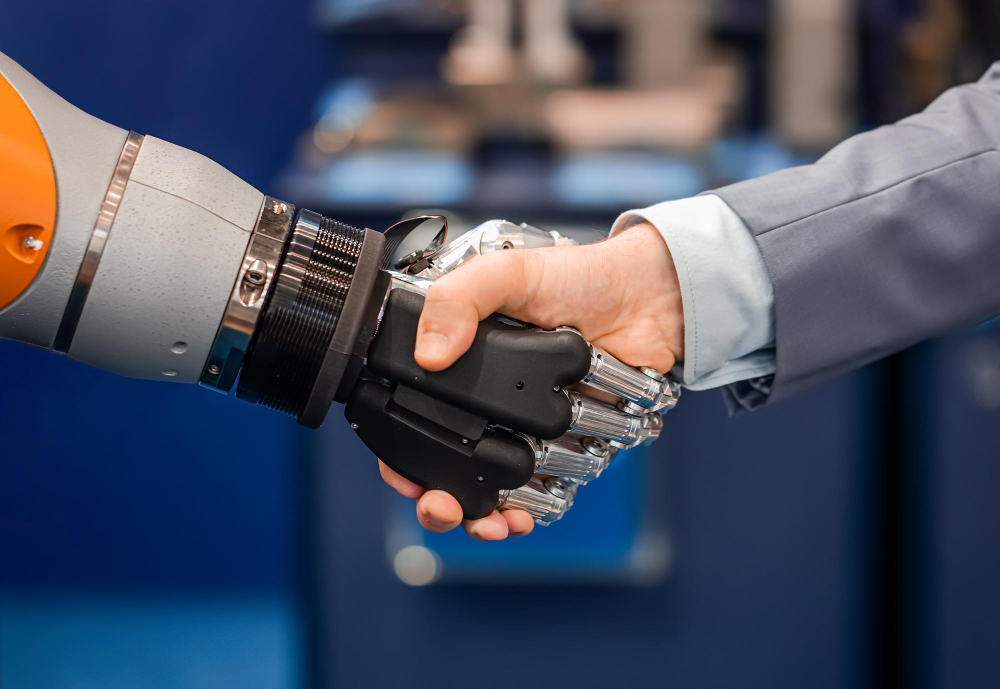
Igrupo Revolutionizes Business Operations: Unlocking Efficiency and Growth

"Uncovering the Secrets of Lost Souls: A Deep Dive into Beacon News Obituaries"
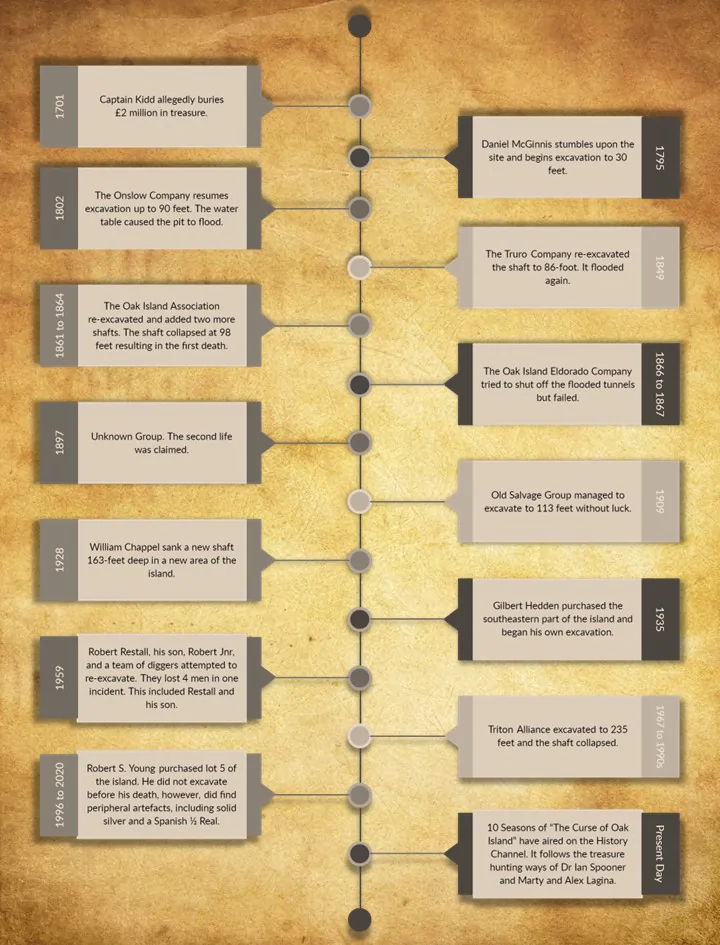
OBSESSION REWARDED: The Fascinating Story of Oak Island Treasure Found in 2024