Hugo Van Lawick: The Cinematic Architect of Africa's Wild Soul
Hugo Van Lawick: The Cinematic Architect of Africa's Wild Soul
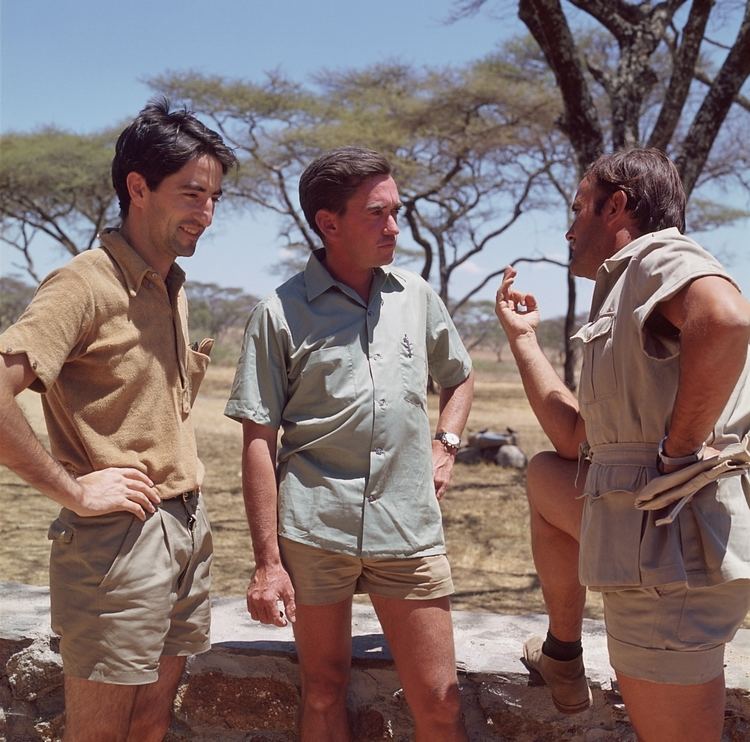
His lens captured the raw heart of Africa, transforming wildlife documentaries into profound meditations on existence. Hugo Van Lawick, a man whose name became synonymous with the Serengeti, did not merely film animals; he documented the intricate narratives of survival and beauty that pulsed across the savanna. This is the story of a man who traded the comfort of civilization for the dust and drama of the wild, becoming a cinematic legend in the process.
Born in 1937 in the Dutch East Indies, now Indonesia, Hugo's early life was a tapestry of colonialism and upheaval. The winds of change blew his family to Europe, eventually settling in the Netherlands. Yet, the tropics had etched their mark on the young boy, and the confined streets of Europe could not contain the burgeoning fascination with the natural world. His path was set when, as a student, he purchased a second-hand movie camera. The decision to forgo a conventional career for a life of cinematic pursuit was not just a choice; it was a calling. He arrived in Tanganyika (modern-day Tanzania) in the early 1960s, a place where the line between observer and participant was destined to blur.
It was here, in the embrace of the African bush, that Van Lawick’s genius found its muse. He was not simply an employee of the renowned filmmaker and photographer Jane Goodall; he was her partner in both life and craft. Their union created a synergy that revolutionized the field. While Goodall was unraveling the behavioral secrets of chimpanzees, Van Lawick was there, translating her scientific triumphs into visual poetry. He developed a style that was deceptively simple yet immensely powerful. He favored natural light, allowing the sun to sculpt the landscape and its inhabitants. His camera rarely intruded; instead, it observed, becoming an invisible fixture in the environment.
Van Lawick’s work transcended the typical nature documentary of his era. He did not rely on artificial sets or staged dramas. His genius lay in his ability to find the epic within the infinitesimal. A single drop of water clinging to a leaf after a rainstorm became a universe. The meticulous grooming ritual between two chimpanzees was a ballet of social grace. He understood that drama did not need to be manufactured; it was inherent in the struggle for life itself.
His approach was methodical and deeply respectful. He spent years, sometimes decades, earning the trust of his subjects. He learned their languages not through words but through presence and patience. This profound understanding is evident in his most celebrated work. **"The Year of the Wildebeest"** (1974), a masterpiece co-directed with Cyril Byrne, captured the Great Migration not as a spectacle, but as a perilous odyssey of millions. The film conveyed a sense of scale and urgency that was unprecedented, placing the viewer directly within the thundering hooves and crocodile-infested rivers.
Van Lawick’s partnership with Goodall yielded a string of iconic films that redefined the genre. **"Miss Goodall and the Wild Chimpanzees"** (1965) was a groundbreaking revelation. It offered the world an intimate glimpse into a society of tool-using apes, challenging the very definition of humanity. His subsequent films, such as **"People of the Forest"** (1970) and **"Gombe: The Magic Forest"** (1990), continued this intimacy, charting the lives of the same chimpanzee families over generations. He was not just filming animals; he was chronicling a society, complete with its joys, conflicts, and tragedies. His voiceover work, often calm and poetic, served as a bridge between the animal kingdom and the human viewer, imbuing the creatures with a sense of personality and emotion that was revolutionary.
What set Van Lawick apart was his unique fusion of artist and anthropologist. He possessed the technical mastery of a seasoned cinematographer and the emotional intelligence of a storyteller. He knew how to wait. Hours would pass in the sweltering heat, the camera mounted silently on a tripod, until the perfect moment presented itself. This patience is a recurring theme in his philosophy. He understood that true understanding cannot be rushed. In a rare interview, he once reflected on the solitude of his work, stating, **"In the bush, you are alone with your thoughts and the rhythm of the land. It is a humbling experience, and it teaches you patience like nothing else."**
His influence extended far beyond the silver screen. He was a pioneer in the use of lightweight, portable film equipment, which allowed for greater mobility and a more intimate perspective. This technical innovation paved the way for the modern nature documentary, influencing generations of filmmakers who followed in his footsteps. He proved that the natural world was not merely a backdrop for human drama, but a stage for its own complex, compelling narratives.
Hugo Van Lawick’s legacy is not measured in awards, though he garnered many, including an Academy Award for **"The Serengeti Shall Not Die"** (1971). His true legacy is etched into the collective consciousness of the world. He did for wildlife filmmaking what Vermeer did for painting: he captured the extraordinary beauty of the ordinary moment. His films are time capsules, preserving a vision of Africa that is both majestic and fragile. They serve as a powerful reminder of a world that, while still wild, is increasingly under threat. Van Lawick did not just film Africa; he gave it a voice, an image, and an enduring soul that continues to inspire awe and reverence long after his passing.
Related Post
Unraveling the Mystery of Hugo Van Lawick's Cause of Death: A Life Cut Short

Unveiling the Success Story of Tony Balkissoon: Laura Jarrett’s Resilient Husband and Architect of a Multi-Million-Pound Media Empire

The Billboard Duo: How Charlie Puth and Meghan Trainor Are Redefining Collaborative Artistry
Glenn Beck Reflects on Fatherhood as a Pillar of American Strength, Raising Four Children with Purpose


