Hunger Games Districts: The Complete Guide To Panem’s 12 Territories And What They Reveal About Society
Hunger Games Districts: The Complete Guide To Panem’s 12 Territories And What They Reveal About Society
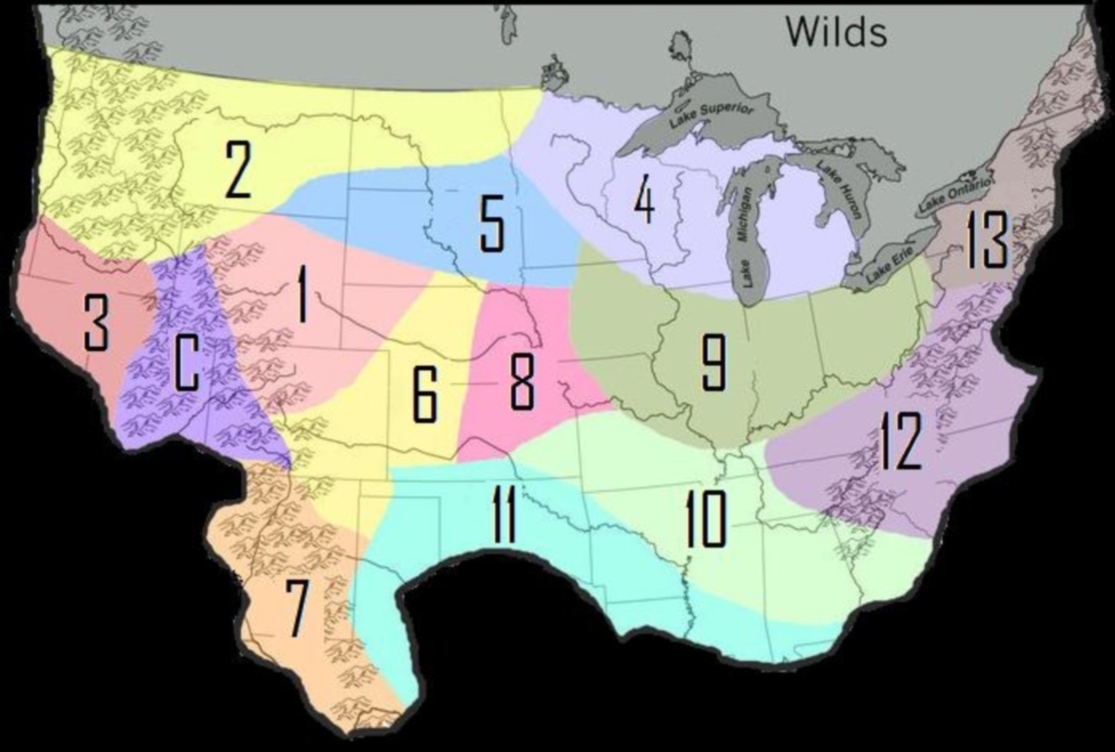
The nation of Panem is organized into twelve distinct districts, each specializing in a specific industry that feeds the Capitol’s excess while suppressing local autonomy. From the coal mines of District 12 to the lush forests of District 7, these territories form the economic and emotional spine of Suzanne Collins’s dystopian world. This article explores the unique role, resources, and realities of each district, offering a clear breakdown of how the Hunger Games map reflects a structured system of control and inequality.
Panem’s geography is not random; it is engineered to extract wealth and maintain power. Districts are deliberately isolated from one another, their populations kept ignorant of conditions beyond their borders to prevent unified resistance.
What Are The Hunger Games Districts And Why Do They Matter
The Hunger Games districts are more than backdrops for the Capitol’s brutal entertainment; they are instruments of political and economic subjugation. Established after the Dark Days, the Capitol imposed the Treaty of Treason to ensure no future rebellion could threaten its rule. Each district was assigned a singular productive function, creating a rigid caste system that persists for generations.
The reaping, the annual selection of tributes, serves as a constant reminder of this imbalance. Young lives are offered as penance for a past rebellion and as a tool to remind the districts of their expendability. Understanding these districts requires examining their industries, infrastructures, and the psychological weight they carry.
District 12: The Face Of Poverty And Resilience
Located in the coal-rich region that would be present-day Appalachia, District 12 is the poorest and most exploited of the thirteen original districts. Its primary industry is coal mining, a dangerous and physically taxing labor that sustains the Capitol’s energy needs. The Victor’s Village, reserved for past winners, stands in stark contrast to the dilapidated Seam where Katniss Everdeen and her family struggle to survive.
Life in District 12 is defined by scarcity and sacrifice. The population is divided between the merchant class in town and the miners in the Seam, with little social mobility. The district’s quiet desperation is punctuated only by the annual terror of the reaping and the numbing routine of underground labor.
District 11: The Breadbasket And The Cost Of Labor
District 11 is Panem’s agricultural powerhouse, responsible for feeding the entire nation. Its vast orchards and fields are tended by a largely African-American workforce, reflecting a dark echo of historical American labor systems. The district is known for its abundance of fruits and grains, yet its inhabitants are among the hungriest, rationed only the crumbs of their massive yield.
The sheer scale of District 11 highlights the grotesque inequality of Panem. The workers are essential, yet they live in poverty, policed by Peacekeepers and surrounded by electric fences. The famous incident of Rue’s death underscores the volatility that simmers beneath the surface of this fertile land.
Specialized Districts: Craft, Industry, And Control
Beyond the poorest districts, Panem’s economy relies on specialized production. Each district has been carved out to master a single craft, ensuring the Capitol’s access to luxury goods and necessary materials without relying on any one district for too long.
- District 1: Luxury confectionery and skilled craftspeople who create high-end goods for the Capitol elite.
- District 2: The masonry and military powerhouse, responsible for the Capitol’s stone structures and the training of Peacekeepers.
- District 3: Technology and electronics, the hub for innovation that maintains the Capitol’s surveillance and control systems.
- District 4: Fisheries and marine biology, providing seafood for the Capitol and training the district’s notable career tributes.
- District 5: Power generation, ensuring the lights stay on in the Capitol and the districts alike.
- District 6: Transportation and railways, managing the network that connects Panem but rarely serves the populace.
- District 7: Lumber and forestry, supplying timber while placing its workers in constant danger from the Capitol’s airships.
- District 8: Textiles and factories, producing the Capitol’s clothing under harsh conditions, often using child labor.
- District 9: Grain processing, a vital but unrewarded role in the district chain.
- District 10: Livestock and cattle ranching, though rarely depicted, it serves the Capitol’s demand for meat.
- District 11: Agriculture, the primary grower of fruits and vegetables for the entire nation.
- District 12: Mining, the source of coal that heats and powers the Capitol’s world.
The Capitol’s Strategy: Division Through Specialization
The Capitol’s design ensures that no district can easily collaborate. By limiting knowledge and resources, they prevent a comprehensive understanding of the nation’s infrastructure. A citizen in District 3 might understand the grid but have no idea how the mines of District 12 function.
This fragmentation is a deliberate tactic. It forces districts to compete for the Capitol’s favor and justifies the heavy-handed enforcement of the Peacekeepers. The Hunger Games themselves exacerbate this division, turning districts against one another in a televised bloodsport that distracts from systemic injustice.
Memoirs And Testimonies From The Fringes
While the rules of the Games are clear, the human element introduces variance. Some districts develop distinct cultures of resistance and memory.
"We know the Capitol is Capitol. We know District 12 is District 12. But sometimes, in the kitchen at night, my mother would talk about the things she remembered from before. Stories. Songs. A different way of looking at the sky."
This quote, though fictional, encapsulates the oral history that persists in the poorer districts. It contrasts sharply with the manufactured nostalgia of the Capitol, where aesthetics are chosen for spectacle rather than authenticity.
Geography And Resource Distribution
The placement of districts suggests a deliberate strategy of balance and control. The wealthier districts are often geographically closer to the Capitol, symbolizing their proximity to power. District 1 and 2, known for their loyalty and martial prowess, are nestled near the heart of Panem.
Conversely, the outlying districts are kept at a distance, making rebellion logistically difficult. District 13, though destroyed and rumored to exist, represents the ultimate threat: a district that refused the Capitol’s terms and survived through isolation. The geography of Panem is a map of control, dictating not just trade but the flow of information and freedom.
The Symbolism Of Landscapes
The environment of each district shapes the temperament of its people. The lush, enclosed forests of District 7 foster a sense of hidden refuge, while the open, harsh plains of District 11 expose workers to the constant gaze of authority. These landscapes are not just settings; they are active forces in the lives of the citizens, influencing their worldview and their capacity to imagine a different future.
The stark contrast between the verdant districts and the grey, industrial zones of the poorer ones is a visual representation of the Capitol’s favoritism and greed. Understanding these environmental cues is key to understanding the motivations behind the districts’ actions in the arena and beyond.
Legacy And Rebellion
The district system, while effective for control, planted the seeds of its own destruction. The inequities it fostered created a deep well of resentment, particularly in districts like 11 and 12, where suffering was most acute. The legacy of the districts is one of trauma, but also of solidarity, as seen in the uprisings that followed the 74th Hunger Games.
The districts became symbols of a collective struggle. Their identities, once imposed by the Capitol, were reclaimed by the people as badges of honor and resistance. The destruction of District 13 and the subsequent rebellion demonstrate that even the most specialized function cannot withstand the human spirit’s desire for freedom.
Related Post