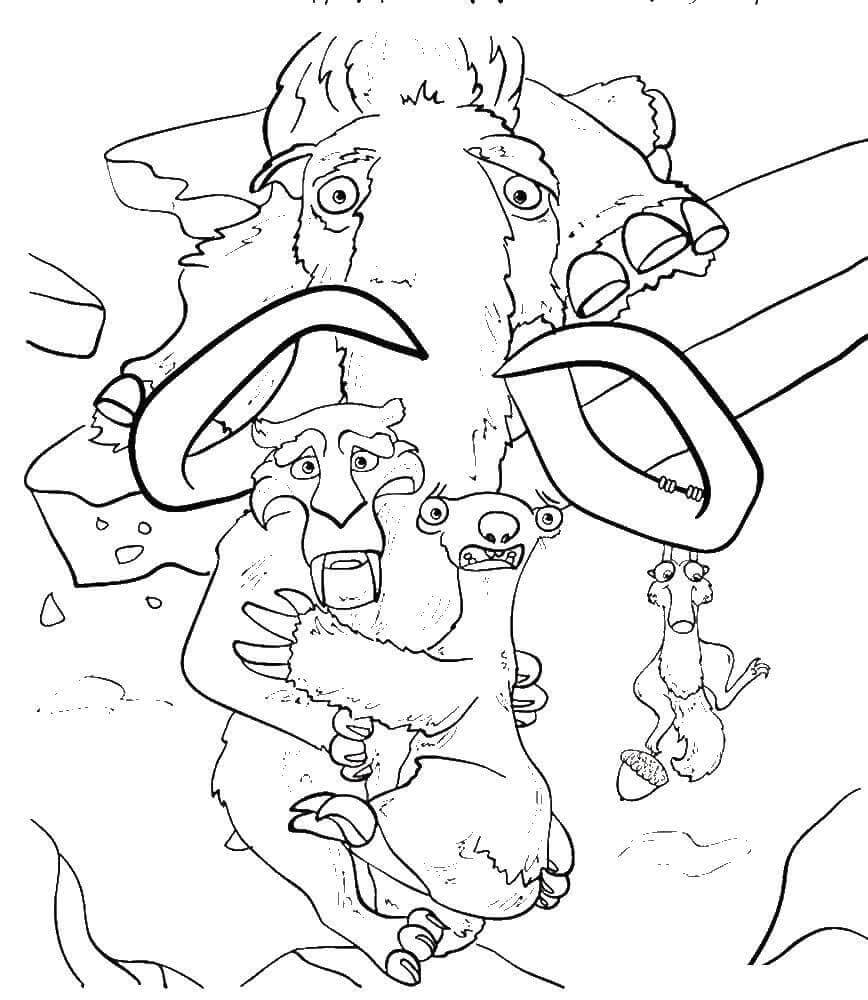
Ice Age Characters: How Sid, Manny, and Diego Drive Scientific Discovery and Cultural Reflection
Ice Age Characters: How Sid, Manny, and Diego Drive Scientific Discovery and Cultural Reflection
The Ice Age animated franchise leverages beloved prehistoric mammals to explore themes of survival, community, and adaptation. Characters such as Manny the mammoth, Sid the sloth, and Diego the saber-toothed tiger serve as narrative vessels for examining complex emotional landscapes and social dynamics. This article analyzes how these characters translate scientific concepts into accessible storytelling while reflecting evolving cultural attitudes toward collaboration and difference.
The franchise, spanning multiple films and ancillary media, presents a stylized version of the Pleistocene epoch. Within this framework, the interactions between species historically thought of as adversaries become a platform for discussing coexistence. The following sections detail the construction of key characters and the underlying messages embedded in their adventures.
The Construction of Manny: Leadership and Burden
Manny, the woolly mammoth, functions as the archetypal reluctant leader. His character arc consistently revolves around grief, responsibility, and the eventual acceptance of found family. He represents the weight of experience and the difficulty of moving forward after loss.
* **Emotional Stoicism:** Manny frequently exhibits a gruff exterior, masking deep sorrow. This aligns with a traditional view of masculinity prevalent in the initial film, where emotional expression is seen as a weakness.
* **Protective Instinct:** His primary motivation is the safety of his herd, a concept that evolves from protecting his biological family in the first movie to safeguarding the wider group in later installments.
* **Wisdom vs. Rigidity:** As the oldest member, Manny often relies on historical precedent. However, the narrative frequently challenges his rigid worldview, forcing him to adapt to the unconventional solutions offered by the younger members.
In one poignant sequence, Manny struggles with the memory of a past tragedy that cost him his family. This storyline allows the franchise to touch on the concept of survivor's guilt without overwhelming the target audience. His eventual reconciliation with the past demonstrates a psychological journey from isolation to integration.
Sid the Sloth: Comic Relief and Unexpected Competence
Sid, the ground sloth, provides much of the franchise's physical comedy and chaotic energy. Initially presented as an abrasive nuisance, his character undergoes significant development, revealing a surprising depth of empathy and moral courage.
* **The Outcast Turned Caregaker:** Sid’s defining narrative function shifts from accidental disruptor to dedicated guardian. In the second film, he takes on the role of a herd member, showcasing a nurturing side that contrasts with his mischievous persona.
* **Instinctual Morality:** Sid often acts on instinct rather than logic, which leads to humorous scenarios but also allows him to make decisions based on pure, unfiltered kindness.
* **Breaking Stereotypes:** By casting a slow-moving, herbivorous creature as the emotional center of the group, the subverts expectations of what a hero looks like.
One of the most enduring aspects of Sid's character is his interaction with the dino-birds in the third film. His attempts to parent them highlight his capacity for unconditional love, reinforcing the theme that family is defined by action, not biology.
Diego the Saber-Toothed Tiger: The Villain Turned Guardian
Diego the saber-toothed tiger introduces the concept of the predator into the herd dynamic. His evolution from a solitary hunter to a loyal friend is one of the most compelling arcs in the series, challenging the audience's perception of innate nature.
* **The Predator’s Dilemma:** Diego embodies the conflict between nature and nurture. He is biologically wired to hunt, yet he develops a profound sense of loyalty to the herd he once sought to exploit.
* **Crisis of Identity:** In the first film, Diego struggles with his identity after failing to ambush the herd. This moment of vulnerability is crucial, as it humanizes him and sets the stage for his redemption.
* **Silent Strength:** Often, Diego communicates more through actions than words. His formidable presence serves as a security blanket for the group, providing a sense of security that allows the others to thrive.
Diego’s journey suggests that change is possible, regardless of one's origins or perceived limitations. His partnership with Sid, in particular, bridges the gap between the fast-paced world of the predator and the slower, more deliberate world of the herbivores.
Scrat: The Relentless Pursuit of Desire
Although not a member of the main herd, Scrat, the saber-toothed squirrel, is arguably the most iconic character in the franchise. His sole purpose is the pursuit of his acorn, a goal that drives the plot across the timeline.
* **The Unwitting Catalyst:** Scrat’s actions inadvertently trigger major geological and climatic events. His pursuit causes continental drift, volcanic eruptions, and the formation of ice dams, illustrating the butterfly effect.
* **Comedic Minimalism:** Unlike the other characters, Scrat has minimal dialogue. His expressions and physical comedy convey his frustration, determination, and occasional triumph.
* **A Force of Nature:** Scrat functions as a metaphor for obsession. He is a one-dimensional character driven by a single instinct, yet his persistence makes him a heroic figure in his own right.
Scrat serves as a narrative device that connects the films visually and thematically. His acorn is a symbol of desire, a simple want that has universe-altering consequences.
Scientific Accuracy and Creative License
While the characters are engaging, it is necessary to address the gap between the animation and scientific reality. The Ice Age films take significant liberties for the sake of entertainment, blending species that would not have coexisted and exaggerating behaviors for comedic effect.
* **Timeline Compression:** The movies compress millions of years of evolution into a linear story. In reality, mammoths, saber-toothed tigers, and giant sloths existed in different time periods.
* **Behavioral Anthropomorphism:** The characters display complex human emotions and societal structures that likely did not exist in prehistoric animals to that degree.
* **The Herd Concept:** The idea of a multi-species "herd" traveling together is a creative choice that simplifies the complex ecosystems of the Ice Age.
However, the franchise succeeds in sparking interest in paleontology. Many children enter the world of science through the lens of these cartoon animals, asking questions about real mammoths and saber-toothed cats.
Cultural Impact and Enduring Legacy
The cultural footprint of these characters extends far beyond the box office. They have become symbols of resilience and the importance of found family. In a world that often feels fragmented, the message of unity presented by Manny, Sid, and Diego resonates deeply.
The franchise has also been a platform for addressing contemporary issues. Environmental concerns, the fear of the "other," and the struggle for community are all themes that remain relevant. The characters serve as mirrors, reflecting our own struggles with acceptance and change.
As the series continues to evolve, the core appeal remains the same: watching flawed characters overcome their differences to achieve a common goal. In a landscape of fleeting trends, the enduring popularity of these prehistoric personalities is a testament to the power of well-crafted storytelling.
Related Post
Ice Age Characters: How Sid, Manny, and Diego Redefined Family, Friendship, and Survival on Screen
Ice Age Heroes: The Unlikely Allies of the Prehistoric Era
The Frosty Fellowship: A Complete List of Ice Age Characters

Ice Age Characters Meet The Coolest Crew In Animation: A Legendary Crossover!