In What Time Zone Is Iowa: Sorting Out The Confusion Between Central And Daylight Saving Time
In What Time Zone Is Iowa: Sorting Out The Confusion Between Central And Daylight Saving Time
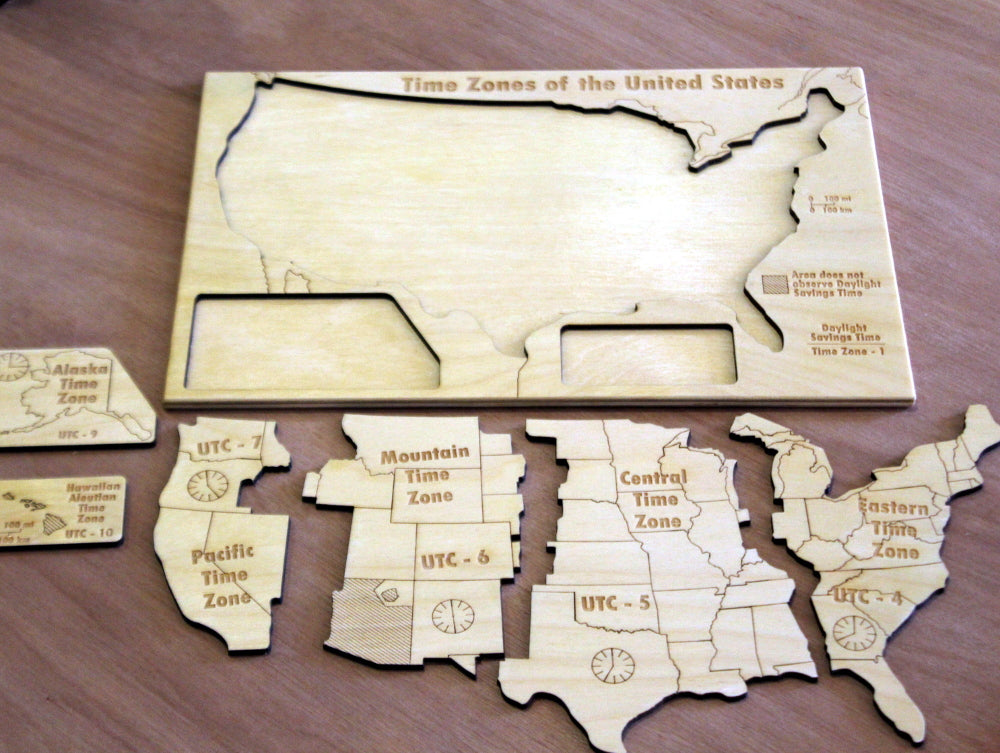
Iowa exists entirely within the Central Time Zone, observing Central Standard Time in winter and Central Daylight Time in summer. This geographic uniformity simplifies timekeeping for residents and businesses, yet the biannual shift between these standards often generates confusion. This article clarifies the current time designation, the mechanics of daylight saving time, and the practical implications for coordination across the state.
The temporal landscape of the United States is divided into four primary zones, with Iowa situated firmly in the Central Time Zone. This designation means that, for a significant portion of the year, the state is six hours behind Coordinated Universal Time (UTC-6). The variation occurs when daylight saving time is active, pushing the offset to five hours behind UTC (UTC-5). Understanding this distinction is crucial for scheduling, broadcasting, and any activity that requires precise temporal alignment.
The implementation of time zones in the United States traces back to the standardization efforts of the railroad industry in the 1880s. Before this consolidation, local solar time varied significantly from town to town, creating havoc for train schedules. The need for a uniform system led to the creation of four time zones, a structure that has largely remained intact, although with some political and practical adjustments over the decades. Iowa has been a consistent participant in this system, aligning its clocks with the broader Central region.
The biannual practice of changing clocks serves as the primary source of temporal confusion for Iowans. Each spring, the state transitions from Central Standard Time (CST) to Central Daylight Time (CDT), moving the clock forward by one hour. Conversely, in the autumn, the clocks are set back to standard time. This ritual is not merely a ceremonial act; it is intended to maximize daylight during waking hours, though its efficacy and necessity are subjects of ongoing debate.
* **Standard Time:** During the cooler months, typically from early November to mid-March, Iowa observes Central Standard Time. The sun rises later and sets earlier, aligning the workday more closely with natural daylight in the winter season.
* **Daylight Saving Time:** From mid-March to early November, the state observes Central Daylight Time. This shifts the evening light further into the late hours, providing more daylight for outdoor recreation and commerce after the typical workday concludes.
* **The Transition Periods:** The weeks immediately following the change in March and November are often marked by a sense of temporal disorientation. Individuals must adjust their sleep schedules, and automated systems require updates to reflect the new time designation.
The uniformity of time across Iowa means that a resident in Council Bluffs, on the state's western edge, shares the exact same time as someone in Davenport on the eastern bank of the Mississippi River. This consistency facilitates seamless communication and commerce within the state's borders. A business call scheduled for 10:00 AM in Des Moines is unequivocally understood to be at 10:00 AM in Sioux City, eliminating the need for complex geographic calculations.
However, the interaction between Iowa's time zone and its neighbors introduces subtle complexities. To the east, Illinois and Wisconsin also observe Central Time, creating a seamless temporal boundary. To the west, Nebraska primarily observes Central Time, but a small western portion adheres to Mountain Time. To the south, Missouri is entirely within the Central Zone. This alignment generally ensures smooth transit and communication across state lines, but it requires vigilance when dealing with regions that do not observe daylight saving time, such as most of Arizona and Hawaii.
The effects of the time zone extend into the realm of broadcasting and media. Television networks schedule prime-time programming from 8:00 PM to 11:00 PM local time. For an Iowan tuning in at 8:00 PM, the national feed is aligned with the Central Time Zone. This scheduling also dictates live sports coverage; a football game kicking off at 3:30 PM local time on a Sunday afternoon is precisely timed for the Central audience, balancing the needs of the Eastern and Mountain feeds.
Technological systems have largely automated the management of time zones, yet the human element remains a potential point of failure. Computer servers, smartphones, and digital calendars are typically configured to sync with network time protocols, ensuring accuracy. However, manual adjustments are sometimes required for older machinery or standalone devices. The error of forgetting to "spring forward" or "fall back" can lead to missed appointments, scheduling conflicts, and logistical errors, highlighting the enduring relevance of this seemingly mundane administrative task.
The question of whether daylight saving time provides tangible benefits continues to be a topic of discussion among legislators and the public. Proponents argue that the extra evening light reduces energy consumption and traffic accidents, while also boosting retail and tourism. Critics contend that the disruption to circadian rhythms poses health risks and that the energy savings are negligible in the modern era. These debates underscore the fact that time is not merely a neutral measurement but a social construct that can be modified to serve perceived societal needs.
For the average Iowan, the time zone is simply the backdrop against which daily life unfolds. They set their watches to the correct designation without a second thought, whether it is the gloom of a CST morning or the extended light of a CDT evening. The structure provided by this system allows for the predictable rhythm of commerce, transportation, and social interaction that defines modern society. Understanding this framework transforms a mundane detail into a fundamental aspect of civic and practical awareness.
Related Post