Is Chicago Central Time? Your Complete Guide to the City’s Time Zone Logic
Is Chicago Central Time? Your Complete Guide to the City’s Time Zone Logic
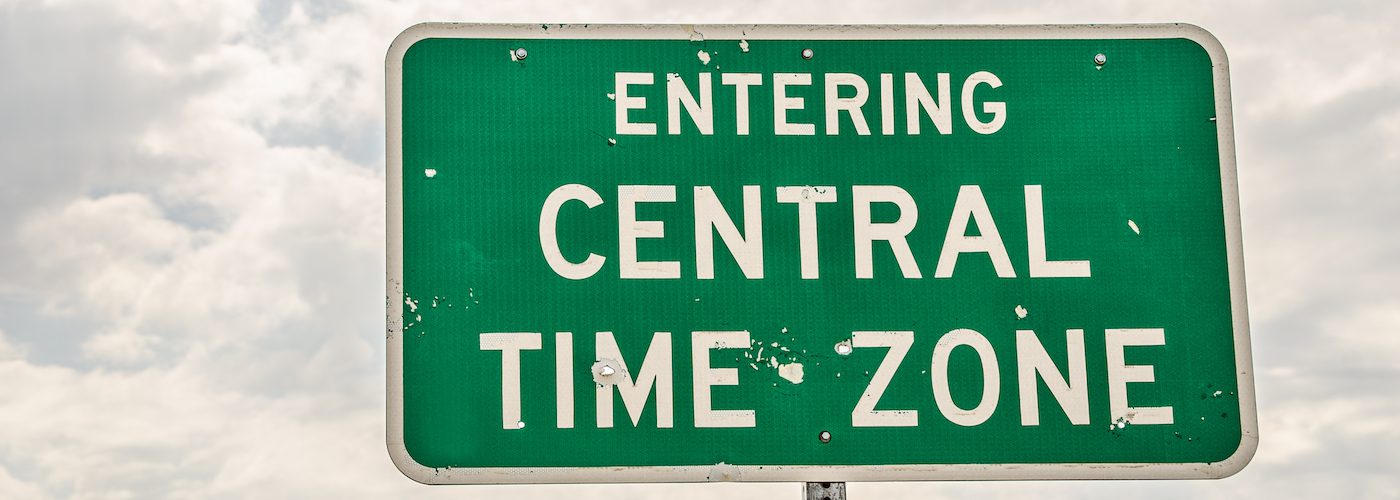
Chicago lies at the intersection of commerce, culture, and connectivity, operating firmly within the Central Time Zone. Understanding whether the city adheres to Central Standard Time or Central Daylight Time, and how this affects calls, travel, and broadcasts, is essential for anyone coordinating across the country. This guide clarifies the time framework governing the Windy City and why it matters.
The geographic designation of "Central Time" reflects the region’s position relative to the Prime Meridian and the solar time at the 90th meridian west. For Chicago, this means a consistent relationship with daylight and darkness that shapes business hours, broadcast schedules, and digital transactions. Below is a detailed look at how time works in Chicago and its practical implications.
The Foundation: Chicago’s Time Zone
Chicago is located in the Central Time Zone (CT), which is 6 hours behind Coordinated Universal Time (UTC−6) during Standard Time and 5 hours behind (UTC−5) during Daylight Saving Time. The city observes Daylight Saving Time, moving clocks forward one hour on the second Sunday in March and back one hour on the first Sunday in November.
This system is not unique to Chicago; it is part of a broader North American timekeeping structure established to synchronize clocks across wide longitudinal spans. The adoption of time zones in the United States in 1883, led by the railroads, created a more efficient framework for scheduling and communication.
Key facts about Chicago’s time zone status:
- Standard Time: Central Standard Time (CST) — UTC−6
- Daylight Time: Central Daylight Time (CDT) — UTC−5
- Time Zone Abbreviation: CT
- Observes DST: Yes, nationwide practice since 1966 under the Uniform Time Act
The choice to remain in the Central Time Zone aligns Chicago with a large portion of the U.S. economic activity, particularly in the Midwest and parts of the South.
Daylight Saving Time: The Twice-Yearly Shift
The question "Is Chicago Central Time?" often arises around the biannual clock changes. When Daylight Saving Time is active, Chicago operates on Central Daylight Time, effectively shifting later into the evening. When it ends, the city returns to Central Standard Time.
This shift has tangible effects on daily life:
- Energy Usage: Studies have shown mixed results on energy savings, with some indicating reduced lighting demand in the evening during DST but increased heating and cooling needs in other periods.
- Health and Safety: The transition into DST in spring has been associated with a temporary increase in traffic accidents and heart attacks, according to research published in journals like Current Biology.
- Technology: Most modern devices adjust automatically, but older systems or specific industrial equipment may require manual updates to avoid scheduling errors.
The decision to keep or abolish DST is a recurring debate. While some U.S. states have pushed to make DST permanent, federal law currently requires states to opt out of DST entirely rather than to stay on daylight time year-round. Chicago, therefore, continues to follow the established cycle.
Coordinating with Chicago: Practical Examples
For professionals and travelers, knowing the exact time difference is critical. Chicago’s time relationship with other major hubs is as follows during Standard Time periods:
- Eastern Time (e.g., New York): Chicago is 1 hour behind.
- Mountain Time (e.g., Denver): Chicago is 1 hour ahead.
- Pacific Time (e.g., Los Angeles): Chicago is 2 hours ahead.
- Greenwich Mean Time: Chicago is 6 hours behind.
These gaps mean that a 9:00 a.m. meeting in Chicago corresponds to 10:00 a.m. in New York and 7:00 a.m. in Denver. During Daylight Saving Time, the differences shift by one hour, with Chicago aligning more closely with Eastern Time for part of the year.
Broadcasting provides a clear example. National television networks schedule prime-time programming from 8:00 p.m. to 11:00 p.m. Eastern. In Chicago, this airs from 7:00 p.m. to 10:00 p.m. during Central Standard Time, ensuring that local audiences can watch live events at a reasonable hour.
Time Coordination in the Digital Age
In an era of global digital transactions, time stamps are crucial. Chicago-based servers, financial exchanges, and data centers rely on precise timekeeping to log events, execute trades, and maintain cybersecurity protocols.
According to Michael Pitt, a systems engineer at a major Chicago fintech firm, “Our trading platforms are synced to atomic clocks via GPS. Even a millisecond discrepancy can mean the difference between a profitable trade and a costly error. We have to account for both Standard and Daylight Saving Time changes in our algorithms.”
This precision extends to everyday internet use. When a user in Chicago schedules a cloud-based task or sets a reminder, the system uses Coordinated Universal Time as a baseline and applies the correct offset based on the device’s location settings.
Global Context and Regional Nuances
While Chicago uses Central Time, it is important to note that not all regions in the same broad area observe identical rules. Parts of Indiana, for example, historically did not observe DST or were split between time zones before federal standardization. Today, most of the state follows the same pattern as Chicago.
Internationally, countries near the same longitude as Chicago may use different time zones for political or economic reasons. For instance, parts of Mexico adjacent to the U.S. Central Time Zone also observe DST in sync with American schedules, facilitating cross-border commerce.
Travelers should always verify local time when moving between regions. A common mistake is assuming that all locations in the Central Time Zone follow the DST schedule identically, which is generally true for U.S. and Canadian regions but may vary in countries farther south.
Why Accurate Time Matters
The reliability of timekeeping underpins modern infrastructure. From train schedules to internet security certificates, the accuracy of time ensures that systems interact smoothly. In Chicago, this means adhering to Central Time with precision.
For individuals, the impact is seen in daily routines: catching a flight, tuning into a national news broadcast, or joining a virtual conference. For businesses, it affects supply chains, customer service hours, and market operations.
As technology advances, the mechanisms that maintain time accuracy—such as atomic clocks and satellite-based GPS timing—become more integrated into the fabric of city life. This ensures that when someone asks, "Is Chicago Central Time?" the answer remains not just a yes, but a dependable and quantifiable standard upon which the city functions.
Related Post
Chicago Central Time Zone: Anchoring MidAmerica’s Rhythm


