Jades Iberia: Decoding the Legacy, Value, and Global Allure of Spanish Jade
Jades Iberia: Decoding the Legacy, Value, and Global Allure of Spanish Jade
The mineralogical identity of jade in Spain has long been overshadowed by the dominance of Asian markets, yet the Iberian Peninsula harbors a geological story that is as complex as it is compelling. This is not merely a tale of a precious stone, but a narrative woven through epochs of geology, shifts in global trade, and the quiet dedication of a niche community. Jades Iberia represents a specific point where mineral science, commercial reality, and historical intrigue converge. Understanding this entity requires looking beyond the romanticized image of Burmese jadeite to examine the distinct materials and markets that define the Spanish-speaking jade landscape.
Geologically, the term "jade" is often misapplied in a commercial context, and this is where the story of Jades Iberia begins with a crucial clarification. True jade is an umbrella term for two distinct minerals: nephrite and jadeite. In Spain, the material historically referred to as "jade" is overwhelmingly nephrite, a calcium-magnesium-iron rich amphibole mineral. This contrasts sharply with the harder, more vibrantly colored jadeite, which is a sodium-aluminum pyroxene. The confusion is not merely academic; it dictates value, origin, and the very methods used to study these green stones.
Spanish nephrite deposits are primarily concentrated in the northern regions, forming part of the larger geological narrative of the Variscan orogeny, a mountain-building event that shaped much of Europe. These deposits are often found in metamorphosed dolomitic marbles, presenting in a range of greens, from deep, almost black emeralds to pale, muted celadons. The texture is typically fibrous, creating a tough, durable aggregate that polishes to a serene, greasy luster. Unlike the translucent perfection often associated with high-end jadeite, Spanish nephrite is valued for its density, its 'feel' in the hand, and its connection to a deep, local mining heritage.
The commercial entity, Jades Iberia, operates at the intersection of this geology and the modern market. In a world where the luxury sector is increasingly standardized, companies dealing in niche materials must become experts in storytelling. Jades Iberia does not simply sell a rock; it curates a connection to a specific landscape and a millennium of mineralogical history. Their role involves navigating the complex supply chain, from the careful extraction and rough sorting in remote Spanish quarries to the final presentation in showrooms or online platforms. This requires a deep understanding of the material's properties, its variations, and how to communicate its unique character to an audience often conditioned by Asian jade standards.
The global jade market is a study in contrasts, and Jades Iberia exists within this dynamic ecosystem. For centuries, the heart of the jade trade has been East Asia, where jadeite from Myanmar (Burma) is enshrined in culture, economics, and art. The values placed on color, translucency, and 'imperial' hues create a benchmark that permeates the entire industry. For a company focusing on Spanish nephrite, the challenge is significant. How does one position a material that is not jadeite, often less translucent, and lacks the immediate cultural cachet of a Burmese piece? The answer lies in reframing the narrative.
Jades Iberia, by focusing on Spanish nephrite, is participating in a broader movement towards material authenticity and provenance. Consumers, particularly in Europe and North America, are increasingly interested in the 'story' behind their purchases. They are looking for sustainable, local, and ethically sourced alternatives to globally traded commodities. A piece of nephrite from Spain offers this. It speaks of the Pyrenees or the Cantabrian Mountains, of ancient tectonic collisions, and of a mining tradition that predates modern industrial extraction. The marketing angle is not about competing with Myanmar on jadeite terms, but about celebrating a different, equally valid, expression of jade-family minerals. The focus shifts from rarity based on visual perfection to rarity based on geological specificity and artisanal connection.
This shift in perspective is echoed in the practices of other specialized miners and dealers globally. The market for alternative jade materials, such as Canadian jade or even California jade, has shown that there is a viable audience beyond the traditional centers of jade consumption. Jades Iberia taps into this growing segment of the market. Their product offering is a direct response to a demand for diversity. Collectors and enthusiasts are actively seeking to broaden their understanding of what jade can be. By providing access to high-quality Spanish nephrite, Jades Iberia is not just filling a commercial niche; it is contributing to a more pluralistic view of the mineral kingdom.
The internal operations of a company like Jades Iberia reflect the specialized nature of its product. The workflow is a blend of old-world craft and modern verification. It likely involves:
1. **Sourcing and Partnerships:** Establishing relationships with a limited number of carefully vetted quarries or mining concessions. The scale is necessarily small, focusing on quality over quantity.
2. **Sorting and Grading:** A meticulous process of examining the raw rough. This involves assessing color, consistency, freedom from fractures, and aesthetic potential. Unlike mass-market products, every piece is evaluated on its individual merits.
3. **Cutting and Polishing:** Often done in-house or by a small network of trusted artisans. The goal is to maximize the beauty of the specific piece, highlighting its unique patterns and luster. Cabochons, beads, and carved figures are common forms.
4. **Certification and Documentation:** In an increasingly regulated market, providing information on origin and, where applicable, geological authentication becomes a key part of the value proposition. This builds trust with the discerning client.
5. **Marketing and Education:** A significant portion of their effort is dedicated to consumer education. This involves explaining the difference between nephrite and jadeite, the geology of Spanish deposits, and the care required for these objects.
The language used within the jade community itself is telling. Terms like 'mutton fat jade' for the finest nephrite describe a tactile, creamy richness that is prized above all else. For Jades Iberia, the vocabulary is likely centered on terms like 'density,' 'grain structure,' 'color zoning,' and 'polish luster.' Their expertise is in this specific language of nephrite appreciation. As one industry insider might observe, the value of such a specialized operation is rooted in its authenticity. A representative from the company might state, "We are not in the business of replicating a market. Our focus is on presenting a genuine, geological product with a specific heritage. We offer our clients a connection to a different, but no less valuable, part of the jade story."
In the end, Jades Iberia’s significance extends beyond the commercial transaction. It is a custodian of geological heritage. In a globalized world where resources are often homogenized, the existence of a company dedicated to a specific regional variety of jade is a form of resistance against the monolithic. It champions the idea that value is not a single, universal metric, but a spectrum defined by beauty, history, and origin. The green stone from Spain, often overlooked in the shadow of its Asian counterparts, finds its voice and its market through entities like Jades Iberia, proving that the story of jade is far richer and more diverse than a single, dominant narrative would suggest.
Related Post
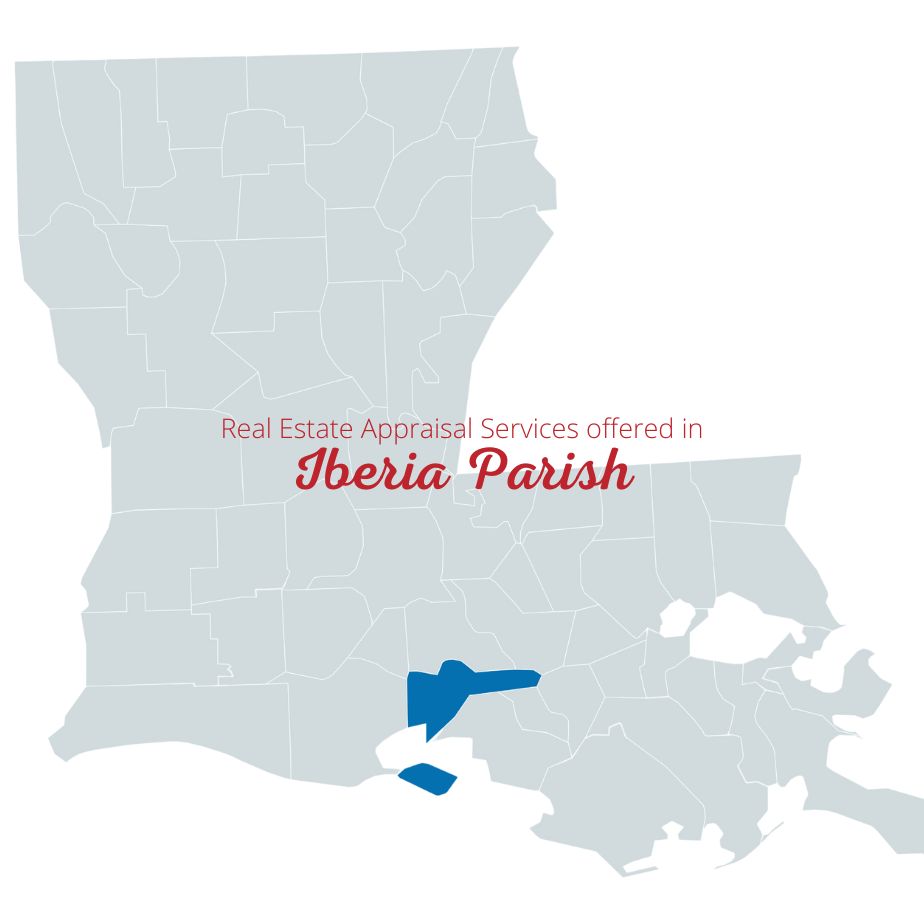
Navigating Acadiana’s Real Estate Value with Jades Iberia Parish Appraiser Expertise

Jades Iberia: Redefining Luxury Travel with Iberian Flair and Sustainable Vision
Jades Iberia: How Spain's Ancient Jade Trade Is Reshaping European Archaeology and Luxury Markets

Jades Iberia Parish Appraiser: The Relentless Engine Behind Accurate Real Estate Valuation in Acadiana