Jo Harvelle: The Unsung Heart of Supernatural — Beyond The Winchester Bromance
Jo Harvelle: The Unsung Heart of Supernatural — Beyond The Winchester Bromance
Jo Harvelle sits at a unique crossroads in the pantheon of television’s long-running fantasy dramas, embodying a grounded resilience that elevates the supernatural chaos surrounding her. Often perceived through the narrow lens of her potential and realized romantic tension with Dean Winchester, her character functions as a crucial stabilizing force within the hunter lifestyle. This article dissects Jo’s evolution from a rebellious daughter in a lineage of hunters to a seasoned leader, examining her narrative function, thematic weight, and the quiet legacy she leaves on the series.
The world of "Supernatural" is defined by its transient nature; motley crews form in dusty bars and dissolve in roadside tragedies. Within this volatile ecosystem, Jo Harvelle represents continuity, the permanent fixture in a trailer park that refuses to move. Her journey, which begins in the dusty confines of her family’s roadhouse, stretches across multiple seasons and fundamentally alters the dynamic between the show’s protagonists and the broader hunter community. Unlike the Winchester brothers, whose motivations are deeply personal and often revenge-driven, Jo operates from a sense of communal responsibility.
Jo’s introduction in the second season instantly establishes her as a force of nature. She is the offspring of Ellen Harvelle, a woman who runs the Roadhouse—a neutral hub for the supernatural-weary. From the outset, Jo is defined by her competence and her refusal to be sidelined. She does not wait for a man to validate her expertise; she earns her place through action. This is evident in her initial encounter with Sam and Dean, where she physically restrains the volatile hunter Ash, demonstrating a pragmatism that immediately sets her apart from the more emotionally volatile characters populating the series.
A critical aspect of Jo’s character is her rejection of the "damsel in distress" archetype that often plagues female characters in genre fiction. While she is undoubtedly capable of fear and vulnerability, these traits never translate into helplessness. When faced with the monstrous threats that plague the series, Jo’s response is consistently one of tactical engagement. She strategizes, she arms herself, and she fights. This agency is not merely a personality quirk but a narrative necessity that broadens the show’s thematic scope.
Jo’s leadership qualities come to the forefront during her tenure running the Roadhouse. Following her mother’s death, she inherits not just a business but a network of contacts and a complex set of obligations. Her management style is firm but fair, creating an environment where hunters can rest, share intelligence, and prepare for the next hunt. This is a stark contrast to the Winchesters' more ad-hoc, reactive approach. Under Jo’s watch, the Roadhouse becomes a symbol of organized resistance against the encroaching darkness, a place where the hunted can sometimes feel like the hunters.
The narrative surrounding Jo is also deeply intertwined with the concept of legacy. She grows up in the shadow of her father, a hunter who disappeared under questionable circumstances, and the weight of his absence shapes her motivations. Her relationship with her mother is a complex mix of reverence and friction, highlighting the generational tensions within the hunter world. Jo grapples with the fear of inheriting a doomed fate while simultaneously embracing the skills and knowledge passed down to her. This internal conflict adds a layer of psychological depth often missing from genre television.
Her interactions with the main cast provide a fascinating counterpoint to the Winchester-centric worldview. While Sam and Dean are driven by their bond as brothers, Jo represents the broader community of people affected by the supernatural. She serves as a bridge between the Winchester’s personal hell and the larger, more systemic battle against evil. Her alliances are pragmatic and shifting, dictated by the immediate threat rather than familial obligation. This makes her a reliable, if sometimes frustrating, ally. She understands that the fight is not just about saving the world in a grand, cinematic sense, but about protecting the countless individuals caught in the crossfire.
Jo’s story arc is punctuated by moments of both triumph and tragedy. Her leadership is tested when the Roadhouse becomes a target, and her decisions during these crises reveal a woman hardened by experience but not hardened against compassion. She forms meaningful connections, not just with Sam and Dean, but with other characters who share her burden. These relationships are fleeting but intense, underscoring the theme of found family that runs through the series. She demonstrates that heroism is not the exclusive domain of those with destinies written in prophecy, but is available to those who choose to stand and fight.
The character of Jo Harvelle also serves to deconstruct the mythology surrounding the hunter life. It is not a noble calling but a grim trade that consumes personal lives. Jo’s struggles with the isolation and moral compromises inherent in her work provide a window into the emotional cost of the Winchesters’ adventures. Her presence forces the narrative to acknowledge the collateral damage inflicted on the periphery of the main storyline. She is a reminder that for every demon vanquished and every angel saved, there are quieter losses occurring in the shadows.
Ultimately, Jo Harvelle’s significance lies in her embodiment of resilience. She navigates a world obsessed with destiny and legacy, carving out a path defined by her own choices rather than the expectations placed upon her. Whether manning the counter at the Roadhouse or standing shoulder-to-shoulder with seasoned hunters on the front lines, she remains a constant reminder of the human element within the supernatural fray. Her journey is a testament to the strength required to survive in a universe that is fundamentally hostile, a quiet powerhouse whose impact resonates long after her final scene.
* **Formative Years:** Raised within the hunter community, Jo’s childhood was defined by the realities of the supernatural, long before she donned a hunter’s vest.
* **The Roadhouse Legacy:** Inheriting the family business transforms Jo from a rebellious daughter into the de facto leader of a critical hub for the hunter network.
* **Operational Independence:** Jo consistently proves that she does not require male validation to confront supernatural threats, often outshining her male counterparts in tactical scenarios.
* **Community Focus:** Her leadership style emphasizes the collective good, contrasting with the Winchester’s often singular, brother-focused mission.
* **Complex Lineage:** The disappearance of her father and the burden of her mother’s expectations create a rich internal conflict that drives her character development.
Related Post
Alona Tal The Story Of Jo Harvelle In Supernatural: A Fan’s Journey From Obsession To Legacy

Unconventional Quest for Supernatural Justice: The Mysterious World of Jo Harvelle
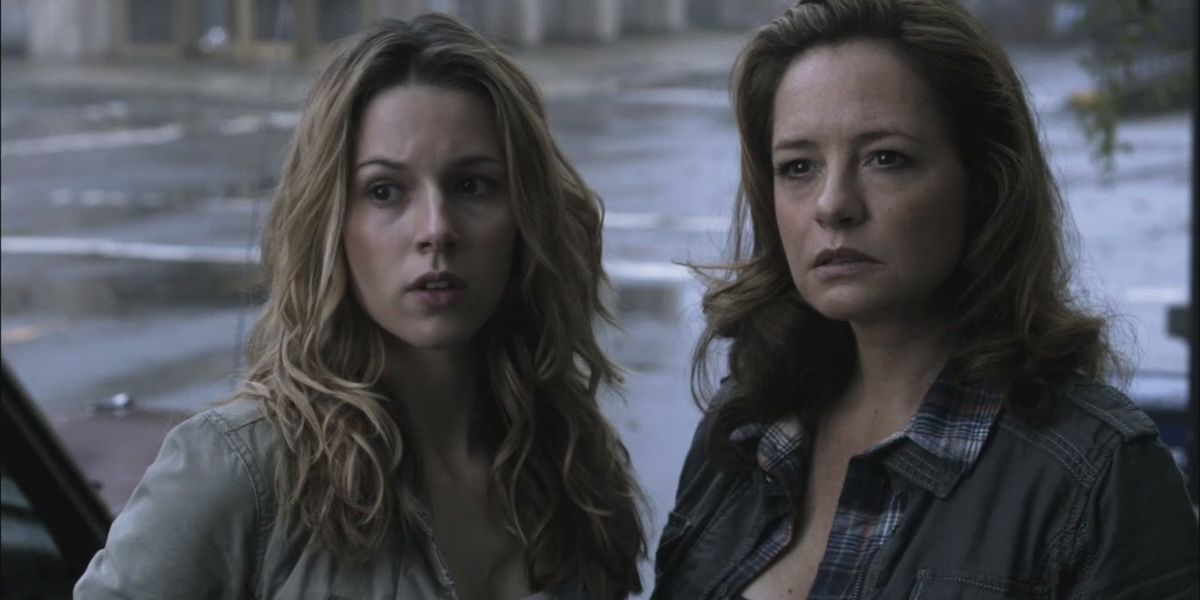
Jo Harvelle: The Unsung Hero of Supernatural Lore

Uncovering the Painful Stories Behind Dallas Morning News Obituaries: A Closer Look at Death Notices