Jordan in Southwest Asia: The Unseen Architect of Stability and Resilience
Jordan in Southwest Asia: The Unseen Architect of Stability and Resilience
In a region often defined by volatility, Jordan stands as a paradox of fragility and endurance. This desert kingdom, bordered by warring neighbors and hosting over a million refugees, operates as a critical geopolitical hinge in Southwest Asia, managing humanitarian crises while advancing cautious reforms. Its value to global security and economic stability is frequently underestimated, overshadowed by louder regional conflicts. Yet, without Jordan's calculated diplomacy and managed resilience, the infrastructure of peace and trade linking Europe, Asia, and Africa would buckle under the strain.
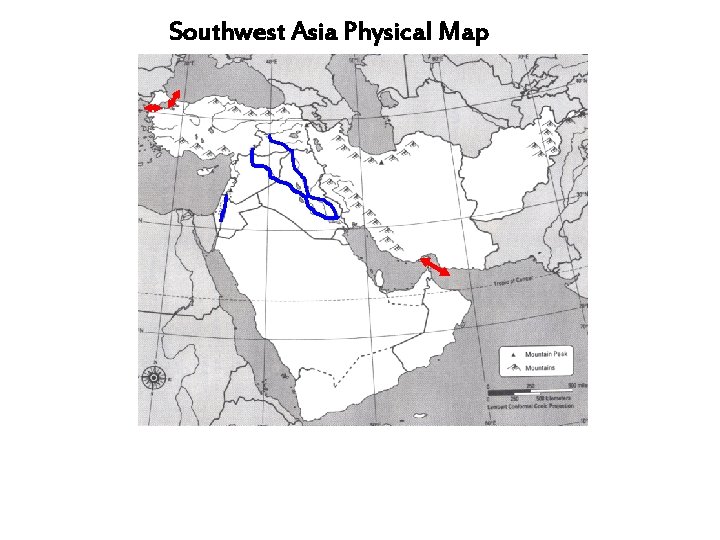
Strategically positioned at the crossroads of Saudi Arabia, Iraq, Syria, Israel, and the Red Sea, Jordan serves as the indispensable logistical and diplomatic corridor for the modern Middle East. The kingdom manages the delicate politics of its borders, acting as a gatekeeper for energy pipelines and a mediator in regional disputes. Economically, it balances the scales between Western investment, Gulf patronage, and the harsh arithmetic of a debt-laden public sector. Its survival is not merely a domestic affair; it is a linchpin for the security and economic interests of its powerful neighbors and global powers. Understanding Jordan is to understand the complex architecture of stability in an otherwise fractured region.
The nation’s geographic utility is perhaps its most significant, yet quiet, asset. Jordan commands key sections of the Arab Potash Company, the world’s fourth-largest potash producer, a vital resource for global agriculture. It serves as the eastern terminus of the Arab Gas Pipeline, a critical artery that once transported subsidized Egyptian gas to energy-hungry Syria and Lebanon, symbolizing its role as an energy corridor. Furthermore, the kingdom provides the only viable terrestrial link between Iraq’s beleaguered markets and the outside world, a route of immense strategic value since the US withdrawal from Iraq. This logistical dominance translates directly into geopolitical leverage. As one regional analyst noted, "Jordan is the pin that pops the bubble; if it were to destabilize, the connections that hold the Levant and the Gulf’s eastern flank together would pop with it." Its borders are not lines on a map but pressure valves for the entire region.
This pivotal role is magnified by the overwhelming burden of hospitality Jordan has shouldered for decades. The kingdom hosts one of the highest per-capita concentrations of refugees in the world, a reality that has tested its social fabric and fiscal reserves. Since the outbreak of the Syrian civil war, Jordan has granted asylum to over 650,000 registered Syrians, a staggering number for a population of roughly 10 million. This is in addition to hundreds of thousands of Palestinians, Iraqis, and Yemenis who have found temporary sanctuary within its arid plains. The strain on water resources, infrastructure, and public services is immense, creating a quiet crisis within a nation often seen only through the lens of its more famous neighbor, Israel. The government’s response has been a careful dance between maintaining domestic stability and appealing for international aid. "We cannot sustain this level of hospitality alone," a senior official in Amman confided during a background briefing. "Our stability is a public good, and the world must invest not just in defense, but in the human economy that makes this stability possible."
Economically, Jordan operates in a perpetual state of managed crisis. Lacking significant oil wealth, the country relies heavily on foreign aid, remittances from citizens working abroad, and the revenue from its underdeveloped tourism sector, much of which is centered on the ancient desert city of Petra. Public debt has soared to over 90% of GDP, and subsidies for fuel and food, while politically necessary, have drained the treasury. Successive governments have embarked on hesitant privatization and economic reform programs, often stalled by the political risks of lifting subsidies that keep the urban poor afloat. The International Monetary Fund has repeatedly engaged with Amman, providing lifelines in the form of loans conditional on fiscal discipline. Yet, these programs are a double-edged sword; cutting subsidies can ignite the very unrest the state is trying to prevent. The challenge for Jordanian technocrats is to reform a brittle system without breaking the social contract that has, however imperfectly, preserved order for generations.
Politically, the kingdom navigates a tightrope between tradition and the demands of a younger, more connected population. For decades, Jordan has been a constitutional monarchy with a parliament, but the king retains significant executive power, a arrangement that has provided continuity in a turbulent neighborhood. The government walks a fine line between security and freedom, wary of the kind of uprisings that toppled leaders in Tunisia, Egypt, and Libya. Civil society is active, but space for dissent is carefully calibrated. The state’s security apparatus is widely regarded as effective and professional, a legacy of a system built to survive. However, the promise of political liberalization remains a work in progress, perpetually deferred by the existential threats lurking just beyond its borders. The king’s role is not merely symbolic; it is the anchor in a sea of uncertainty, a promise that the country will not be swept away by the tides of regional chaos.
The resilience of the Jordanian state is a product of its leadership’s pragmatic foreign policy. Amman maintains open lines of communication with all sides in regional conflicts, from Tehran to Riyadh, from Washington to Moscow. This non-aligned posture, born of necessity, allows the kingdom to host peace talks, facilitate prisoner exchanges, and serve as a neutral ground for diplomacy. It is a role that requires immense skill and constant calibration. The kingdom has survived the Assad regime’s collapse, the ISIS caliphate’s rise and fall, and the shifting sands of the Saudi-Iranian rivalry, largely by refusing to take sides until it is absolutely clear where the winds of history are blowing. This delicate balancing act is the essence of Jordanian statecraft. To take a side is to risk becoming a target; to remain neutral is to preserve the space necessary for survival. In a neighborhood of revolutionary fervor and sectarian strife, Jordan’s conservatism is its strength.
Ultimately, the story of Jordan in Southwest Asia is the story of a nation perpetually managing the unmanageable. It is a buffer, a bridge, and a backstop for a region in turmoil. Its importance is inversely proportional to its size and resources, a testament to the skill of its leaders and the endurance of its people. The kingdom faces an uncertain future, with demographic pressures, water scarcity, and the ever-present threat of regional spillover demanding innovative solutions. Yet, to watch Jordan is to witness a masterclass in geopolitical survival. It is a country that has stared into the abyss of chaos and, through a combination of external support and internal fortitude, has managed to build a fragile but functional oasis of stability. In the calculus of Southwest Asia, Jordan may not be the biggest player, but it is arguably the most essential.
Related Post

Southwest Asia Jordan: At The Heart Of History, Culture, And Strategic Ambition
Southwest Asia Jordan: Where Ancient Crossroads Shape Modern Identity
Jordan in Southwest Asia: The Kingdom’s Quiet Resilience and Strategic Balancing Act

The Power of the March 28 Sign: Unlocking the Secrets of the Zodiac's Most Enigmatic Date


