King Kong 2005 Cast: Dissecting the Performances Behind Peter Jackson's Epic Revival
King Kong 2005 Cast: Dissecting the Performances Behind Peter Jackson's Epic Revival
Peter Jackson’s 2005 reimagining of King Kong leveraged cutting-edge motion capture technology to tell a classic story, requiring performances that bridged the human and the monstrous. The film’s success hinged on a tightly woven ensemble, from an emotionally guarded filmmaker to a vulnerable actress whose gaze humanized the Eighth Wonder. This article provides a detailed analysis of the principal cast, their contributions, and the unique challenges of performing within Jackson’s digital opus.
The Creative Anchor: Andy Serkis as Kong
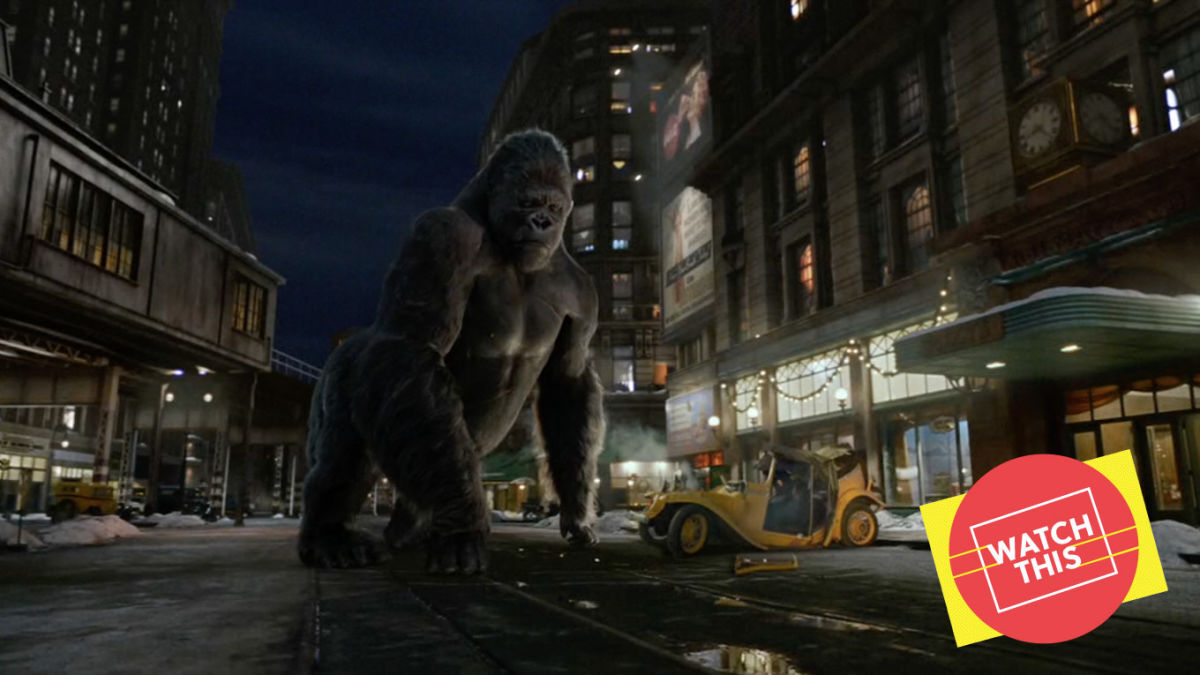
At the heart of the film lies the titular character, brought to life through the revolutionary performance capture work of Andy Serkis. Serkis, already celebrated for his motion capture role as Gollum in The Lord of the Rings, was tasked with creating a creature capable of conveying profound emotional depth. His performance was not one of brute force alone but of nuanced vulnerability, curiosity, and tragic pathos.
Serkis did not simply provide the physicality; he supplied the emotional blueprint. Every movement, from the deliberate pacing of Kong’s footsteps to the delicate curl of his fingers as he examined Ann Darrow, was meticulously crafted through performance. The actor had to convey a spectrum of feeling without the crutch of visible human facial expressions, relying heavily on eye performance and body language. As visual effects supervisor Joe Letteri noted, the goal was to make the technology disappear, leaving only the character.
- Physical Transformation: Serkis’s performance required a level of physical exertion that was immense. He wore a motion capture suit with a helmet-mounted camera, allowing him to interact with the blank blue studio walls that would later become Skull Island. His movements were recorded in real-time, translating human kinetics into the ape’s massive frame.
- Emotional Core: Beyond the size, Serkis imbued Kong with a childlike wonder and a deep, resonant loneliness. His famous “I think I love you” scene is a testament to his ability to project complex emotion through a creature design that was, on paper, non-human.
The integration of Serkis’s performance with the cutting-edge CGI resulted in a character that critics and audiences alike accepted as a living, breathing entity. It was a performance that earned him widespread critical acclaim and solidified motion capture as a legitimate acting discipline.
The Human Lens: Naomi Watts as Ann Darrow
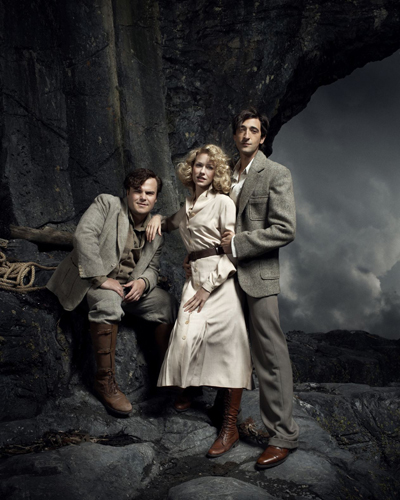
Naomi Watts stars as Ann Darrow, the aspiring actress whose journey from Broadway hopeful to Kong’s captive becomes the film’s emotional anchor. Her character serves as the audience’s conduit into the surreal world of Skull Island, representing the vulnerable “damsel” whose terror and eventual compassion drive the narrative.
Watts’s performance is defined by its authenticity and escalating intensity. She effectively charts Ann’s transformation from a hopeful actress looking for a break to a woman who has faced the abyss and formed a profound connection with it. Her screams are not just reactions of fear but genuine expressions of terror, survival, and a strange, protective love. Watts’s ability to convey this vulnerability without appearing weak is central to the film’s dramatic weight.
- The Audition: Ann’s initial screen test for the fictional play “Gorilla Dawn” is a masterclass in double-meaning, showcasing Watts’s ability to deliver dialogue that is both period-appropriate and subtly ironic.
- The Abduction: Watts masterfully portrays the transition from naivety to abject terror during the iconic log bridge attack, her performance providing the human counterpoint to the chaos of the creatures.
- The Bond: In the film’s second half, Watts’s expressions shift from horror to empathy, culminating in the quiet, wordy moments on the New York theater roof that ground the film’s fantastical premise in genuine emotion.
Watts’s casting was a critical success, with many praising her for bringing a grounded, relatable humanity to a role that could have easily been one-dimensional.
The Driven Visionary: Jack Black as Carl Denham
Jack Black delivers a scene-stealing, larger-than-life performance as Carl Denham, the ambitious and morally flexible filmmaker whose quest for the ultimate shot drives the plot. Black, known for his anarchic comedy, brings a surprising depth and Shakespearean gravity to the role of a man consumed by his art.
Denham is a study in contradictions—charismatic yet reckless, visionary yet selfish. Black captures the frantic energy and performative bravado of a theater director, but he also taps into the character’s profound desperation and sense of obsolescence in a changing world. His famous “It’s not hard to make decisions once you know what your decision is” speech is delivered with such conviction that the audience is swept up in his singular, doomed vision.
Black’s comedic timing provides necessary levity, while his dramatic moments, particularly his final, broken realization of what he has done, anchor the film’s themes of exploitation and the cost of art. He is the engine of the narrative, and his performance is a vital, pulsating force within the ensemble.
The Weathered Professional: Adrien Brody as Jack Driscoll
Adrien Brody, fresh from his Academy Award win for The Pianist, plays Jack Driscoll, the ship’s first mate who becomes Ann’s protector. Brody brings a weathered, world-weary professionalism to the role, providing a stark contrast to Black’s flamboyance.
His character serves as the film’s moral compass and action hero, and Brody delivers a grounded, reliable performance. While his role is arguably the smallest of the main cast, Brody’s presence lends a sense of rugged authenticity to the crew’s journey. His physical transformation, including a noticeable loss of weight to appear gaunter, demonstrated his commitment to the role. He is the steady hand on the tiller, the one who tries to impose order on Denham’s chaotic ambition.
The Collaborative Triumph
The success of King Kong (2005) is as much a testament to the collaborative power of its cast as it is to Jackson’s direction and the visual effects team’s innovation. Each principal actor operated in a unique performance vacuum, performing against blue screens and without the benefit of reactive co-stars. This required an immense degree of imagination and discipline.
The cast didn’t just perform their lines; they performed to an empty landscape, creating the emotional truth that would later be matched with digital perfection. Their work provided the essential human element that made Kong’s non-human form so compelling. The film stands as a landmark achievement in cinema, not only for its technology but for the powerful, human-centered performances that give the monumental spectacle its soul.
Related Post
King Kong 2005 Cast: The Human Dynamite Behind the Giant Ape’s4035 Days of Performance and Preparation
King Kong 2005: A Deep Dive into Peter Jackson’s Cinematic Colossus
How The King Kong 2005 Cast Brought a Colossus to Life: A Masterclass in Talent and Vision

Unleashing the Power of Soundboard 3Kh0: Revolutionizing Music Production and Sound Design


