Louis XV of France: The Monarch, the Myth, and the Collapse of a Dynasty
Louis XV of France: The Monarch, the Myth, and the Collapse of a Dynasty
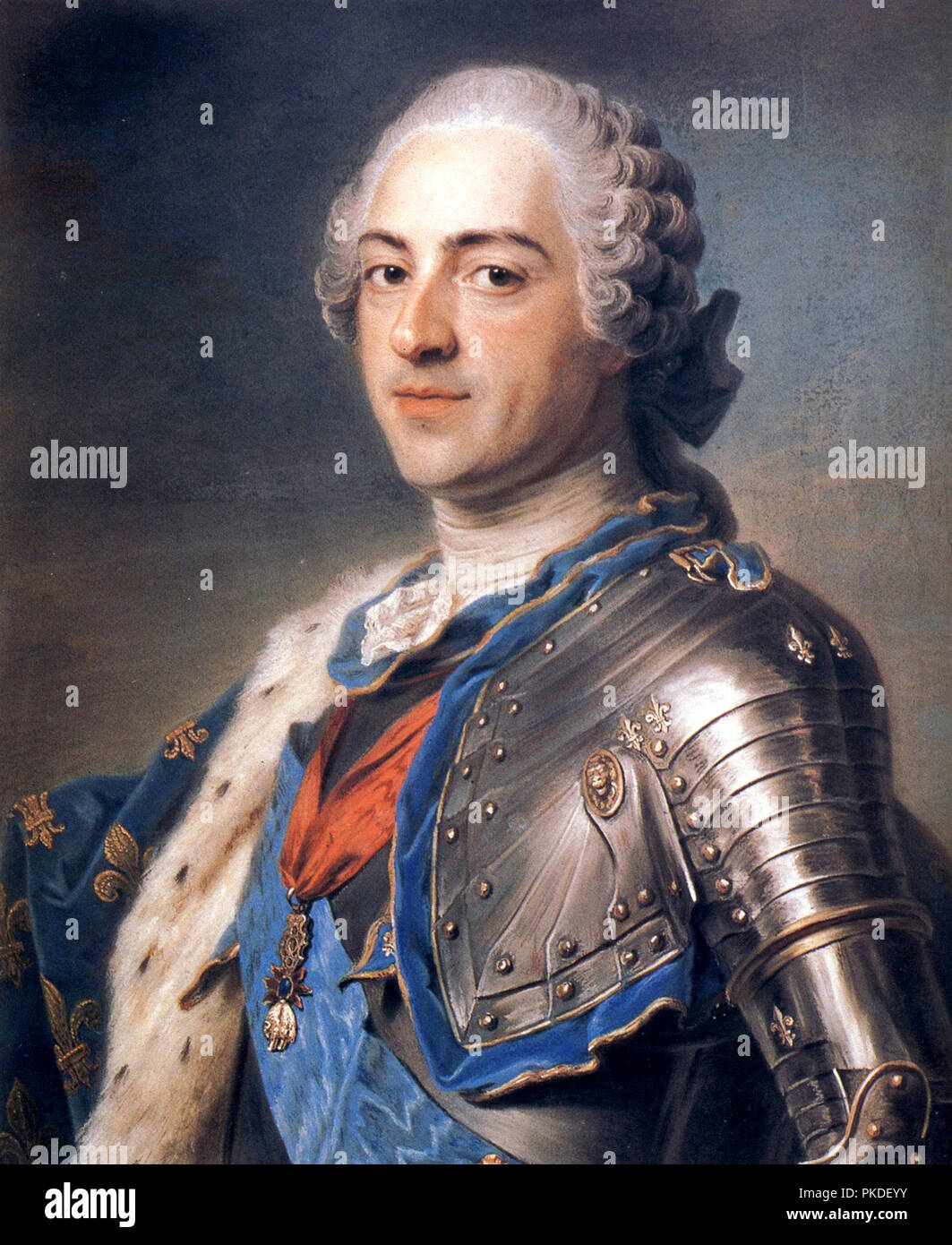
Louis XV ruled France for nearly six decades, from 1715 to 1774, navigating the delicate transition from absolute monarchy to the Enlightenment. His reign, often defined by personal tragedy and political drift, ultimately set the stage for the French Revolution. This article examines the complexities of his rule, separating the frail child-king from the aging monarch burdened by debt and disillusionment.
Born on February 15, 1710, Louis was the great-grandson of Louis XIV, inheriting a throne swollen with grandeur but brittle with fiscal tension. His early life was a gilded cage, shaped by the Regency of Philippe II, Duke of Orléans, and a court obsessed with etiquette and spectacle. The Duc de Saint-Simon, a contemporary diarist, captured the atmosphere of intrigue, noting the pervasive "flattery, deceit, and cabals" that surrounded the young prince. His education was rigorous but cold, emphasizing classical studies and courtly manners over the practical statecraft he would later struggle with.
The death of his father, Louis, le Dauphin, in 1711, made Louis the heir at just two years old. Upon the death of Louis XIV in 1715, the five-year-old ascended the throne, initiating a regency that reshaped French politics. The Regency, led by the Orleans faction, sought to unwind the rigid centralization of the Sun King, loosening controls on the aristocracy and the press. This period of relative freedom, however, was short-lived. In 1723, Louis XV was declared of age, and his personal rule began, though real power soon shifted to his able but unpopular Minister, Cardinal André-Hercule de Fleury.
Fleury's tenure from 1726 to 1743 marked a period of relative stability and financial reform. The Cardinal, a former tutor, wielded authority with a pragmatism that his sovereign often lacked. He prioritized peace, avoiding costly foreign entanglements that had drained the royal coffars under Louis XIV. "I govern alone," Louis XV once declared, a statement that belied the reality of Fleury's dominance. The minister implemented tax reforms and promoted economic initiatives, briefly alleviating the burdens that had plagued the monarchy. Yet, this stability was fragile, built on a foundation of deferred conflicts and growing debt.
Louis XV’s personal life became a public spectacle, profoundly impacting the monarchy's image. His marriage to Marie Leszczyńska in 1725 produced ten children, securing the Bourbon line but offering little emotional solace. The King’s well-documented affairs, notably with the Marquise de Pompadour and later the Comtesse du Barry, became symbols of a monarch detached from his duties. Pompadour, a mistress of extraordinary intelligence and ambition, exerted considerable influence over appointments and policy, becoming a target of public resentment. The King’s pursuit of pleasure at court contrasted sharply with the simmering discontent among the common populace, who bore the weight of taxation.
The foreign policy decisions of Louis XV would ultimately define his legacy as a failure of leadership. The War of the Austrian Succession (1740–1748) and the Seven Years' War (1756–1763) eroded France’s global dominance. In the Seven Years' War, French forces suffered devastating losses in Europe and ceded Canada and vast territories in India to Britain, a humiliation that wounded national pride. The King’s dismissive remark, "After me, the deluge" (Après moi, le déluge), allegedly captured his indifference to the future, though its authenticity is debated. These military defeats exposed the financial ruin that Fleury’s careful management had only papering over.
The financial crisis deepened under Louis XV’s later reign. The costs of constant warfare, coupled with the lavish spending of the court, created an unsustainable debt spiral. Attempts at fiscal reform, proposed by ministers like Turgot and Necker, were met with fierce resistance from the privileged classes, including the Parlements and the aristocracy, who guarded their tax exemptions jealously. The King, increasingly withdrawn and suffering from smallpox, lost the will to enforce painful changes. He famously lamented the burdens of his office, stating, "I am too much of a philosopher to regret lost opportunities." This apathy, however, was a luxury the state could no longer afford.
The intellectual currents of the Enlightenment further eroded the divine justification of royal authority. Philosophers like Voltaire, Rousseau, and Montesquieu criticized the ancien régime, advocating for reason, tolerance, and political reform. While Louis XV patronized the arts and sciences, he viewed these ideas with suspicion, fearing challenges to his power. The suppression of the Jesuits in 1762 and the censorship of radical texts revealed his conflicted stance: a desire for progress hampered by a need for control. The monarchy was increasingly seen not as a divine protector but as an outdated institution.
By the time of his death on May 10, 1774, at the Palace of Versailles, Louis XV left a kingdom on the brink of collapse. His grandson, Louis XVI, inherited a treasury drained empty and a populace seething with inequality. The failures of his later years—financial mismanagement, military humiliation, and political inertia—cast a long shadow. The monarchy’s prestige, so meticulously built by Louis XIV, had been fatally undermined. As the historian J.P. Lewis noted, Louis XV’s reign was "a series of lost opportunities" that paved the way for the Revolution. His legacy is a testament to the fragility of power when personal weakness intersects with systemic decay.
Related Post
Louis XV of France: The Monarch Who Navigated a Kingdom on the Brink

Unleashing the Flavors of India: The Spicy and Savory World of Madras Curry

Unlock the Power of Le Bon Coin: Your Ultimate Guide to Buying and Selling Online

The 7 Deadly Sins: Exploring the Iconic Symbols that Shape Human Character


