Louisville Kentucky Time Zone: Navigating EST Confusion for Business and Travel
Louisville Kentucky Time Zone: Navigating EST Confusion for Business and Travel
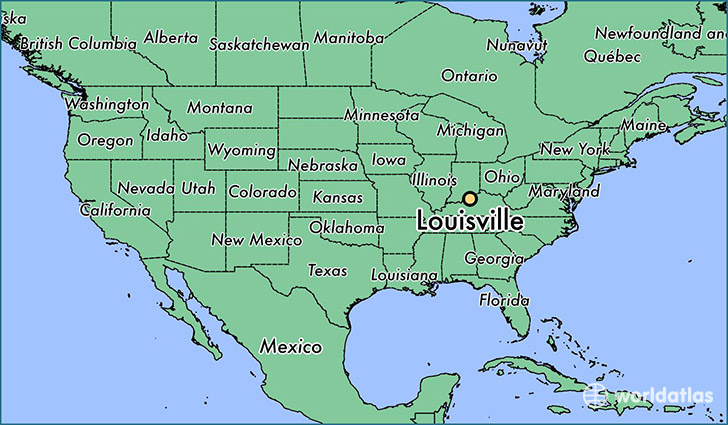
Louisville, Kentucky operates exclusively within the Eastern Time Zone, aligning its daily rhythm with major hubs like New York and Atlanta. This geographical placement creates specific advantages for commerce and logistics, while also presenting unique challenges regarding seasonal time shifts. This article provides a definitive guide to understanding how time is managed in Louisville, ensuring clarity for residents and visitors alike.
The city of Louisville is the largest city in the Commonwealth of Kentucky and serves as a major economic engine for the region. As a key player in global shipping, owing to the presence of the Port of Louisville and the UPS Worldport hub, precise timekeeping is not merely a formality but a critical component of the supply chain. Residents and business owners must navigate the nuances of Daylight Saving Time with the same diligence required for any major business decision.
Understanding the Eastern Time Zone
Geographically, Louisville sits at a longitude of approximately 85.76° West, placing it firmly within the North American Eastern Time Zone (ET). This zone is officially designated as UTC-5 during Standard Time and UTC-4 during Daylight Saving Time. The consistent application of this time framework ensures that Louisville remains synchronized with the financial markets of Wall Street and the distribution networks of the Southeast.
Unlike states such as Arizona or Hawaii, which have opted out of Daylight Saving Time, Kentucky adheres to the Uniform Time Act of 1966. This means that Louisville observes the bi-annual ritual of "springing forward" and "falling back."
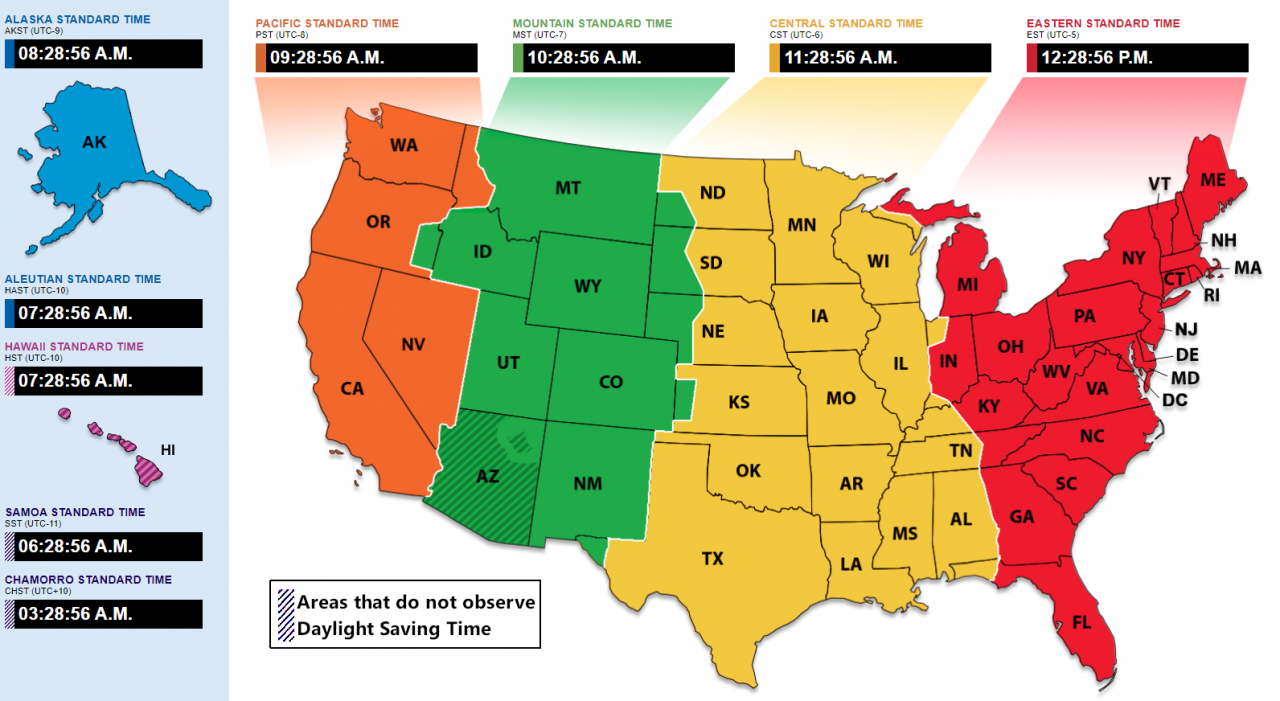
Here is a breakdown of how Louisville time compares to other major zones:
- vs. Central Time: Louisville is 1 hour ahead of cities like Chicago or Dallas.
- vs. Pacific Time: Louisville is 3 hours ahead of Los Angeles or Seattle.
- vs. GMT: Louisville is 5 hours behind Greenwich Mean Time in the winter and 4 hours behind in the summer.
The Mechanics of Daylight Saving Time
Daylight Saving Time (DST) in Louisville begins on the second Sunday in March, when clocks are moved forward by one hour at 2:00 AM. This shift grants residents an extra hour of evening daylight, which is intended to reduce energy consumption and encourage outdoor activity. Conversely, DST ends on the first Sunday in November, when clocks are set back to 2:00 AM, returning the city to Eastern Standard Time.
Impact on Business Operations
For businesses in Louisville, particularly those involved in logistics and manufacturing, the time zone is a fixed variable in operational planning. The shift to Daylight Saving Time can disrupt global coordination, as European partners are suddenly one hour closer in time difference, while Asian partners become one hour further away.
"Time is our most valuable asset in freight forwarding," states a logistics manager at a major air freight facility at the Louisville International Airport. "When the clocks change, we have to meticulously adjust our scheduling software to ensure a package leaving Louisville at 10 AM EST arrives in Frankfurt at the correct local time. A minute error can cascade into significant delays."
The consistency of the Eastern Time Zone allows Louisville to maintain a strong identity as a hub for radio dissemination. The clear-channel AM radio stations in the region can broadcast with high power overnight, a privilege not afforded in all time zones, allowing information and entertainment to flow seamlessly across the Eastern seaboard.
Technological Coordination and Scheduling
In the modern era, where digital calendars and automated systems govern our lives, the time zone of Louisville plays a crucial role in data synchronization. Cloud computing servers located in the region must account for the DST shift to ensure that timestamps on transactions are accurate.
When scheduling virtual meetings with colleagues in Denver (Mountain Time), it is essential to remember the one-hour difference. Similarly, those coordinating with Pacific Coast partners must factor in a three-hour gap. Miscommunication regarding time is a common pitfall for remote teams, making the explicit labeling of "EST" or "EDT" vital for professional correspondence.
Travel and Communication Considerations
For the traveler, Louisville presents a straightforward experience regarding time. Upon arrival, visitors can set their watches to Eastern Time immediately. The transition across the Indiana border, which surrounds the Louisville metropolitan area on three sides, requires attention to the time zone map of that specific state. While most of Indiana now observes DST, historical complexities mean that travelers should always verify the local time upon crossing county lines.
When contacting official city services or businesses, callers from the Pacific Time Zone should note that the standard business hours in Louisville (9 AM to 5 PM) fall between 6 AM and 2 PM their local time. This requires proactive planning to ensure successful communication during the workday.
The Cultural Rhythm of Time
Beyond the mechanics of clocks, the time zone influences the cultural rhythm of Louisville. Because the city shares its time with New York, media consumption patterns often align with the Eastern feed of national news networks. This creates a sense of immediacy regarding national events, as the headlines hitting Louisville at 8 AM are often the same ones dominating the conversation in Washington D.C.
Key Facts to Remember
- Louisville is in the Eastern Time Zone (ET).
- The city observes Daylight Saving Time, switching between EST (UTC-5) and EDT (UTC-4).
- Louisville is always 1 hour ahead of Central Time.
- The 2024 Spring DST shift occurred on March 10th; the Fall shift occurs on November 3rd.
- Clear-channel radio broadcasting is optimized for the Eastern Time Zone overnight.
Understanding the time zone of Louisville, Kentucky is more than a matter of setting a clock correctly. It is about understanding the city's role in a global network of commerce, communication, and culture. By adhering to the Eastern Time framework, Louisville maintains its position as a reliable and synchronized link in the chain of modern civilization.
Related Post
Louisville Ky United States Time Zone: The Heartbeat of the Bluegrass City Shaping Community, Culture, and Sports
Decoding Time in Louisville, KY: Precision Across Zones, Daylight Saving, and Local Rhythms

Time to Adapt: Understanding Louisville, KY's Unique United States Time Zone
Louisville, KY: Living in Harmony with the Eastern Time Zone


