Maria Flores Williams: Charting the Uncharted — How a Reluctant Leader is Redefining the Future of Data and AI Ethics
Maria Flores Williams: Charting the Uncharted — How a Reluctant Leader is Redefining the Future of Data and AI Ethics
Maria Flores Williams is the quiet force behind the most consequential debates in technology today, a data ethicist who has shifted the conversation from what algorithms can do to what they should do. As the founder of the Algorithmic Accountability Collective, she has pressured governments and Fortune 500 companies to confront the systemic biases embedded in their AI systems. Her work, grounded in lived experience and rigorous analysis, challenges the tech industry to move beyond compliance and toward genuine responsibility. This is the story of how one woman is reshaping the ethical landscape of the digital age.
For years, the conversation around artificial intelligence has been dominated by engineers and executives, often focusing on technical benchmarks like accuracy and speed. The human and societal impacts were frequently treated as afterthoughts, addenda to be handled by legal teams long after the code was written. Maria Flores Williams entered this fray with a different premise: that technology is never neutral, and its design is always a moral choice. Her career is defined by this belief, a bridge between the cold logic of data science and the messy reality of human consequence. She understands that an algorithm trained on biased data will perpetuate and even amplify historical injustices, and she has dedicated her professional life to stopping that cycle.
The origins of her mission are not found in a boardroom but in the everyday realities of her community. Growing up in a predominantly Latinx neighborhood in South Texas, she witnessed firsthand how flawed data collection could manifest in tangible harm. Her family's small business was repeatedly flagged by a financial algorithm as high-risk, not because of their financials, but because of the zip code they lived in. This experience ignited a profound skepticism toward the supposedly objective machinery of tech. It taught her that data is not a pristine reflection of reality but a snapshot of history, often distorted by systemic inequities.
Her path to becoming a leading voice was circuitous and deeply personal. She began her career as a software engineer at a major cloud provider, a role that offered stability but left her with a nagging sense of unease. The more she learned about machine learning, the more she saw the potential for harm lurking within the elegant lines of code. "I kept asking questions in meetings that made people uncomfortable," she recalls. "I’d say, 'But what about the privacy implications?' or 'Who is this going to hurt?' The answer was always, 'That’s not our problem; that’s for the policy people.' But I knew it was our problem from the very beginning." This friction eventually led her to leave her lucrative position and pursue a path that would allow her to tackle these issues head-on.
In 2019, she co-founded the Algorithmic Accountability Collective (AAC), a non-profit organization dedicated to empowering communities to understand and challenge the algorithms that govern their lives. The AAC does not just critique; it builds. One of its flagship programs is "Audit the Algorithm," a series of community workshops that teach residents how to scrutinize the AI tools used in housing, hiring, and criminal justice. Participants learn to demand transparency, identify potential bias, and advocate for their rights. The goal is to shift power dynamics, moving the conversation from the abstract realm of "disruption" to the concrete reality of impact.
The AAC's most significant victory came in partnership with a coalition of grassroots organizations in the Midwest. For months, the group had been investigating a predictive policing software used by several municipal agencies. The vendor claimed the system was "data-driven" and unbiased. Flores Williams and her team launched a parallel data collection initiative, interviewing residents about their experiences with police presence in their neighborhoods. They cross-referenced this qualitative data with the algorithm's predictions. The results were damning. The software was disproportionately flagging majority-Black and Latino neighborhoods for "high-risk" patrols, not because of higher crime rates, but because of historical arrest data that reflected decades of discriminatory policing practices. "The algorithm wasn't predicting crime; it was predicting racism," Flores Williams stated in a report presented to the city council. "It was automating the very biases we were trying to solve." The ensuing public pressure led to a moratorium on the software and a commitment from the city to develop a new procurement process that included community oversight.
This model of community-led auditing is becoming a blueprint for change. The AAC has since expanded its work to the healthcare sector, where AI is being used to triage patients and recommend treatments. Their current focus is on "diagnostic disparity," examining how algorithms trained primarily on data from white, male patients can fail to accurately diagnose conditions in women and people of color. Flores Williams argues that true innovation cannot exist without equity. "We are building the future with code written by a homogenous group of people, and then we are surprised when it doesn't work for everyone," she explains. "We need diversity in the room from day one—not as a checkbox, but as a core component of the engineering process."
The challenges she faces are immense. The tech industry is notoriously resistant to external scrutiny, often framing calls for ethics as impediments to innovation. There is also the practical difficulty of regulating a field that is constantly evolving. Governments are playing catch-up, and the regulatory frameworks that exist are often patchwork and outdated. Flores Williams navigates this landscape with a pragmatic optimism. She has found unexpected allies in places one might not expect, including some forward-thinking executives who see ethical AI not as a burden, but as a competitive advantage. "The conversation is changing," she notes. "The question is no longer whether we should care about ethics, but how we do it in a way that is scalable and sustainable. The market is responding because consumers are demanding better."
Her influence extends beyond policy and into the classroom. She is a frequent guest lecturer at universities, where she urges computer science students to see themselves not just as coders, but as civic actors. In one memorable lecture at a prominent engineering school, she challenged the graduates: "You are the architects of the next decade of technology. The choices you make in your first few years will echo for generations. Don't build for a world that doesn't exist; build for the world we want to live in." This educational focus is critical for Flores Williams. She believes that the long-term solution lies in cultivating a new generation of technologists who are fluent in both code and conscience.
Looking ahead, Maria Flores Williams sees her work not as a battle to be won, but as a foundation to be built. The Algorithmic Accountability Collective is currently working on a global open-source repository of bias-detection tools, making them accessible to community organizations worldwide. Her vision is a technological ecosystem where accountability is not an afterthought, but an inherent design principle. It is a future where the power of algorithms is harnessed not for control, but for liberation. For Maria Flores Williams, the data is clear, and the path forward is the one that centers the most vulnerable. In choosing this path, she is not just changing the industry; she is changing the world, one careful line of code at a time.
Related Post

Unveiling The Life And Legacy Of Maria Flores Williams: A Trailblazer In Education And Community Service
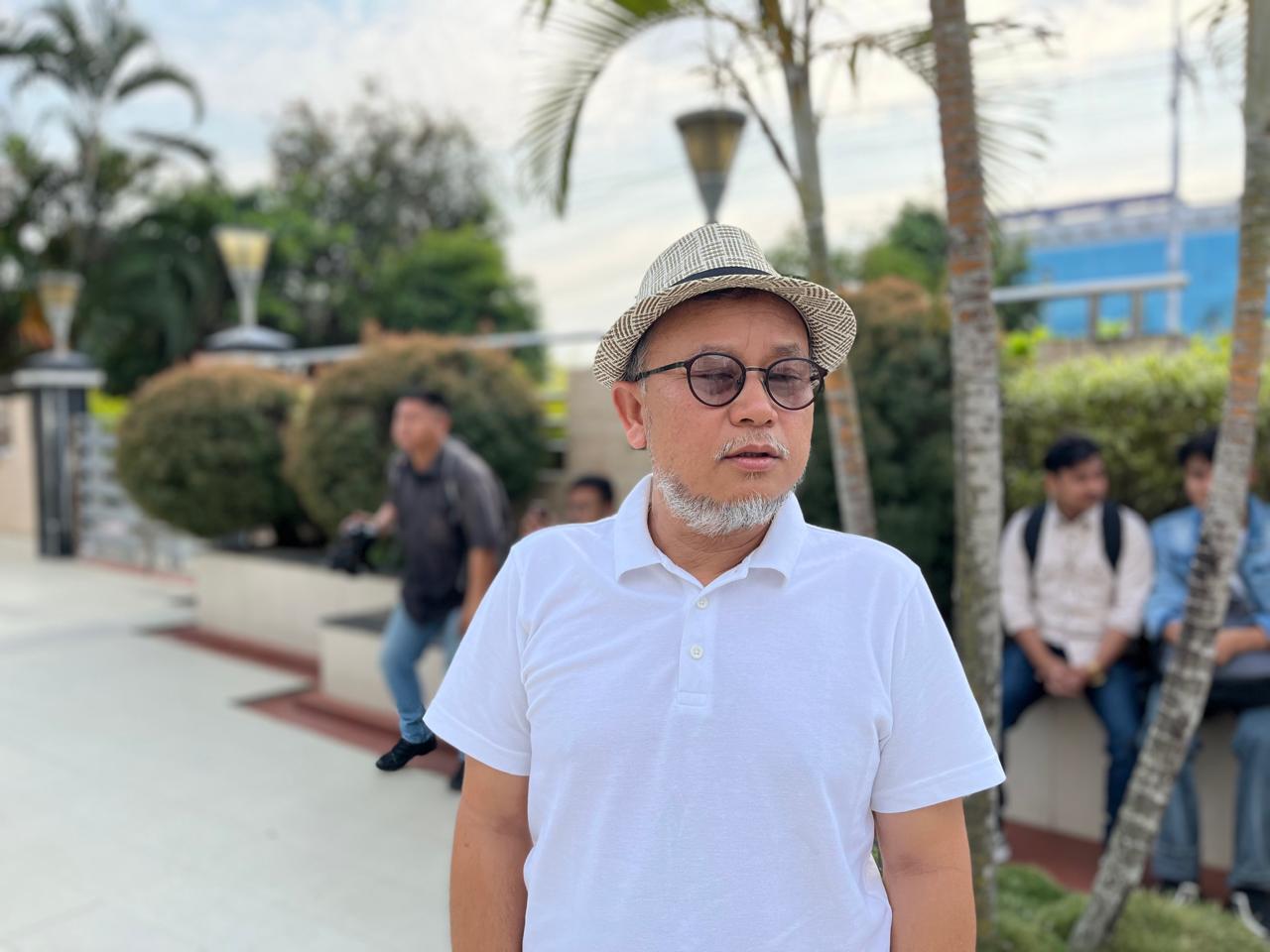
Maria Flores Williams: Pioneering Voice in Cultural Advocacy and Educational Innovation

Meet Maria Flores Williams: The Wife of a Visionary Who Bridged Community and Change

Maria Flores Williams: The Pioneering Chicana Teacher Who Broke Barriers in Education


