Mastering Pst Pdt Time: The Ultimate Guide to Pacific Time Zone Nuances
Mastering Pst Pdt Time: The Ultimate Guide to Pacific Time Zone Nuances
The Pacific Time Zone, encompassing both PST and PDT, dictates the rhythm of life for millions across North America, serving as a critical temporal framework for business, technology, and daily coordination. This article provides a comprehensive exploration of Pacific Standard Time (PST) and Pacific Daylight Time (PDT), demystifying their structure, application, and the pivotal switch between them. Understanding these concepts is essential for seamless scheduling and global connectivity in an interconnected world.
At its core, Pacific Time functions as a living system, shifting between two distinct states to align with the sun's position. This biannual ritual, while routine for some, often triggers confusion regarding terminology, observance dates, and geographic scope. Delving into the mechanics of this time zone reveals a sophisticated adaptation designed to optimize daylight usage and synchronize regional activities.
The Anatomy of Pacific Time: PST vs PDT
The distinction between PST and PDT is fundamental to navigating the temporal landscape of the western Americas. Both represent the same geographic region but are applied in different seasonal contexts to maximize the utilization of natural daylight.
Pacific Standard Time (PST): The Winter Baseline
During the fall and winter months, the Pacific Time Zone operates on Pacific Standard Time. This is the "standard" or permanent time for the zone, established when clocks are set back from Daylight Saving Time. PST is 8 hours behind Coordinated Universal Time (UTC-8). This period is characterized by earlier sunsets and later sunrises, influencing everything from energy consumption patterns to sporting event schedules.
- UTC Offset: UTC-8
- Application: November to March (in the US and Canada)
- Usage: Standard timekeeping when Daylight Saving is not active
For instance, when it is 12:00 PM (noon) in Greenwich, England (UTC+0), it is 4:00 AM in Los Angeles during PST. This specific offset is crucial for international coordination, particularly for businesses with partners in Europe or Asia.
Pacific Daylight Time (PDT): The Summer Shift
To extend evening daylight, the region transitions to Pacific Daylight Time. PDT is observed during the warmer months, effectively moving the clock forward by one hour. The result is a UTC-7 offset, providing an additional hour of evening light for recreation, commerce, and general well-being. PDT typically runs from March to November.
- UTC Offset: UTC-7
- Application: March to November (in the US and Canada)
- Usage: Timekeeping during the period of Daylight Saving Time
Using the same example, when it is noon in Greenwich, it becomes 5:00 AM in Los Angeles during PDT. The one-hour shift significantly alters the daily rhythm, pushing forward schedules for schools, markets, and broadcast media.
The Mechanics of the Switch: When Clocks Change
The transition between PST and PDT is a highly orchestrated event, governed by federal law in the United States and standardized protocols in Canada. The specific dates are not static but follow a recurring annual schedule designed to minimize disruption.
- Spring Forward (PDT Begins): On the second Sunday in March, at 2:00 AM PST, clocks are advanced to 3:00 AM PDT. This "spring forward" effectively loses an hour of sleep but grants extended evening daylight.
- Fall Back (PST Resumes): On the first Sunday in November, at 2:00 AM PDT, clocks are set back to 1:00 AM PST. This "fall back" returns an hour to the day, aligning sleep patterns with the earlier sunrise.
These dates ensure that the majority of the population experiences the shift simultaneously, maintaining consistency across economic and social sectors. However, the human body often takes several days to adjust to the change, a phenomenon commonly known as "social jetlag."
Geographic and Political Scope
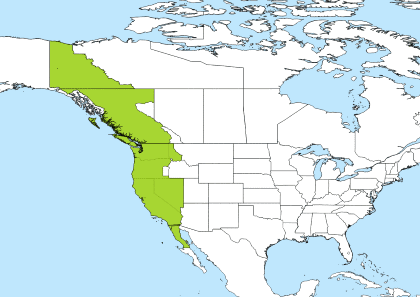
The Pacific Time Zone is not merely a line on a map; it is a vast region encompassing diverse landscapes and jurisdictions. Its application is uniform across specific administrative regions, creating a cohesive temporal bloc.
Primary Regions Observing Pacific Time
The majority of the western coastal United States and western Canada adhere to this schedule. The zone stretches from the bustling urban centers of the West Coast to the remote communities of the northern territories.
- United States: The states of California, Washington, Oregon, Nevada, and most of Idaho.
- Canada: The provinces of British Columbia and Yukon.
- Mexico: The northwestern states of Baja California, which sit directly south of California.
Notably, Arizona and Hawaii do not observe Daylight Saving Time. Arizona remains on Mountain Standard Time (MST) year-round, while Hawaii operates on its own distinct Hawaii-Aleutian Time Zone.
Impact on Technology and Global Coordination
In the digital age, the precision of time is not a convenience but a foundational element of infrastructure. The handling of PST and PDT is a critical challenge for software systems, financial markets, and global networks.
Computing systems rely on Coordinated Universal Time (UTC) as a neutral backbone. Operating systems and applications must then apply the correct local offset, which changes based on the DST status. Failure to update these rules correctly can lead to scheduling errors, data corruption, and security vulnerabilities.
For global enterprises, Pacific Time is often the de facto standard for technology. Major tech hubs in Silicon Valley operate on PDT, making it the temporal center for product launches, earnings calls, and real-time trading. A miscommunication regarding whether an event is scheduled in PST or PDT can derail international negotiations or cause missed deadlines.
Navigating Common Confusions and Best Practices
Despite its prevalence, Pacific Time remains a source of frequent confusion. The ambiguity surrounding the acronyms and the shifting dates require a proactive approach to scheduling and communication.
Best Practices for Scheduling
To avoid errors, professionals are advised to adopt specific strategies when coordinating across time zones:
- Use UTC or Zulu Time: For critical international meetings, referencing UTC eliminates all local ambiguity.
- Specify the Time Zone: Always include the time zone abbreviation (e.g., 10:00 AM PST or 10:00 AM PDT) in emails and calendar invites.
- Leverage Digital Tools: Modern calendar applications like Google Calendar and Outlook automatically adjust for DST if the location is correctly set.
Understanding the current status of the time zone is the first step. Is the world observing PST or PDT? This simple check is the key to unlocking clear communication.
Related Post
The Ultimate Guide to PST and PDT: Unpacking the Pacific Time Zone