Million Billion Trillion: The Ultimate Guide to Understanding These Massive Numbers
Million Billion Trillion: The Ultimate Guide to Understanding These Massive Numbers
The terms million, billion, and trillion represent critical thresholds in finance, science, and economics, yet most people struggle to grasp their true scale and practical implications. This article explores how these numerical milestones shape global markets, scientific discovery, and public policy, while demystifying the vast distances between them through concrete examples and expert perspectives. Understanding the progression from million to trillion is essential for interpreting everything from national debt to technological innovation, as these figures define the scope of modern challenges and achievements.
The journey from million through billion to trillion reveals not just mathematical progression, but fundamentally different scales of human experience and capability. Where a million seconds equals roughly 11 days, a trillion seconds stretches to nearly 32,000 years, illustrating how each step creates an almost incomprehensible leap in magnitude. These numbers serve as both measuring sticks and psychological barriers, helping societies conceptualize everything from individual wealth to cosmic distances.
The Anatomy of Large Numbers
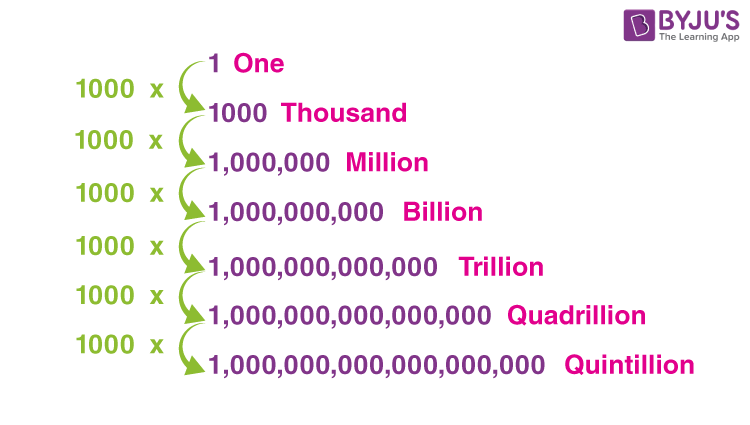
To comprehend the progression from million to trillion, it's essential to understand their mathematical foundation and practical applications across different fields. Each represents a thousandfold increase over the previous unit, but the psychological and practical impact of each step varies dramatically.
Defining the Numerical Progression
The structure of large numbers follows a consistent pattern that forms the backbone of financial, scientific, and statistical analysis:
- Million: 1,000,000 (10^6) - One thousand thousand
- Billion: 1,000,000,000 (10^9) - One thousand million (short scale)
- Trillion: 1,000,000,000,000 (10^12) - One thousand billion
This progression creates exponential gaps that become increasingly difficult to visualize or contextualize in everyday terms.
Historical Context and Usage Evolution
The adoption of these terms reflects profound shifts in economic and scientific understanding. As global markets expanded and scientific capabilities advanced, the need for precise large-number terminology became critical.
- Million: Once considered an unimaginable sum, became commonplace during the Renaissance with the rise of international trade
- Billion: Emerged in the 19th century as nations needed terms for national budgets and astronomical calculations
- Trillion: Gained prominence in the late 20th century with discussions of national debt and cosmic measurements
The transition from billion to trillion particularly marks entry into the realm of macroeconomics and fundamental physics, where numbers begin to challenge human intuition.
Real-World Applications Across Industries
The practical significance of these numerical thresholds manifests differently across sectors, creating distinct professional languages and conceptual frameworks.
Financial Markets and National Economies
In finance, the progression from million to trillion represents different orders of magnitude in economic power and complexity:
- Million: Individual high-net-worth portfolios, mid-sized business valuations
- Billion: Major corporation market caps, national budget allocations
- Trillion: Global GDP figures, total national debt, systemic financial risk
"The difference between billion and trillion isn't just mathematical—it's political and psychological," explains Dr. Elena Rodriguez, professor of macroeconomics at the University of International Finance. "When we move from discussing budgets in billions to trillions, we're entering territory that fundamentally changes how citizens understand governance and economic policy."
Scientific Measurement and Technological Achievement
Science relies heavily on these numerical milestones to describe phenomena beyond ordinary human experience:
- Million: Distance from Earth to Sun (93 million miles), genome base pairs in humans
- Billion: Age of the Earth (4.5 billion years), number of neurons in human brain (86 billion)
- Trillion: Distance to nearest star systems, estimated number of galaxies in observable universe
These measurements help scientists communicate the incredible scale of existence, from subatomic particles to cosmic structures.
Comparative Analysis and Perception Challenges
The psychological impact of these numbers varies dramatically, affecting everything from charitable giving to risk assessment in financial markets.
Time-Based Comparisons
One of the most effective ways to understand these numbers is through temporal comparisons:
- Million seconds: Approximately 11.5 days
- Billion seconds: Approximately 31.7 years
- Trillion seconds: Approximately 31,700 years
This progression illustrates how each numerical threshold creates entirely new frameworks for understanding duration and scale.
Visual and Conceptual Representations
Various analogies help bridge the gap between abstract numbers and tangible understanding:
- Stacking paper: A stack of one million sheets reaches about 4 kilometers high, while one trillion sheets would reach to the moon and back multiple times
- Population analogy: One million people represents a small city; one trillion people would be 13 times the current global population
- Digital storage: One million characters equal roughly 1 MB; one trillion characters equal approximately 1 TB of data
Contemporary Relevance and Future Implications
As global challenges grow in scale, the practical significance of these numerical thresholds continues to expand, particularly in discussions about climate change, technological development, and geopolitical power structures.
Global Challenges and Policy Considerations
The increasing use of trillion-scale figures in policy discussions reflects the growing complexity of addressing planetary-scale challenges:
- Climate investment: Trillion-dollar infrastructure plans for renewable energy transition
- Healthcare: Multi-trillion dollar calculations for pandemic preparedness and treatment research
- Space exploration: Trillions of kilometers in interstellar travel calculations
Technological Frontier and Future Scaling
Emerging technologies continue to push the boundaries of how we conceptualize these numbers:
- Quantum computing promises calculations involving quintillions of operations per second
- Genomic sequencing now deals with petabytes of data containing information measured in billions of base pairs
- AI systems increasingly process trillion-parameter models to achieve human-like pattern recognition
"We're entering an era where trillion-scale considerations become routine in business and policy," notes technology analyst Marcus Chen. "The psychological barrier that once made these numbers abstract is dissolving as they become central to decision-making processes."
The progression from million through billion to trillion represents more than mathematical curiosity—it reflects humanity's expanding capacity to understand, manipulate, and conceptualize increasingly vast scales of reality. As these numbers permeate everyday discourse about climate, economics, and technology, developing genuine numerical literacy becomes essential for informed participation in modern society.
Related Post

When Bigness Isn't Enough: Mastering the Mind-Boggling Vastness of Million, Billion, Trillion, and Quadrillion