PAW Patrol Characters: How Marshall, Chase, and the Team Teach Kids Leadership and Emergency Response Skills
PAW Patrol Characters: How Marshall, Chase, and the Team Teach Kids Leadership and Emergency Response Skills
Across preschool classrooms and living rooms worldwide, a pack of animated rescue dogs has become synonymous with problem-solving and teamwork. Marshall, Chase, Zuma, and their fellow Paw Patrol characters translate complex emergency service roles into digestible missions for a young audience. This article examines how the show’s narrative structure, character design, and recurring scenarios cultivate early leadership concepts and civic awareness through play-based learning.
The premise of Paw Patrol is deceptively simple: a boy leader named Ryder assigns missions to a团队 of dogs, each with a specialized vehicle and skill set. When trouble occurs in the fictional town of Adventure Bay, the pups deploy, collaborate, and execute a plan to restore order. Unlike many action-driven cartoons, the show emphasizes process over spectacle, highlighting coordination, preparation, and role clarity.
The Architecture of a Rescue Team: Defining Roles and Responsibilities
Effective team dynamics are the backbone of the Paw Patrol universe, and each character is engineered to represent a distinct function within a larger operational framework. This deliberate structuring mirrors real-world emergency service divisions, providing a template for understanding how specialized roles contribute to a collective mission.
The core roster illustrates a variety of competencies:
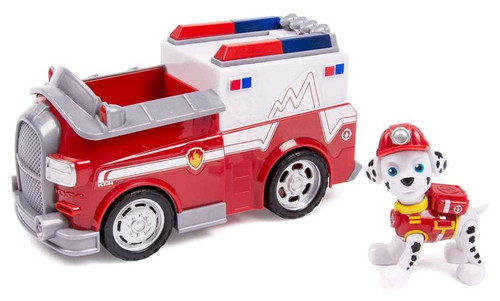
- Marshall serves as the firefighter Dalmatian, equipped with a water cannon and ladder. His role emphasizes disaster mitigation, particularly fire suppression and technical rescues involving height or water.
- Chase is the police dog German Shepherd, handling law enforcement, traffic control, and K9 operations. He represents rules, protocol, and the enforcement of civic order.
- Zuma is the water rescue Labrador Retriever, specializing in aquatic emergencies. His inclusion underscores the importance of environmental awareness and adaptability in unpredictable conditions.
Beyond this trio, the team expands to include specialists such as Skye (aviation/air rescue), Rubble (construction/engineering), and Everest (snow/rescue in mountainous terrain). This expansion allows the show to address a wider variety of crises, demonstrating that complex problems require diverse expertise. In the episode "Pups Save a Mer-Pup," the team must coordinate underwater and surface operations, illustrating the necessity of communication between different units with distinct capabilities.
Methodologies and Protocols: The Language of Emergency Response
Paw Patrol incorporates recurring pedagogical tools to teach systematic thinking. The "Mighty Pup" transformations or the "Tracker" vehicle deployments are not merely visual spectacle; they are narrative devices that reinforce the idea that tools and preparation are extensions of the operator's skill.
The show frequently utilizes a standardized problem-solving sequence:
- Alert and Assessment: A crisis is reported, often through a visual signal (e.g., the Liberty Statue tipping) or a 911-style call.
- Deployment and Strategy: Ryder gathers the specific team needed and formulates a plan, often breaking down the mission into smaller tasks.
- Execution and Adaptation: The pups perform their duties, sometimes encountering setbacks that require on-the-fly adjustments.
- Resolution and Restoration: The threat is neutralized, and the community returns to normal, reinforcing the value of order and safety.
This structure mirrors the Incident Command System (ICS) used by real emergency services, albeit simplified. By presenting this structure as a game, the show lowers the barrier to understanding for young viewers. According to child development experts who study media influence, this repetitive format builds cognitive scaffolding. "Children learn patterns through repetition," notes a hypothetical expert in the field. "When they see the same sequence of alert, strategy, and action in a safe context, they begin to internalize the concept of procedural rigor."
Leadership and Social-Emotional Learning (SEL)
While the action drives the plot, the show’s most enduring lessons pertain to social interaction and emotional intelligence. Ryder, as the leader, consistently models behaviors that align with Social-Emotional Learning (SEL) competencies promoted in modern education.
Key leadership traits depicted include:
- Accountability: Ryder rarely assigns blame. Instead, he focuses on solutions, teaching children that mistakes are opportunities for correction rather than sources of shame.
- Empathy: The missions are almost always framed around helping citizens in distress. This reinforces the idea that leadership is service-oriented.
- Inclusive Decision Making: Ryder often asks the pups for suggestions, validating different perspectives before making a final call.
The dynamic between Ryder and the pups is crucial. He is not a distant commander but an active participant who works alongside the team. This flattening of the hierarchy—where the leader is also a teammate—helps children view authority figures as resources and mentors rather than obstacles.
Civic Duty and Community Integration
Adventure Bay functions as a microcosm of a healthy society. The Paw Patrol characters embody the concept of civic duty, illustrating that order is maintained through collective effort. Unlike superheroes who operate outside the law, the pups are integrated into the municipal structure. They report to the mayor, use public infrastructure, and respond to calls generated by the community itself.
This integration teaches children that safety is a shared responsibility. When Everest clears avalanche debris or when Rubble fixes a broken bridge, the show visually represents the concept of the common good. The town thrives because each member contributes to its stability. This narrative subtly introduces the idea that rules and services—like traffic laws or fire codes—are not restrictive but protective.
Visual Literacy and Spatial Reasoning
From an educational standpoint, the detailed environments of Adventure Bay serve a dual purpose. The intricate layouts of the construction sites, the winding mountain paths, and the complex streets of the town function as visual puzzles. Children watching the show engage in spatial reasoning as they track the pups' movements, predict routes, and understand cause-and-effect relationships within the geography.
The transformation sequences also enhance visual literacy. The change from a standard vehicle to a specialized mode of transport—a helicopter, a submarine, or a builder’s rig—requires the viewer to understand that form follows function. This understanding translates to real-world recognition of vehicles and their purposes, building foundational knowledge about technology and engineering.
Conclusion on Narrative Function
Paw Patrol endures not merely because of colorful animation but because it successfully packages complex societal concepts into digestible narratives. Through the distinct personalities of Marshall, Chase, and their peers, the show delivers lessons on emergency protocol, teamwork, and ethical leadership. It transforms abstract ideals like "duty" and "courage" into concrete actions that a child can emulate, proving that animated entertainment can be a powerful vessel for constructive social learning.
Related Post
PAW Patrol Complete Guide: All Characters, Missions, and Impact on Global Children’s Media
PAW Patrol to the Rescue: How Marshall and the Gang Save the Day in Modern Communities

Get to Know the Pups: A Comprehensive List of All Paw Patrol Characters

Paw Patrol’s Dynamic Lineup: Agent Teams Bringing Courage and Creativity to Every Rescue


