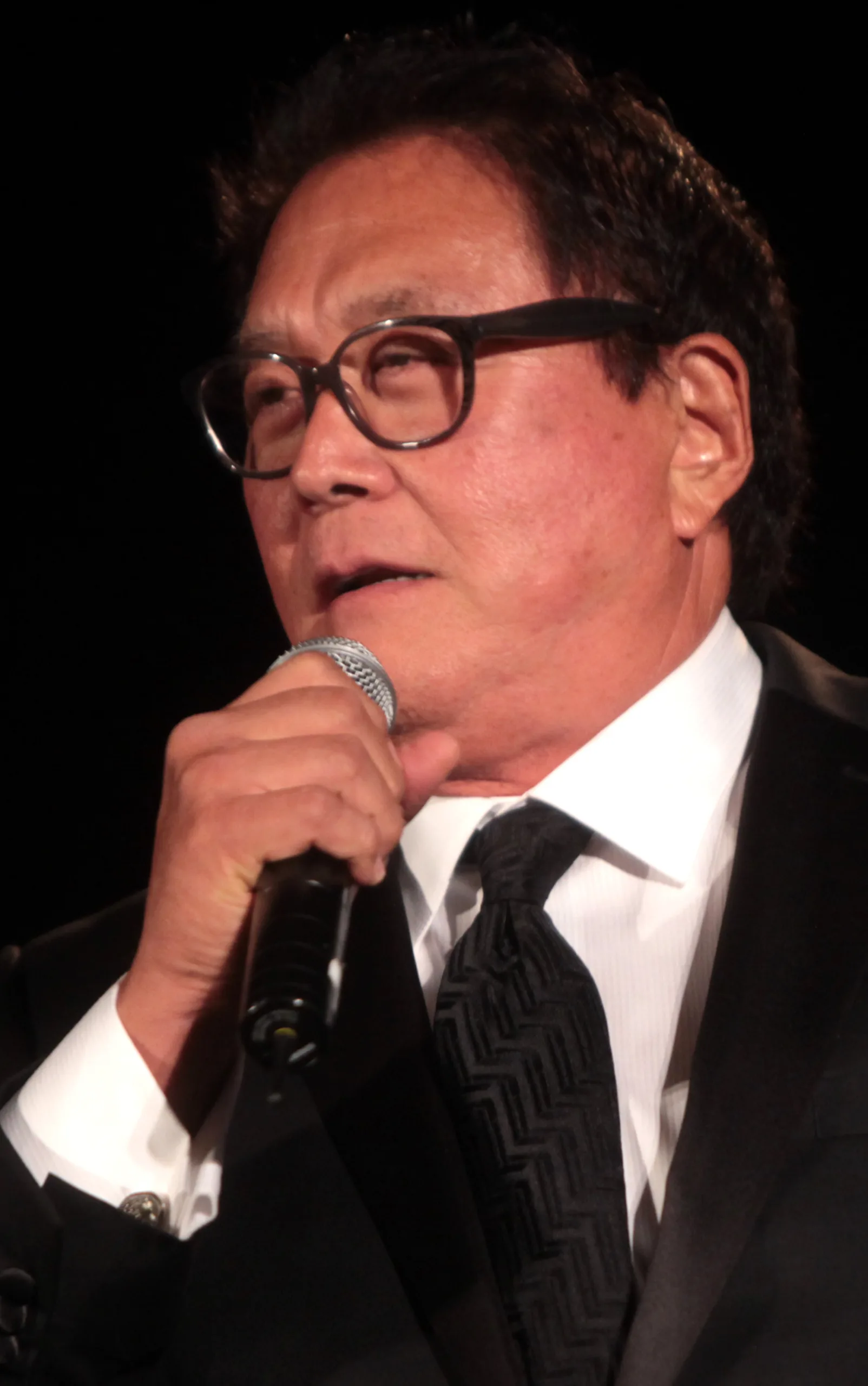
Robert Kiyosaki: The Controversial Visionary Rewriting the Rules of Wealth and Financial Literacy
Robert Kiyosaki: The Controversial Visionary Rewriting the Rules of Wealth and Financial Literacy
For decades, Robert Kiyosaki has been a polarizing figure in the world of personal finance, simultaneously revered as a revolutionary teacher and ridiculed as a purveyor of get-rich-quick schemes. Best known for his seminal work "Rich Dad Poor Dad," Kiyosaki fundamentally shifted the discourse around money by challenging conventional wisdom about assets, liabilities, and the rat race. This article examines the core tenets of his philosophy, their practical application, and the enduring debate surrounding his methods in today's economic landscape.
The essence of Kiyosaki's ideology is not about earning more money, but about understanding the difference between assets and liabilities and acquiring income-generating assets. He argues that the traditional path of studying hard, getting a secure job, and saving money is a recipe for stagnation, as it keeps individuals focused on liabilities that drain cash flow rather than building a portfolio of assets. His central message is a call for financial education and entrepreneurship, urging individuals to break free from financial dependency and build systems that work for them, rather than working for systems.
### The Foundational Split: Rich Dad vs. Poor Dad
Kiyosaki's philosophy is anchored in the contrasting financial mindsets he learned from two father figures: his own biological father, the "Poor Dad," and his best friend's father, the "Rich Dad." This narrative framework, while biographical, serves as a powerful vehicle for illustrating fundamental economic concepts.
The "Poor Dad," a highly educated government official, epitomized the conventional path to financial security. He valued job stability, a strong work ethic, and formal education, often saying, "Study hard so you can find a good company to work for." His approach, while respectable, led to a cycle of trading time for money and a constant struggle with taxes and expenses. In contrast, the "Rich Dad," a self-made entrepreneur with minimal formal education, emphasized financial literacy, risk-taking, and building businesses. He famously asked Kiyosaki, "Why don't you rich?" to provoke thought and challenge the status quo. This dichotomy is not a biography but a parable designed to highlight the different ways people think about and interact with money.
At the heart of the Rich Dad philosophy is a radical reinterpretation of accounting. Kiyosaki teaches that true wealth is not measured by how much money you make, but by how much money you keep, how long it works for you, and how much cash flow it generates. This requires a shift in perspective, where the average person sees a new car as an asset, while the financially literate see it as a liability—a monthly cash outflow that costs money for insurance, maintenance, and depreciation.
### The Asset Quadrant: Building Multiple Income Streams
Kiyosaki popularized the concept of the asset quadrant, a framework for categorizing how individuals earn and manage money. This model divides income generation into four quadrants, each representing a different relationship with employment and capital.
1. **E Quadrant (Employee):** This is the most common quadrant. Individuals trade time for money, receiving a paycheck from an employer. They are subject to the "Paycheck Paradox," where more income often leads to higher taxes and increased spending, resulting in little to no net wealth accumulation.
2. **S Quadrant (Self-Employed):** People in this quadrant work for themselves but are often trapped in their own business. They are technicians who do the work but fail to build a system or a sales force that can operate without their constant presence. Their income stops when they stop working.
3. **B Quadrant (Business Owner):** This is where Kiyosaki positions himself and his teachings. Business owners leverage other people's time, money, and systems to build a scalable entity. The key is to create a system that generates cash flow whether the owner is working or not.
4. **I Quadrant (Investor):** This quadrant involves making your money work for you by investing in stocks, bonds, real estate, and other ventures that generate passive income. True investors focus on assets that appreciate and provide a return, rather than speculative gambling.
The ultimate goal, according to Kiyosaki, is to move left to right across the quadrants, transitioning from being an employee to becoming an investor. This journey requires a fundamental shift in mindset: from seeking security to seeking opportunity, from consuming to producing, and from being a technician to being a visionary.
### Core Strategies for Financial Independence
Kiyosaki's methodology is built on several key strategies that are designed to accelerate wealth building. These are not get-rich-quick tips but a systematic approach to financial empowerment.
* **Buy Assets, Not Liabilities:** This is the foundational rule. An asset puts money in your pocket (e.g., rental properties, stocks that pay dividends, a profitable business). A liability takes money out (e.g., a car, credit card debt, a personal residence). The wealthy focus on acquiring assets, while the poor and middle class often acquire liabilities they think are assets.
* **Mind Your Own Business:** Kiyosaki encourages individuals to build a business or investment portfolio outside of their primary job. This "side business" is a critical buffer against economic downturns and a pathway to true financial independence. It is about building a system that generates income independently of your direct labor.
* **The Power of Leverage:** This includes other people's time, other people's money (OPM), and other people's systems. By using OPM, an investor can control a large asset with a small amount of their own capital. By using other people's time, a business owner can scale their operations beyond the limits of their own hours.
* **Tax Efficiency and the Corporation:** Kiyosaki is a strong advocate for incorporating as a business. He teaches that a corporation is a legal entity that can earn, spend, and grow, and that it offers significant tax advantages over being an employee or a sole proprietor. By treating a business as a corporation, individuals can retain more of their earnings and reinvest them back into the business.
### Criticism and the Evolving Landscape
Kiyosaki's methods have not been without significant criticism. Detractors point to his 2020 prediction of a massive economic crash, which did not materialize as he described, as a mark against his credibility. Others argue that his strategies, particularly real estate and stock market investing, require a level of capital and risk tolerance that is inaccessible to the average person. Some have also scrutinized the commercialization of his brand, noting that a significant portion of his wealth comes from selling books, seminars, and board games rather than from his own investment returns.
Despite these criticisms, Kiyosaki’s core message about financial education remains profoundly relevant. In an era of inflation, stagnant wages, and market volatility, his call to action—to become financially literate, to understand the difference between an asset and a liability, and to build multiple streams of passive income—resonates more strongly than ever. He serves as a provocateur, a teacher, and a reminder that the path to financial freedom is not found in a paycheck, but in the knowledge and discipline to build a system of wealth.
His influence extends beyond personal finance, permeating the culture of entrepreneurship and self-improvement. He has inspired millions to question the traditional employment model and to seek alternative paths to economic independence. While his persona and tactics may be controversial, the fundamental principle he champions—that financial literacy is the most valuable skill one can possess—is a truth that transcends market cycles and individual success stories.
Related Post

Robert Kiyosaki Net Worth Unveiling The Financial Genius Behind the Rich Dad Brand
Robert Kiyosaki’s Books: Building Financial Literacy Through Cashflow Quadrant And Asset Strategies
Robert Kiyosaki Twitter: The Unfiltered Blueprint to Financial Resilience and Controversy
Robert Kiyosaki Net Worth: How the Millionaire Author Built His Empire