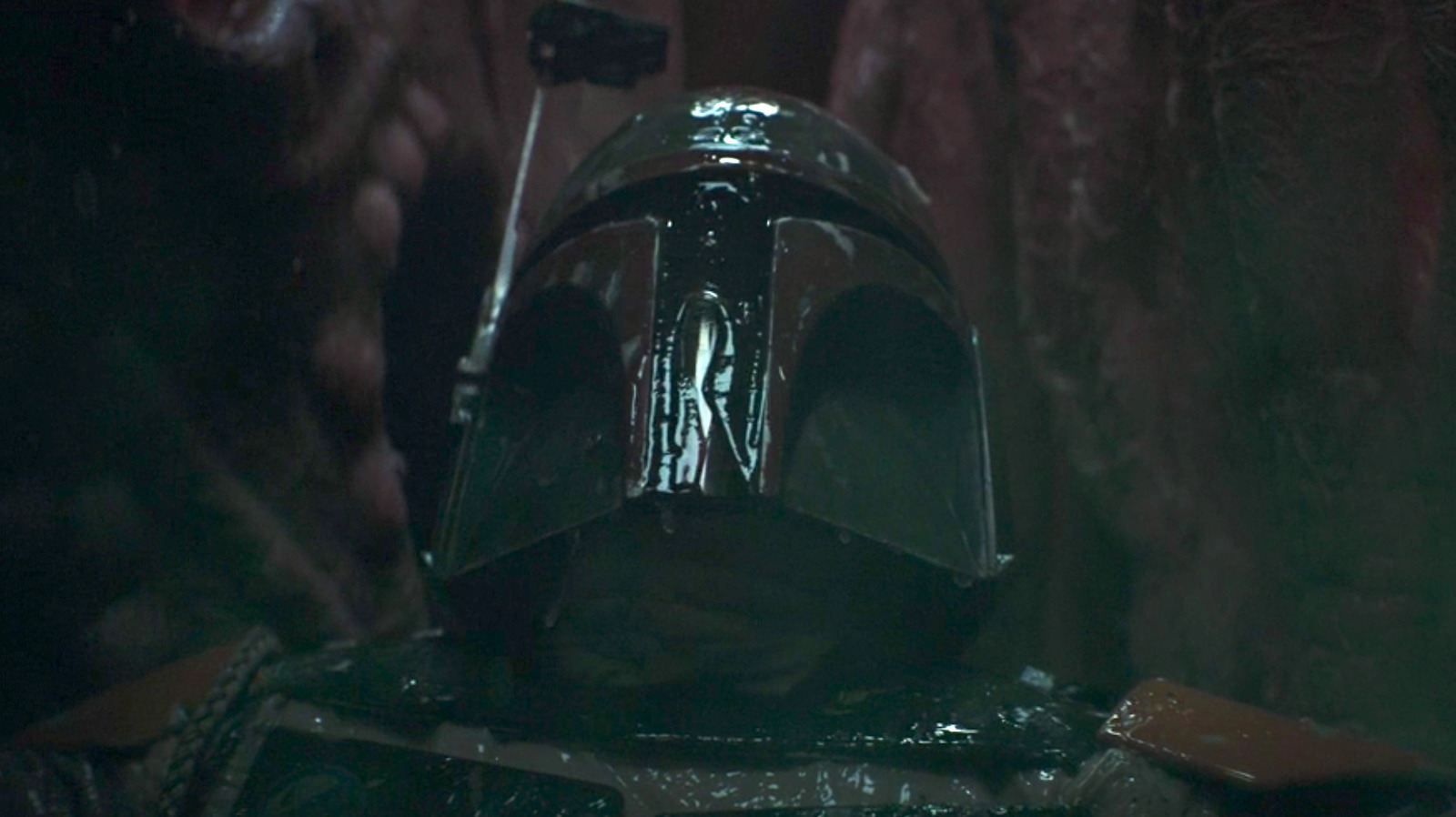
Sarlacc: Biology, History, and the Enduring Fascination of Star Wars' Most Terrorious Beast
Sarlacc: Biology, History, and the Enduring Fascination of Star Wars' Most Terrorious Beast
The Sarlacc, a colossal subterranean predator native to the desert planet Tatooine, has become one of the most iconic and enduring symbols of menace in the Star Wars universe. Best known for its role in the climactic scenes of "Return of the Jedi," the creature offers a compelling case study in speculative biology and cinematic storytelling. This article examines the creature's established canon biology, its narrative function within the saga, and the scientific principles that inform its terrifying reputation.
The creature’s official designation is Sarlacc, and its designation as a "beast" belies a complex organism that has fascinated fans for decades. According to official sources, the Sarlacc is an ancient, sessile entity that survives for millennia by digesting its prey. Its existence on Tatooine represents a remarkable adaptation to a harsh desert environment, turning a barren world into a domain of silent, patient terror. Understanding the Sarlacc requires looking at its physical structure, its role in the galaxy's history, and the science that might support such a formidable predator.
Anatomy of a Monster: The Sarlacc's Physical Profile
The Sarlacc is described as a massive, terrestrial creature with a unique physiological design that makes it a perfect apex predator in its environment. Unlike mobile hunters, the Sarlacc employs a strategy of ambush and digestion, remaining largely buried beneath the sands of the Dune Sea for centuries. Its most recognizable feature is the vast, circular maw surrounded by concentric rings of razor-sharp teeth. This maw is not merely for swallowing; it is the primary tool for processing organic matter.
Below the surface, the creature's anatomy is even more grotesque and efficient. Once captured, the victim is pulled down into a subterranean network of digestive tubules. These tubules are equipped with strong cilia that transport the digested matter to specialized gastric juices, allowing the Sarlacc to absorb nutrients over an extended period. The creature’s biology is not solely focused on predation; it also possesses a unique nervous system that allows it to sense vibrations and the electrical impulses of living creatures from great distances.
* **The Maw:** The primary point of entry, capable of generating a powerful suction to draw in prey.
* **Digestive Tubules:** A network of biological pipelines that break down matter externally or internally before absorption.
* **Cilia:** Microscopic hair-like structures that facilitate the movement of food through the digestive system.
* **Sensory Nodes:** Tentacle-like appendages that detect movement and life signs, allowing the Sarlacc to remain hidden until the perfect moment to strike.
This anatomy suggests a creature that is less an animal and more a geological feature with predatory instincts. It is less of a "he" or "she" and more of a "it," a natural disaster with teeth.
History and Canon: More Than Just Jabba's Pit
While the Sarlacc gained widespread fame through its appearance in *Star Wars: Return of the Jedi*, its history within the galaxy predates the events on Tatooine by millennia. The species is believed to be ancient, with some specimens, such as the famous "Great Pit of Carkoon," existing for over a thousand years. These creatures are not merely animals; they are living landmarks, shaping the behavior and travel routes of those who know of their existence.
The most famous encounter in modern galactic history involves the Hutt crime lord Jabba Desilijic Tiure. In an effort to dispose of his enemies, Jabba utilized the Sarlacc as an execution device, dropping his captives into the creature's maw. This practice cemented the Sarlacc's reputation as the galaxy's most notorious executioner. However, the creature’s role in the larger galactic conflict is often overlooked. The Sarlacc is not a mindless beast; it is a survivor. It has adapted to the arid climate of Tatooine, a testament to its resilience and evolutionary success.
Dr. Patricia O’Connor, a xenobiologist specializing in Outer Rim fauna, offers this perspective:
> "The Sarlacc represents a fascinating evolutionary dead-end and a success story simultaneously. It has effectively become a stationary ecosystem. Its digestive byproducts enrich the surrounding sand, creating a unique niche that supports other, smaller organisms. It is less a predator and more a landscape."
This perspective shifts the view of the Sarlacc from a simple monster to a vital, if terrifying, component of the Tatooinian ecosystem.
The Science of the Horror: Could a Creature Like This Exist?
From a scientific standpoint, the Sarlacc pushes the boundaries of known biology. The concept of a sessile, continent-spanning predator seems to violate fundamental principles of energy consumption and mobility. However, if we apply speculative science, the creature becomes slightly more plausible.
The key to the Sarlacc's survival is its energy efficiency. As a sessile organism, it does not expend calories on hunting or moving. It relies on the passive delivery of food via its trap. The immense size of the creature suggests a metabolism that can store energy for long periods, allowing it to survive for centuries between meals. Its powerful gastric acids are a form of external digestion, a process seen in some terrestrial insects and fungi, but scaled to an unimaginable degree.
Furthermore, the idea of a "thinking" trap is not as far-fetched as it appears. The network of sensory nerves could function similarly to the sensitive hairs of a Venus flytrap, triggering a rapid and powerful muscular contraction when prey is detected. This would allow the Sarlacc to ensnare victims with terrifying speed, belied by its otherwise immobile form.
Legacy and Cultural Impact
Regardless of the biological plausibility, the Sarlacc has secured its place in popular culture. It is a symbol of inescapable doom, a fate worse than death. The image of a screaming victim tumbling into a sea of teeth is seared into the collective memory of a generation. The creature represents the ultimate "dark side" of the Star Wars galaxy—a place where justice is not served, but consumed.
The fear associated with the Sarlacc is not just about the pain of digestion, but the horror of helplessness. Victims are stripped of their agency, their bodies turned into fuel for a creature that will never even acknowledge their existence. This cold, impersonal method of eradication is perhaps the most terrifying aspect of the Sarlacc's design.
In conclusion, the Sarlacc is more than a monster; it is a masterclass in creature design. It combines the visceral horror of the grotesque with the intellectual curiosity of the scientifically speculative. It is a testament to the power of science fiction to create life forms that challenge our understanding of biology and ecology, ensuring that the dread of the Sarlacc will endure as long as Star Wars fans continue to gaze into the shadows of the Dune Sea.
Related Post
Sarlacc The Iconic Star Wars Character Explained: Myth, Origins, and Enduring Legacy