Science Definition For Deposition: The Definitive Process, Power, and Paradox of Earth’s Silent Architect
Science Definition For Deposition: The Definitive Process, Power, and Paradox of Earth’s Silent Architect
Deposition is the geological process by which sediments, soil, and rocks are added to a landform or landmass, transforming the Earth’s surface over time. Often overlooked in favor of more dramatic forces like erosion or tectonic uplift, deposition is the quiet counterpart that builds deltas, beaches, and fertile plains. This article explains the exact science definition for deposition, examines how it works in natural and human contexts, and explores why understanding this process is essential for managing landscapes and mitigating environmental risk.
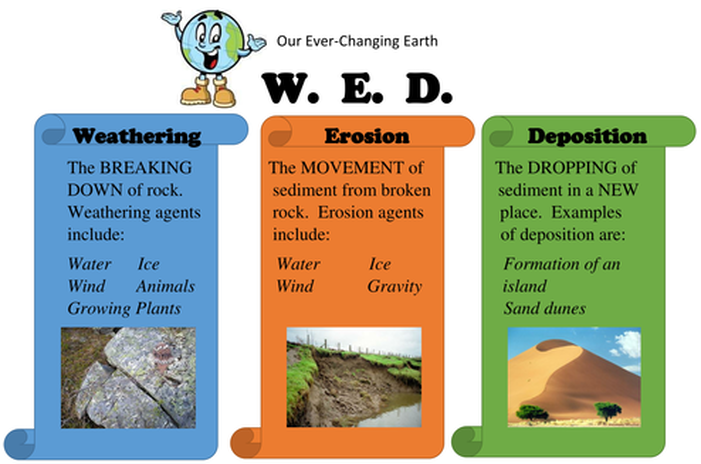
In geology, deposition occurs when the energy of a transporting medium—such as water, wind, ice, or gravity—drops or settles particles that were previously carried in suspension or traction. It is the final stage in a sedimentary cycle that begins with weathering and erosion, continues with transport, and ends with deposition, where material comes to rest and accumulates. The specific environment—river channel, coastal zone, glacial margin, or desert dune—dictates the type, size, and sorting of sediments that are deposited, creating the stratigraphic record that geologists interpret to reconstruct past landscapes and climates.
To state the science definition for deposition precisely: Deposition is the process in which sediments, particles, or dissolved materials are laid down or accumulate in a new location after being transported by natural agents such as water, wind, ice, or gravity, resulting in the buildup of landforms or sedimentary layers. This definition emphasizes both the physical mechanism of settling and the environmental context that determines where and how deposition occurs.
Water is the most common agent of deposition in depositional environments. As river velocity decreases at the mouth of a canyon or within a floodplain, its capacity to carry sediment declines, causing sands, silts, and clays to settle out in sequential layers known as stratified deposits. Deltas, alluvial fans, and natural levees are classic examples of landforms built primarily by deposition, with the former showcasing intricate patterns of sediment branching into standing water bodies. Along coastlines, wave action and longshore currents transport sand and gravel, depositing them as beaches, spits, and barrier islands that protect inland areas from storm impact.
Wind deposition operates in arid and semi-arid regions where loose sediments are abundant and vegetation is sparse. Aeolian processes can transport fine dust and silt over thousands of kilometers, with dust storms depositing layers known as loess across vast tracts of land, particularly in mid-latitude regions downwind of deserts. Coarser sand particles, however, are typically moved by saltation—a hopping motion along the ground—forming distinctive dunes when the wind slows or encounters an obstacle. Loess deposits, some tens of meters thick, are highly fertile and have supported agriculture for millennia, demonstrating the profound influence of wind deposition on both landscape and human settlement.
Glacial deposition is another critical component of the science definition for deposition, involving the accumulation of material dropped directly by ice or meltwater. Glaciers act as powerful bulldozers, eroding bedrock and entraining rock debris ranging from fine silt to house-sized boulders. When the ice melts or retreats, these materials are deposited as till, an unsorted mixture that forms characteristic landforms such as moraines, drumlins, and eskers. Outwash plains form from sediments carried by glacial meltwater streams, which sort particles by size and create layered deposits that reveal the direction and history of ice movement.
Gravity-driven deposition, often categorized separately from fluvial, aeolian, or glacial processes, involves the downslope movement of material under the influence of gravity. Mass wasting events such as landslides, mudflows, and rockfalls transport sediment from higher to lower elevations, where it accumulates at the base of slopes or in depositional basins. These deposits can be highly unconsolidated and prone to re mobilization, making them significant in terms of hazard assessment and land-use planning. Understanding where and how gravity-driven deposition occurs is essential for infrastructure stability and risk reduction in mountainous and coastal regions.
Deposition is not only a geological phenomenon but also a critical factor in environmental management and engineering. In river systems, deposition can lead to aggradation of riverbeds, increasing flood risk in adjacent areas, while strategic deposition in wetlands can be used to restore ecological function and improve water quality. Human activities such as mining, construction, and agriculture often accelerate deposition rates, leading to issues like reservoir siltation, loss of coastal habitats, and altered groundwater dynamics. Engineers and planners must account for deposition processes when designing dams, levees, harbors, and drainage systems to ensure long-term functionality and ecological compatibility.
Climate change is altering deposition patterns in measurable and sometimes alarming ways. Increased precipitation intensity can enhance fluvial deposition and flooding, while rising sea levels and changing storm regimes affect coastal deposition, leading to shoreline retreat or, in some cases, localized aggradation. Reduced glacial meltwater and shifting wind patterns can modify loess deposition and dust transport, with implications for soil fertility, air quality, and regional hydrology. Monitoring deposition rates and patterns through field measurements, remote sensing, and modeling helps scientists and policymakers anticipate future landscape changes and adapt accordingly.
The science definition for deposition encompasses a wide range of physical processes and environmental interactions, highlighting its role as a fundamental mechanism of landscape formation and transformation. By studying how and where sediments are deposited, researchers can interpret Earth’s history, assess present-day environmental changes, and plan for sustainable land and water management. Deposition reminds us that landscapes are dynamic, shaped not only by powerful erosive forces but also by the quiet, ongoing accumulation of material that builds the ground beneath our feet.
Related Post