SiriusXM Radio: How the Pioneer of Satellite Audio Became the Last Bastion of Linear Broadcast in a Streaming World
SiriusXM Radio: How the Pioneer of Satellite Audio Became the Last Bastion of Linear Broadcast in a Streaming World
SiriusXM Radio has evolved from a niche satellite service immune to digital disruption into a sprawling audio conglomerate leveraging legacy subscribers, original podcasts, and automotive integration to remain relevant. By merging the familiar structure of broadcast programming with on-demand capabilities, the company has carved a unique hybrid model that bypasses the limitations of traditional radio while avoiding the volatility of pure streaming competition. This article examines how SiriusXM navigates the tension between its linear radio roots and its push toward a multi-platform media entity in an increasingly fragmented audio landscape.
The origins of SiriusXM trace back to the late 1990s, when the race to commercialize satellite radio technology accelerated amid a frenzy of venture capital investment. Founded through the 2001 merger of Sirius Satellite Radio and XM Satellite Radio, the company spent years battling regulatory hurdles and skepticism toward a subscription-based audio service. Early adopters were drawn by the promise of clear, commercial-free channels spanning music, sports, news, and entertainment, delivered from satellites orbiting thousands of miles above the Earth. Unlike terrestrial radio, which was constrained by geographic spectrum limitations and advertising clutter, satellite radio offered a national footprint with consistent sound quality and curated variety that seemed revolutionary at the time.
The transition from satellite dish to dashboard proved to be the single most consequential strategic decision in SiriusXM’s history. By embedding receivers directly into new vehicles, the company transformed cars into captive listening environments during commutes and road trips. Automakers embraced the model as a value-added feature, while SiriusXM treated the installation as a long-term investment, banking on the fact that drivers would grow accustomed to the service and maintain subscriptions even after warranty periods expired. The predictable revenue stream generated by automotive subscriptions provided a financial buffer that allowed the company to invest in content, technology, and marketing without the immediate pressure to chase advertising dollars at the expense of user experience.
As streaming platforms disrupted the music industry and forced terrestrial radio to adapt, SiriusXM pursued a dual strategy of preservation and innovation. It maintained its core offering of uncensored music channels, live sports play-by-play, and talk radio personalities while simultaneously expanding into on-demand libraries, podcast-style shows, and streaming apps accessible on smartphones and smart speakers. This hybrid approach enabled the company to retain older subscribers who valued the curated nature of linear radio while attracting newer demographics accustomed to algorithmic discovery and podcast bingeing. Rather than positioning itself as a streaming challenger to Spotify or Apple Music, SiriusXM framed its expansion as an evolution of the trusted radio experience, leveraging its archives, celebrity talent, and exclusive events to differentiate itself in a crowded marketplace.
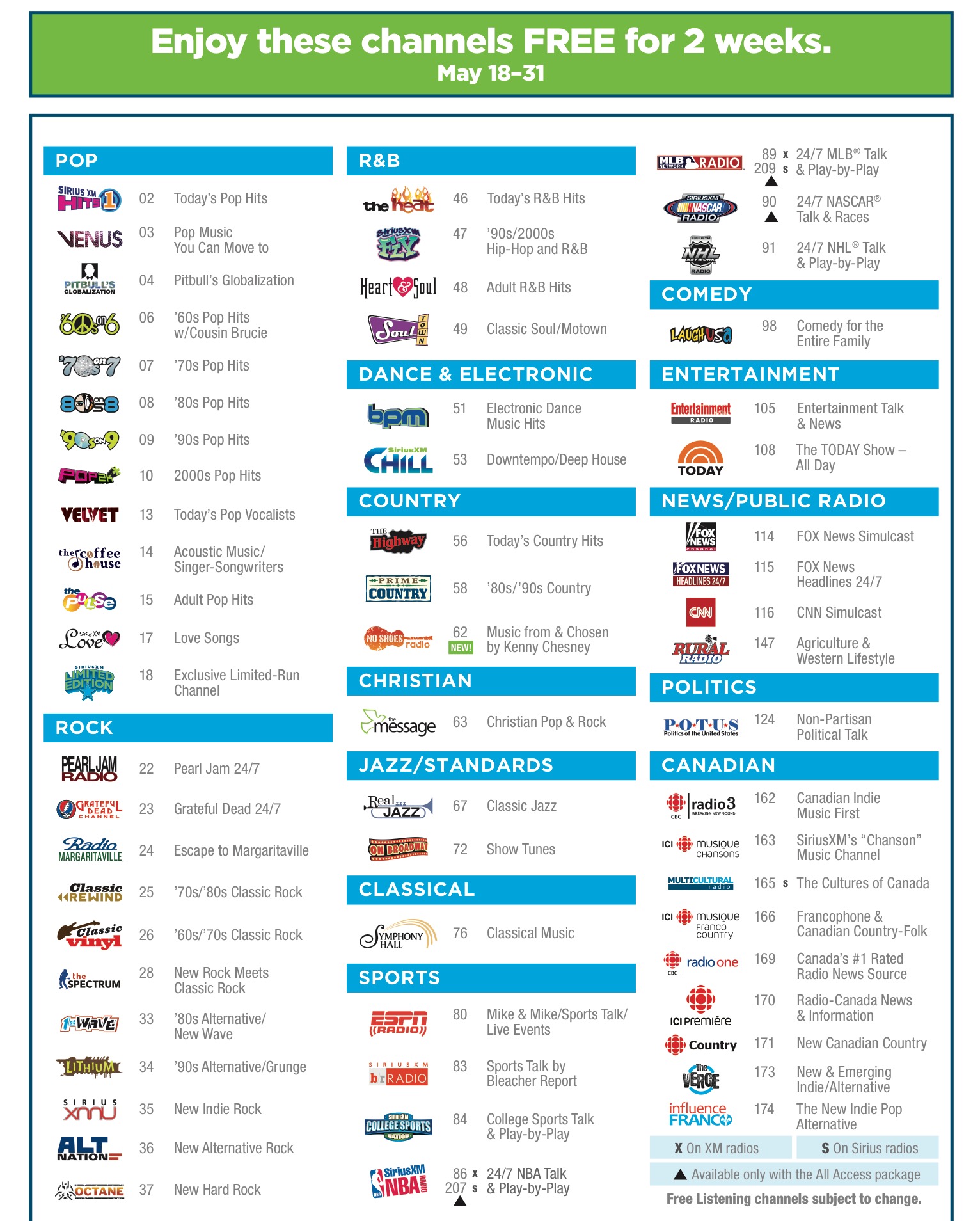
Content has been central to SiriusXM’s ability to sustain subscriber loyalty and fend off cord-cutting trends. The company’s portfolio includes genre-specific music channels, hosted talk shows, regional sports coverage, and original series produced under the SiriusXM Studios banner, many of which are tied to recognizable personalities and established media franchises. Exclusive programming deals, such as channels dedicated to specific artists, decades, or musical themes, create a sense of depth and specialization that is difficult for generalist streaming services to replicate at scale. For sports fans, partnerships with leagues and teams provide live audio broadcasts of games and analysis, turning traffic-heavy commutes into prime viewing windows that exist outside traditional television schedules.
Technological integration has further solidified SiriusXM’s presence beyond the car. Its mobile apps allow subscribers to stream live radio, replay recently aired shows, and access on-demand content across devices, effectively decoupling the service from the physical receiver. Features such as song identification, social sharing, and personalized recommendations have narrowed the gap between traditional radio interactivity and modern digital expectations. The company’s partnerships with connected home speaker brands and in-home smart devices have extended its reach into living rooms and kitchen counters, reinforcing the SiriusXM brand as a ubiquitous companion rather than a situational convenience tied to a dashboard.
Despite these adaptations, questions about SiriusXM’s long-term trajectory persist in an era when audio consumption is increasingly fragmented and on-demand. Critics point to the rising popularity of free, ad-supported streaming services and niche platforms that cater to specific interests as potential threats to subscription-based growth. The company’s reliance on legacy revenue from automotive and satellite subscribers means that continued success depends on balancing innovation against the risk of alienating its existing base. Executives have responded by emphasizing cross-platform integration, data-driven insights, and targeted marketing to highlight the breadth of content available under a single subscription, framing SiriusXM not as a relic of the past but as a flexible audio ecosystem capable of evolving with listener habits.
The financial performance of SiriusXM reflects a mature, cash-generative business rather than a high-growth disruptor, with revenue streams anchored by multi-year subscriber contracts and stable advertising markets. Investors have responded positively to consistent profitability and measured expansion, even as the company navigates competitive pressures and shifting media consumption patterns. Strategic acquisitions, content partnerships, and experiments with emerging formats such as immersive audio and interactive storytelling suggest a willingness to evolve while preserving the core strengths that made satellite radio compelling in the first place. As the audio wars intensify and consumer attention becomes increasingly fragmented, SiriusXM’s ability to reconcile its broadcast heritage with digital transformation will determine whether it remains a mainstay of the media landscape or gradually fades into a footnote of early twenty-first-century technology.
Related Post
Unleash Your Ears: The Ultimate Guide to Sirius XM Radio Stations

Country Roads and Satellite Waves: Exploring the Top Country Stations on Sirius XM Radio
Channel List Sirius Xm Radio: The Ultimate Guide to Every Station, Sport, and Talk Channel
The Ultimate SiriusXM Roadmap: Navigating Music, Talk, and Comedy in Your Daily Life


