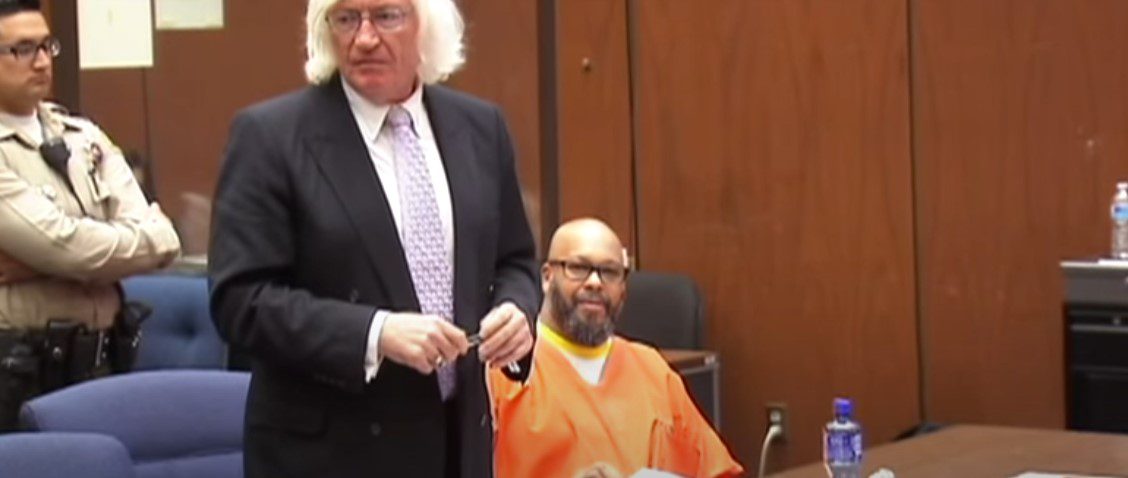
Suge Knight Release Date: Calculating the Timeline for Marion 'Suge' Knight's Freedom
Suge Knight Release Date: Calculating the Timeline for Marion 'Suge' Knight's Freedom
The possibility of Marion "Suge" Knight walking free after serving a fraction of his 28-year sentence for a deadly 2015 hit-and-run has become a subject of intense public speculation. Convicted in 2018 for voluntary manslaughter, the Death Row Records co-founder is navigating the final stretches of his prison term under strict legal guidelines. This article provides a definitive breakdown of the complex calculations governing his release date, examining parole eligibility, sentencing nuances, and the procedural realities that dictate when he might re-enter society.
The case of Marion Suge Knight is inextricably linked to the violent history of the Los Angeles music industry and the high-profile trial that followed. On January 29, 2015, Knight was involved in a collision with a group of men in Compton, resulting in the death of Terry Carter and serious injury to Cle "Bone" Sloan. Initially charged with murder, Knight ultimately pled no contest to voluntary manslaughter and assault with a deadly weapon. His sentence of 28 years, with a possibility of parole, represents a significant reduction from the potential life sentence he faced at trial.
Understanding when Suge Knight might be released requires navigating the labyrinthine world of the California Department of Corrections and Rehabilitation (CDCR) and its distinct legal frameworks. The application of sentencing laws such as Proposition 99, Proposition 36, and the more recent Proposition 57 plays a critical role in determining the timeline. These laws dictate how much of a sentence must be served before an individual becomes eligible for parole, a crucial distinction for anyone following the case.
The Mechanics of Parole Eligibility in California
In the state of California, the path to release is rarely a straight line. It is a journey governed by a combination of the original sentencing terms, state laws that modify those terms, and the discretionary review of the state parole board. For inmates like Suge Knight, who were sentenced under specific statutory codes, the calculation is particularly precise, though subject to interpretation and adjustment.
The initial sentence imposed on Knight was 28 years, with the possibility of parole. This specific designation is the starting point for any timeline analysis. However, the application of Proposition 36, the Safe Neighborhoods and Schools Act, is a primary factor in his potential release date. Passed by voters in 2000, Proposition 36 adjusted the "three strikes" law, and its provisions include a rule that credits defendants with "good time" served at a rate of one day for every day served after the conclusion of their trial. This credit directly impacts the minimum amount of time that must be served before a parole hearing is granted.
To illustrate the calculation, consider the following breakdown of the factors involved:
* **Original Sentence:** 28 years with the possibility of parole.
* **Good Time Credit (Proposition 36):** Assuming Knight was arrested in 2015 and convicted in 2018, he would have accrued significant pre-release custody credit. The standard is one day credited for each day served after trial. If his trial concluded in 2018 and he had been incarcerated since 2015, this could amount to roughly 1,000 days of credit, or nearly 3 years.
* **Parole Eligibility Date:** This is the earliest point at which the parole board can consider the inmate for release. For a 28-year sentence with a possibility of parole, the board typically reviews the case at the one-third mark or at the 10-year mark, whichever is greater. One-third of 28 years is approximately 9.3 years. Therefore, the theoretical parole eligibility window would open around 2024, assuming no additional adjustments.
However, the CDCR's internal guidelines add another layer of complexity. The department often sets a "sailing date," which is considered the official start of the sentence for administrative purposes. This date can sometimes differ from the date of arrest or the imposition of sentence, further muddying the timeline for the public.
The Role of Disciplinary History and Good Conduct
Even if an inmate becomes legally eligible for parole, the final decision rests with the California Parole Board. This panel of officials reviews a variety of factors, not the least of which is the inmate's disciplinary record while incarcerated. Any infractions, whether major or minor, can delay a release date by months or even years.
For a high-profile inmate like Suge Knight, the parole process is under a microscope. The board must consider not only the letter of the law but also the potential public safety implications of releasing a figure who was once a titan of the music industry. While the law provides a framework, the application of that law is often influenced by these qualitative assessments.
* **Disciplinary Reports:** Inmates can earn "good conduct time" credits for positive behavior, which can reduce their sentence. Conversely, "misconduct time" is added for violations.
* **Parole Conditions:** If granted parole, the release is not a clean break. The inmate is typically placed on a period of supervised release, which can include GPS monitoring, restrictions on travel, and mandatory check-ins with a parole officer. For Knight, any conditions would likely be stringent given his history and the nature of his crime.
The interplay between these legal mechanisms creates a moving target. While one can estimate a release window based on statutes and credits, the precise date remains fluid until the CDCR makes a final calculation or the parole board grants release. Public records requests to the CDCR would be required to obtain the exact administrative sailing date and the calculated parole eligibility date specific to Marion Suge Knight's inmate number. Without access to these specific internal documents, the timeline remains an informed estimation based on the known facts of the case and the standard operating procedures of the California penal system.
As the legal wheels turn, the question of Suge Knight's release date continues to captivate public interest. It serves as a stark reminder of the long arm of the law and the intricate calculations that govern life and liberty within the carceral system. For now, the definitive answer lies buried in the archives of the California Department of Corrections, a complex equation of time, behavior, and judicial discretion that will eventually determine when, or if, the music industry's most notorious figure walks free.
Related Post
Suge Knight Release Date: The Definitive Timeline From Incarceration To Conditional Freedom