The Brad Bellick Paradox: How Prison Guard Became Prisoner of Pop Culture
The Brad Bellick Paradox: How Prison Guard Became Prisoner of Pop Culture
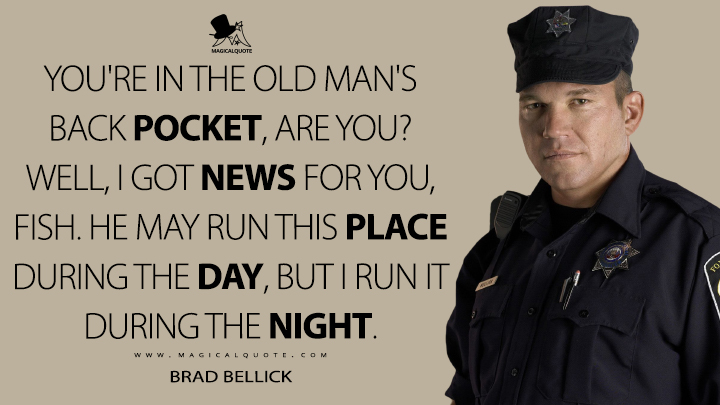
Wade Williams’ portrayal of Captain Brad Bellick on Fox’s “Prison Break” transformed a one-dimensional antagonist into an unlikely cultural icon, revealing the complex relationship between fiction and audience empathy. This article examines how Bellick evolved from a simple villain into a symbol of flawed authority, exploring the performance behind the character and the sociological implications of rooting for the prison guard. Through analysis of key story arcs and fan reception, we dissect why a man dedicated to upholding an oppressive system became a figure of both contempt and reluctant admiration.
The character of Brad Bellick entered the narrative of “Prison Break” as the stereotypical brutal prison captain, a man whose function was to embody institutional obstruction and cruelty. Tasked with preventing the escape of genius engineer Michael Scofield, Bellick employed methods that ranged from intimidation to outright brutality, serving as the primary human barrier between the protagonists and freedom. Yet, as the series progressed, creator Paul Scheuring and writer Karyn Usher deliberately layered the character, moving beyond the trope of the simple, mustache-twirling guard to expose vulnerability, ambition, and a warped sense of duty. This deliberate complexity is what allowed the character to transcend his initial purpose and lodge himself permanently in the pop culture consciousness, demonstrating how even the most antagonistic roles can become vehicles for unexpected narrative depth.
The Anatomy of the Antagonist: Performance and Persona
Wade Williams’ performance was the anchor that grounded Bellick’s evolution in reality, preventing the character from becoming a mere caricature. His physicality—ramrod straight posture, deliberate movements, and a deep, commanding voice—initially presented Bellick as an immovable object. However, Williams consistently infused the role with subtle shifts in expression that hinted at a man under pressure, revealing the cost of his unwavering stance. The actor’s ability to transition from cold fury to moments of raw, almost bewildered panic provided the character with a tragic dimension. He wasn't just evil; he was a man trapped by his persona and the system he served, a realization that resonated with viewers and critics alike.
Consider the dynamic between Bellick and his direct superior, the morally bankrupt warden Henry Pope, played by Stacy Keach. This relationship was a masterclass in subtle power plays, where Bellick’s aggressive enforcement of rules often put him at odds with the warden’s more calculating, long-game approach. Bellick represented the blunt instrument of institutional power, while Pope was the scalpel. This friction humanized the captain, positioning him not as a mindless enforcer but as a loyal soldier whose methods, while harsh, were born from a twisted allegiance to the prison’s corrupt hierarchy.
Key Arcs: From Brute to Reluctant Survivor
Bellick’s journey is defined by several pivotal arcs that chart his transformation from antagonist to a more complex, albeit still flawed, figure. These moments served as the crucible that forged a more three-dimensional character, moving the audience from simple disdain to a more complicated mix of contempt and pity.
The African Escape Arc: Perhaps the most significant turning point for Bellick was his capture and subsequent imprisonment in the brutal, inescapable conditions of the Panama prison camp. Stripped of his authority, uniform, and identity, Bellick was forced to survive alongside the very men he once hunted. This narrative device was brilliant because it completely inverted the power dynamic. Thrown into an environment where his training was useless and his bravado was a liability, Bellick was reduced to a desperate survivor. His interactions with inmates like Michael and Sucre revealed a capacity for grudging cooperation and even survival instincts that bordered on the heroic, albeit motivated by self-preservation.The Pursuit of Redemption: Upon his return to the US prison system, Bellick’s motivations shifted dramatically. No longer the captain of the prison, he became an inmate, a fish out of water. This new position allowed the writers to explore his vulnerability and isolation. He navigated a hostile new environment, facing the very real threat of violence from inmates he once policed. His attempts to navigate this new world, sometimes clumsily and sometimes with surprising resilience, added a layer of dark comedy and pathos. He became a symbol of the cyclical nature of the prison system, a man who enforced the rules only to become a victim of them.The Sociological Mirror: Why We Root for the “Enemy”
The phenomenon of audiences rooting for Brad Bellick is a fascinating sociological case study. It speaks to a fundamental human desire to see complexity in morality and a skepticism toward institutional narratives. Bellick represented the system, and yet, the system failed him. When he was powerless, stripped of his badge and his authority, he became vulnerable, and vulnerability is a powerful trigger for empathy.
* **The Underdog Instinct:** Humans are inherently drawn to underdog stories. Bellick, in his post-capture state, was the ultimate underdog. He was a large man in a small, brutal world, struggling just to exist. His failures were palpable, and his struggles to adapt were relatable on a basic, human level.
* **The Flawed Authority Figure:** The character tapped into a widespread skepticism of authority. Bellick was not a cartoonish villain; he was a man who believed in the rules, even when the rules were corrupt or hypocritical. Seeing him humbled by the very system he served provided a form of catharsis for viewers who may harbor resentment towards institutional power.
* **The Quest for Identity:** Beyond his role as a guard, Bellick was a man searching for purpose. His identity was so tightly wrapped in his uniform and his authority that when that was gone, he was lost. This existential crisis mirrored the struggles of many individuals facing job loss or a drastic change in life circumstances, making his journey resonate on a personal level.
Legacy and Lasting Impact
Years after the series finale, Brad Bellick remains a touchstone in television discussion. He is frequently cited in conversations about the best supporting characters in dramatic television, a testament to the enduring appeal of Wade Williams’ performance. The character serves as a prime example of how a well-written antagonist can become a protagonist in their own right, not through a change of heart, but through a change of circumstance. Bellick’s legacy is a reminder that the line between hero and villain is often blurred, and that the most compelling characters are rarely purely one or the other. He was the face of oppression who, through sheer misfortune, became the audience’s unlikely proxy for survival, proving that even the most rigid enforcer of the system can become its most poignant casualty.
Related Post
Behind Bars: The Rise and Fall of Brad Bellick, Fox River's Most Feared Correctional Officer


