The Brokeback Mountain Filmed Journey: From Devastating Short Story to Cinematic Landmark
The Brokeback Mountain Filmed Journey: From Devastating Short Story to Cinematic Landmark
The 2005 film Brokeback Mountain represents a watershed moment in cinema, transforming Annie Proulx’s stark 1997 short story into a visually opulent and emotionally resonant masterpiece. Directed by Ang Lee and starring Heath Ledger and Jake Gyllenhaal, the production navigated a complex landscape of artistic vision, logistical challenges, and cultural sensitivities to depict a profound love story. This article examines the intricate process of how the Brokeback Mountain filmed journey unfolded, from pre-production decisions to the final cut that captivated global audiences.
The decision to bring Proulx’s minimalist prose to the big screen required significant adaptation. Producer Diana Ossana, who co-wrote the screenplay with Larry McMurtry, faced the initial challenge of translating the story’s fragmented, internal narrative into a visual language. The vast, isolating Wyoming landscape became a central character, demanding a meticulous approach to location scouting and cinematography. "The story was so interior, and the language so elliptical," Ossana later reflected. "Our job was to find the visual equivalents for that emotion and that repression." This foundational work set the stage for a production that would prioritize mood and atmosphere over conventional dramatic structure.
The logistical undertaking of filming in remote, mountainous terrain was immense. The production team selected several real locations in Alberta, Canada, to stand in for the fictional Brokeback Mountain. These included the breathtaking Icefields Parkway and the stark beauty of the Canadian Rockies, which provided the necessary isolation and grandeur. However, shooting in such a rugged environment presented daily obstacles. Weather conditions were notoriously unpredictable, with crews battling sudden snowstorms and high winds that could halt progress for days. The physical demands on the cast and crew were severe, requiring specialized equipment and safety protocols for mountain access.
Heath Ledger and Jake Gyllenhaal underwent intensive preparation to embody their characters, Ennis Del Mar and Jack Twist. To achieve the authentic look of ranchers, both actors gained weight and grew their hair and beards. They spent weeks living on a real ranch, learning how to ride horses, handle cattle, and adopt the specific physicality required for the roles. This immersion was crucial for developing the naturalistic rapport visible in their performances. Ledger, in particular, was known for his methodical approach, keeping a journal in character to explore Ennis's internal world. "Heath would come in and he’d have dirt on his boots," recalled filmmaker Rodrigo Prieto, the director of photography. "He was completely committed to the physical and emotional reality of the character."
The film’s iconic romantic scenes, particularly the now-famous shirt-twist scene, required careful choreography and a high degree of trust between the actors and the director. Ang Lee fostered an environment of collaboration and restraint, encouraging subtlety over overt expression. The famous camping scene, where Jack and Ennis tentatively explore their connection, was shot over several days to capture the nuanced progression of their relationship. Lee utilized lingering close-ups and the natural soundscape—the wind, the crickets—to create tension and intimacy without resorting to melodrama. This deliberate pacing allowed the audience to invest in the emotional complexity of the moment.
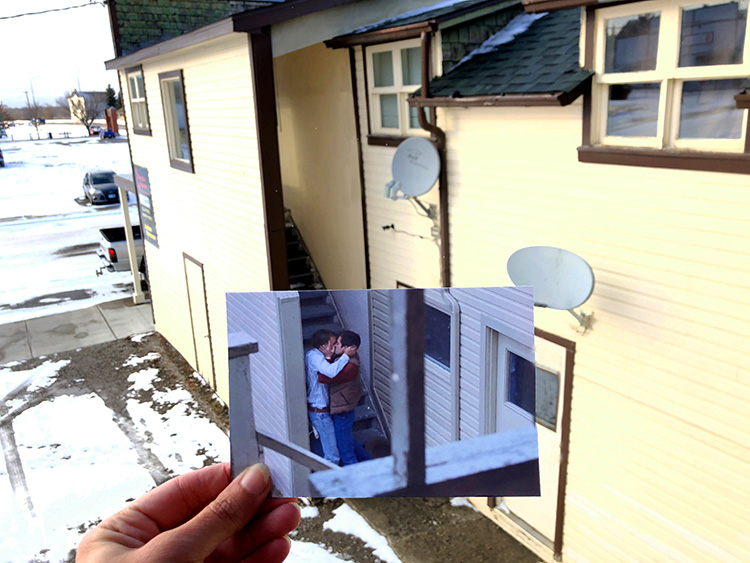
The use of costume and production design was instrumental in conveying the characters' inner lives and the era they inhabited. Costume designer Marit Allen drew inspiration from 1960s Western wear, sourcing authentic fabrics and workwear that reflected the characters' rugged lifestyles and economic status. The contrast between the muted, earthy tones of their clothing on the mountain and the brighter, more colorful palette of their lives in Texas served as a visual metaphor for their dual existences. The ramshackle house in Texas, filled with flimsy trailers, underscored the impermanence and instability of their lives outside the mountain.
The soundtrack, composed by Gustavo Santaolalla, became an integral part of the film’s emotional impact. Santaolalla’s score, featuring melancholic guitar melodies and sparse instrumentation, perfectly complemented the film’s themes of longing and repression. The music avoided overt sentimentality, instead creating a haunting backdrop that underscored the unspoken feelings between the protagonists. The decision to use mostly instrumental music was a conscious one, allowing the visuals and performances to carry the primary emotional weight. "The music had to be very fragile," Santaolalla explained. "It had to breathe with the images."
The post-production process involved meticulous editing to maintain the film’s contemplative rhythm. Editor Rodrigo Prieto worked closely with Ang Lee to structure the narrative across several decades, using conventional storytelling markers rather than explicit scene transitions. The film’s non-linear structure, jumping back and forth in time, mirrors the persistence of memory and the inescapable nature of the past. This formal choice distinguished Brokeback Mountain from more conventional period dramas and contributed to its unique cinematic texture. The final cut is a testament to disciplined storytelling, where every frame serves the central relationship.
The release of Brokeback Mountain ignited a global conversation about homosexuality in cinema and society. Its unflinching portrayal of a same-sex relationship set against a backdrop of societal condemnation resonated deeply with audiences worldwide. The film garnered widespread critical acclaim, earning numerous awards, including three Academy Awards. Its success signaled a shift in mainstream cinema, demonstrating that complex, human stories about queer lives could achieve both artistic and commercial validation. The film’s legacy is cemented not only as a landmark in LGBTQ+ representation but also as a profound exploration of love, loneliness, and the choices that define a life.
Related Post
Where Was Brokeback Mountain Filmed: The Hidden Landscapes Behind the Cinematic Love Story

Breaking Down the Barriers: The Historic Success of Brokeback Mountain Filmed on Location
The Hidden Spots of Wyoming: A Closer Look at Where Brokeback Mountain Was Filmed

Where Was The Movie Brokeback Mountain Filmed: The Undiscovered Wonders of Wyoming and Alberta


