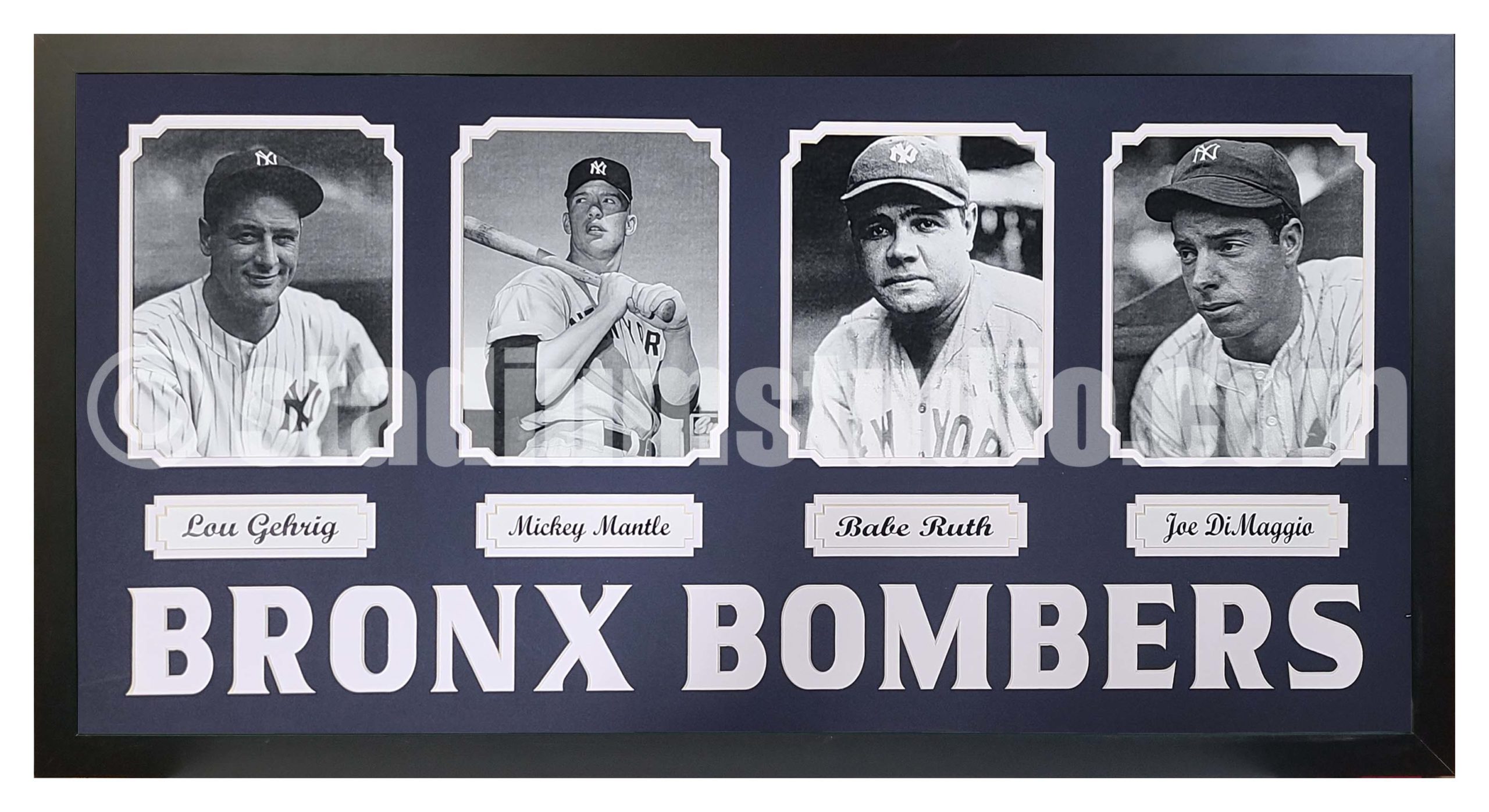
The Bronx Bombers: A Dynasty Forged in Fire and Faith
The Bronx Bombers: A Dynasty Forged in Fire and Faith
The New York Yankees, colloquially known as the Bronx Bombers, stand as the most storied franchise in professional sports, defined by relentless excellence and a trophy case that overflows with history. From Babe Ruth’s mythical called shot to Derek Jeter’s signature flip, the franchise has weathered economic depressions, world wars, and bitter rivalries to become a global symbol of American sporting success. This is the definitive chronicle of how a baseball team transcended its sport to become an institution.
For more than a century, the Yankees have operated at the intersection of commerce and competition, leveraging a perfect storm of market size, media innovation, and legendary talent to build what is arguably the most valuable brand in all of sports. While other franchises have risen and fallen, the Yankees maintain an unmatched cultural footprint, turning the Bronx into hallowed ground for baseball pilgrims. The following is an in-depth look at the history, architecture, and enduring legacy of the Bronx Bombers.
### The Genesis of a Dynasty
The origins of the Yankees franchise are rooted in the tumult of the early 20th century. Originally established in 1901 as the Baltimore Orioles, the franchise relocated to New York in 1903 and became the Highlanders, playing out of Hilltop Park. The turning point came in 1913 when the team moved to the expansive Polo Grounds and adopted the iconic pinstripes.
The transformation into a dynasty, however, was catalyzed by the acquisition of a flamboyant first baseman from the Boston Red Sox.
* **The Babe Arrives:** In 1919, Jack Dunn, the owner of the Baltimore Orioles, sold George Herman Ruth to the Yankees to alleviate financial pressure. This transaction, viewed at the time as a salary dump, would become the most consequential in sports history. Ruth, who had been a pitcher, was repositioned as a full-time slugger, and the game of baseball was forever altered.
* **The House That Ruth Built:** Yankee Stadium opened its gates on April 18, 1923. The venue was designed specifically to accommodate Ruth’s prodigious power. The right-field porch became known as "Ruthville," and the stadium earned the nickname "The House That Ruth Built." It was more than a ballfield; it was a cathedral of the sport.
### The Golden Age and the Iron Horse
While Ruth provided the offensive spark, it was Lou Gehrig who embodied the team’s resilience and heart. Gerig’s consecutive game streak, which stood for 56 years, became a benchmark of durability and dedication. He and Ruth formed the most fearsome one-two punch in baseball, leading the Yankees to their first World Series championship in 1923 and another in 1926.
The 1930s solidified the Yankees’ supremacy. Under the stewardship of legendary manager Joe McCarthy, the team perfected a blend of power and speed. The 1936 Yankees, featuring Gehrig, Ruth, and a young Joe DiMaggio, swept the Chicago White Sox in the World Series.
* **The DiMaggio Streak:** In 1941, Joe DiMaggio embarked on a 56-game hitting streak, a feat that remains arguably the most unbreakable record in all of sports. While the streak eventually ended, DiMaggio’s impact on the game—and the team’s winning culture—was instantaneous.
* **Integration and Inevitability:** The Yankees integrated baseball later than some teams, bringing on stars like Mickey Mantle and Yogi Berra in the 1950s. This era yielded an unprecedented five consecutive championships from 1949 to 1953, establishing a level of dominance that frustrated rivals and captivated the nation.
### Modern Era and the Core of a Champion
The latter half of the 20th century saw the Yankees endure lean years, but they always retained the financial wherewithal and the institutional memory to return to prominence. The 1970s and 80s were defined by Reggie Jackson and Billy Martin’s electric teams. However, the modern incarnation of the dynasty was cemented in the late 1990s.
Manager Joe Torre and owner George Steinbrenner assembled a "Core Four" that dominated the American League for over a decade.
1. **Derek Jeter:** The team captain, known for his clutch hitting and slick defensive play at shortstop.
2. **Damon Wayans:** The switch-hitting maestro who provided power and stability at second base.
3. **Andy Pettitte:** The gritty left-hander who was the workhorse of the pitching rotation.
4. **Mariano Rivera:** The closer, a future Hall of Famer whose cut fastball was nearly unhittable, providing an anchor of calm in the chaos of the postseason.
This group won four World Series titles between 1996 and 2000, re-establishing the Yankees as the gold standard of baseball. Rivera, in particular, became the embodiment of the franchise’s clutch DNA. As Hall of Famer Reggie Jackson noted of the era, "It wasn't just about talent. It was about the guy next to you. You knew Jose [Mourino, editor’s note: likely intended Joe Torre] had your back, and you knew Mariano had your back in the ninth inning."
### The Business of Winning
The Yankees' success is not merely a product of the clubhouse; it is a masterclass in sports business. They generate more revenue than almost any other franchise due to their massive media deal with YES Network and their global brand. This financial muscle allows them to pursue free agency in a way no other team can.
While this "buy" approach has drawn criticism for creating a two-tiered league, the Yankees view it as a necessity. They operate under a unique paradigm: they are expected to win every year. As former general manager Brian Cashman stated in a rare interview, "The weight we carry—historically, culturally, financially—is immense. We aren't measured by one season. We are measured by the legacy we leave behind. That pressure is a badge of honor."
This pressure manifests in the annual pursuit of perfection. The Yankees consistently have the highest payroll in baseball, signing veterans like Gerrit Cole and Giancarlo Stanton to massive contracts. This strategy ensures they are always competitive, even if it sacrifices long-term flexibility.
### The Architecture of a Legacy
The physical spaces associated with the Yankees are as integral to their story as the players themselves. The original Yankee Stadium, which hosted Babe Ruth and Lou Gehrig, was demolished in 2008. In its place rose a modern, steel-and-glass cathedral of baseball, replete with a monumental monument park honoring the franchise’s greatest legends.
The new stadium, while sleek, has been criticized for lacking the intimate charm of the original. Yet, it remains a fortress. The right-field deck, affectionately known as "Ruthville" in the new park, still erupts with energy when a home run is launched. The design ensures that the legacy of the past is physically embedded in the architecture of the present.
### The Enduring Impact
The influence of the Bronx Bombers extends far beyond the statistics page. They were the first team to embrace analytics on a large scale, a trend that has reshaped the entire league. They were also pioneers in international scouting, developing talent from the Dominican Republic and Venezuela, broadening the global appeal of the game.
Their rivalry with the Boston Red Sox is the greatest in all of sports, a clash of old-world grit versus new-world power. Every series between these two teams carries the weight of a century of animosity and drama, captivating fans and non-fans alike.
The Yankees are a paradox. They are a bloated corporate entity often criticized for their spending, yet they are also the standard by which all other franchises are judged. They are a team that chokes in October lore, yet they have won 27 World Series, 40 American League pennants, and 16 East Division titles.
In the end, the story of the Bronx Bombers is the story of American resilience and reinvention. They have faced decline, scandal, and fierce competition, yet they have always found a way to rebuild and reclaim the top spot. They are not just a baseball team; they are a cultural touchstone, a reminder of a bygone era where the crack of the bat and the roar of the crowd in the Bronx signaled the promise of a fall afternoon spent in hopeful anticipation.
Related Post

Bronx Bombers Informally: The Soul of the Bronx’s Baseball Revolution

Yankees A Deep Dive Into the Bronx Bombers: The History, Pulse, and Legacy of New York’s Greatest Offense

Bronx Bombers Informally: The Unfiltered, Hilarious Stories Behind the Team That Defined an Era