The Byway Vs Highway Debate: Choosing The Right Road For Your Journey
The Byway Vs Highway Debate: Choosing The Right Road For Your Journey
The United States transportation network presents drivers with a spectrum of road options, from historic byways weaving through rural valleys to vast highways stitching the nation together. Understanding the distinct purposes, design standards, and regulations of these routes is essential for efficient and safe travel. This article examines the fundamental differences between byways and highways, analyzing their engineering, legal definitions, and roles within the broader transportation ecosystem.
Defining The Divide: What Constitutes A Highway?
In the American context, the term "highway" generally refers to a major public road, especially a main route between towns or areas. Highways are engineered for high-volume, high-speed vehicular traffic and form the backbone of interstate and state transportation systems. They are characterized by controlled access points, limited intersections, and design speeds that often exceed 65 miles per hour.
The federal government plays a significant role in the highway system through the Federal-Aid Highway Program, which funds projects deemed vital for national connectivity and economic vitality. These roads are built to strict geometric standards, featuring wide lanes, paved shoulders, median barriers, and advanced signage to facilitate safe, high-speed travel.
Engineering Specifications And Standards
Highway construction adheres to the "Manual on Uniform Traffic Control Devices" (MUTCD), ensuring consistency in signage, signals, and markings across the country. Key engineering features include:
- Limited Access: Entrances and exits are typically managed via on-ramps and off-ramps, reducing conflicts with slower-moving traffic.
- Divided Roadways: Physical barriers or grass medians separate opposing traffic flows to prevent head-on collisions.
- High Design Speeds: Curves are banked more gently, and sight distances are maximized to allow drivers to maintain speed safely.
The Allure Of The Byway: Definition And Purpose
While "highway" implies speed and volume, the term "byway" evokes scenery, history, and a more leisurely pace. Legally and culturally, a byway is a type of road—often a two-lane rural route—that provides access to remote areas and points of interest. The United States has specific classifications for scenic byways, which are roads recognized for their archaeological, cultural, historic, natural, recreational, or scenic qualities.
According to the National Scenic Byways Program, these routes are "curves in the road that lead to the curve in your soul." They are not primarily designed for high-speed transit but rather for experiencing the landscape and the journey itself.
Classification And Recognition
Byways exist on a spectrum of official recognition, which dictates the level of preservation and promotion they receive:
- National Scenic Byways: These are roads that have been designated by the U.S. Secretary of Transportation after meeting specific criteria for intrinsic qualities, such as stunning views or historical significance, and providing multiple opportunities for traveler engagement.
- State Scenic Byways: Recognized by state governments, these routes meet similar intrinsic value criteria but on a state level, often linking local communities and heritage sites.
- Historic Routes: Some byways trace the paths of old trade routes, cattle drives, or migration trails, serving as linear museums of American history.
Contrasting Functions: Mobility Vs. Experience
The primary divergence between byways and highways lies in their intended function. Highways are utilitarian arteries designed to move people and goods from point A to point B with maximum efficiency. Byways, conversely, are destinations in themselves, designed to provide a sensory and cultural experience.
This functional difference dictates nearly every aspect of the road. A highway prioritizes throughput and safety at speed, while a byway prioritizes context sensitivity and preservation of the surrounding environment.
Speed Limits And Traffic Flow
Speed is the most tangible differentiator. On a rural interstate highway, the speed limit is commonly 70 or 75 miles per hour. On a designated scenic byway, the limit is often significantly lower—45 or 55 miles per hour—and may be further reduced to 35 or 25 miles per hour in specific heritage districts or challenging mountain segments.
Traffic flow also differs dramatically. Highways operate on the principle of uniform motion; a sudden stop or slow vehicle can cause chain-reaction accidents. Byways, however, are expected to have variable traffic flow, with farm equipment, horse-drawn carriages, and bicycles sharing the road with motor vehicles.
Regulation And Legal Framework
The legal definitions of these roads carry weight regarding jurisdiction, funding, and user rights. Highways are heavily regulated by state and federal motor carrier safety administrations, with strict rules regarding vehicle weight limits, hazardous materials transport, and driver hours of service.
Byways, particularly scenic byways, often operate under different regulations. For example, some scenic byways may include segments where trucks are prohibited or where the use of bicycles is heavily encouraged. Land use regulations near a byway may be stricter to prevent over-development and protect the scenic vista that gives the road its value.
Choosing The Right Road For The Journey
The choice between a byway and a highway is not merely a matter of geography; it is a choice about the philosophy of travel. Drivers must weigh efficiency against enrichment, speed against sightlines.
Selecting a route depends heavily on the trip objective:
When A Highway Is The Optimal Choice:
- Time Sensitivity: Commuting to work, catching a flight, or delivering time-sensitive goods require the predictability and speed of a highway.
- Long-Distance Travel: Covering hundreds of miles between states is most practical and economical on the interstate system.
- Heavy Cargo: The robust construction and high weight limits of highways are necessary for transporting heavy loads.
When A Byway Is The Optimal Choice:
- Tourism And Recreation: Visiting national parks, coastal towns, or wine country is best achieved via scenic routes that place the destination at the forefront.
- Cultural Immersion: Driving a historic route provides context and depth to understanding the geography and people of a region.
- Mental Well-being: For those seeking to reduce stress and digital detox, the slower pace and natural beauty of a byway offer restorative benefits.
The Future Of The Road
As transportation evolves with the advent of electric vehicles and autonomous driving technology, the definitions of byway and highway may begin to blur. Charging infrastructure is being installed on scenic routes, and automated vehicles may one day navigate narrow, winding roads with precision.
However, the fundamental human desire for both efficient transit and scenic exploration will likely ensure that the byway versus highway debate remains relevant. Whether one seeks the kinetic energy of the open road or the meditative calm of a winding country lane, the American road system offers the infrastructure to satisfy both desires. The key is understanding the distinct nature of each to choose the right road for the journey you intend to take.
Related Post
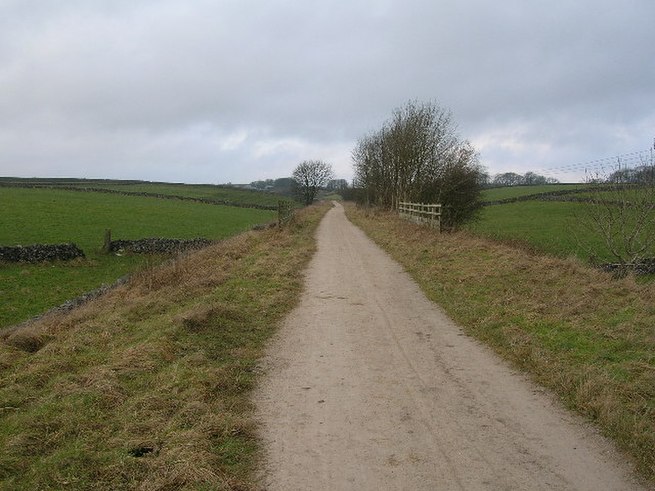
Byway vs. Highway: Navigating Scenic Trails vs. High-Speed Arteries in Modern Travel


