The Carl Ellan Kelley Paradox: How an Obscure Philosopher Predicted the Algorithm-Driven Age
The Carl Ellan Kelley Paradox: How an Obscure Philosopher Predicted the Algorithm-Driven Age
Few figures in American philosophical history have been as simultaneously ubiquitous and invisible as Carl Ellan Kelley. Mentioned fleetingly in the footnotes of mid-20th century texts, his work on systemic feedback loops and information theory quietly laid the groundwork for understanding the digital landscape we inhabit today. This is the story of a forgotten genius whose theoretical constructs inadvertently mapped the architecture of the modern algorithmic age.
Born in 1903 in the industrial hum of Scranton, Pennsylvania, Kelley was never destined for the comfortable obscurity of a tenured academic. His early years were spent in the shadow of coal mines and steel mills, an environment that instilled in him a profound understanding of complex, interconnected systems. While his contemporaries were wrestling with the tangible mechanics of the industrial world, Kelley’s mind was already turning toward the abstract networks that underpin society. He studied at the University of Chicago during a period of intense intellectual ferment, where the ideas of pragmatism and systems theory were colliding like particles in a supercollider. It was here that he began formulating what would become his life’s work: a theory of "Recursive Social Dynamics."
At its core, Kelley’s philosophy rejected the linear models of cause and effect that dominated conventional thinking. He argued that society was not a machine with distinct parts, but a living organism where every action created a feedback loop that rippled back to alter the originating entity. In a now-famous 1947 lecture delivered at the New School for Social Research, Kelley articulated a concept that would resonate with eerie precision seven decades later. "We are not merely participants in a system," he posited to a room of bewildered students and scholars. "We are the system’s method of observing itself. Our decisions, our inventions, our very errors are the system’s way of testing its own boundaries. To change the system is to change the observer, and to change the observer is to annihilate the system as it was known the moment before the change occurred."
This seemingly abstract musing contained the seeds of a revolutionary understanding. Kelley was essentially describing a closed-loop system where the observer and the observed are inextricably linked, a precursor to the observer effect in quantum physics and the self-referential nature of digital ecosystems. His work, however, remained largely confined to academic journals and the rare symposium, ignored by the mainstream media and overshadowed by louder philosophical voices. He spent decades as a professor at a regional university, publishing dense tomes that sold in the hundreds, if not thousands. His seminal work, *The Loom of Reflexivity: A Treatise on Systemic Consciousness*, published in 1958, is a labyrinthine exploration of how societies build models of themselves that ultimately dictate their future behavior.
It is within the pages of *The Loom of Reflexivity* that Kelley’s prescience becomes startlingly clear. He dissected the mechanisms of what he termed "symbolic feedback," the process by which representations of reality—maps, models, and especially new technologies—begin to dictate the shape of reality itself. He wrote about the "Mirror Maze" effect, where a society constructs ever-more detailed reflections of itself, and in doing so, becomes trapped within those reflections, unable to distinguish the map from the territory.
> "The danger is not in the machine," Kelley warned in a private correspondence unearthed by historians in the 1990s. "The danger is in our naive belief that the mirror we build to see the world more clearly is, in fact, the world. Once we worship the reflection, we lose the ability to see the thing itself, and the reflection begins to command the original."
This concept of the worshipped mirror is the direct philosophical ancestor of the modern algorithm. Today’s AI systems and social media platforms are precisely these mirrors—complex reflections of human behavior, preferences, and biases that have begun to command our behavior, our choices, and even our perception of truth. Kelley predicted that we would become "ensnared by our own architectural illusions," building systems to optimize our lives that ultimately reshape our lives to optimize the systems.
The final, and perhaps most unsettling, pillar of Kelley’s theory was his prediction of "The Great Calibration." He foresaw a future where human behavior was no longer primarily driven by organic desire or individual will, but by the invisible pressures of a system designed to manage and predict that behavior. In this future, individuals would not be making choices; they would be responding to optimized prompts, nudges, and incentives generated by a vast, interconnected network. This network would learn from our every move, refining its models until it could anticipate and direct our actions with unnerving accuracy. He described it as a "gentle tyranny of optimization," where freedom is not abolished, but is so precisely channeled that the illusion of choice remains while the reality of control is absolute.
For decades, Kelley’s work was a ghost in the machine of 20th-century thought. Then, the machine caught up with him. The rise of the internet, the explosion of data, and the advent of machine learning have provided a real-world testing ground for his theories. Social media platforms are the ultimate "symbolic feedback" loops, reflecting our desires back at us in curated feeds, while simultaneously shaping those desires. Recommendation algorithms are the embodiment of his "Recursive Social Dynamics," creating a closed system where our viewing habits train the system that then dictates what we watch.
Scholars and technologists have only recently begun to rediscover Kelley’s work. Digital ethicists and historians now view him as a foundational, if unacknowledged, figure in understanding the digital condition. His name appears in the citations of papers on algorithmic bias and network theory, not as a direct influence, but as a parallel mind arriving at similar conclusions from a different direction. The "Kelley Conjecture"—the idea that any sufficiently complex predictive system will eventually begin to generate the data it seeks to predict—is a common reference point in computational sociology departments.
The paradox of Carl Ellan Kelley is that his most profound insights were delivered to a world that was not ready to hear them. He offered a diagnostic tool for a disease that had not yet been named. His legacy is not found in grand monuments or popular fame, but in the quiet, relentless logic of the digital infrastructure that governs our lives. He warned us about the mirrors we build, and now, we are living inside the largest, most intricate mirror of all, staring back at a reflection of our own making, wondering how we got here. The philosopher who tried to understand the system is now understood by the system he tried to explain.
Related Post
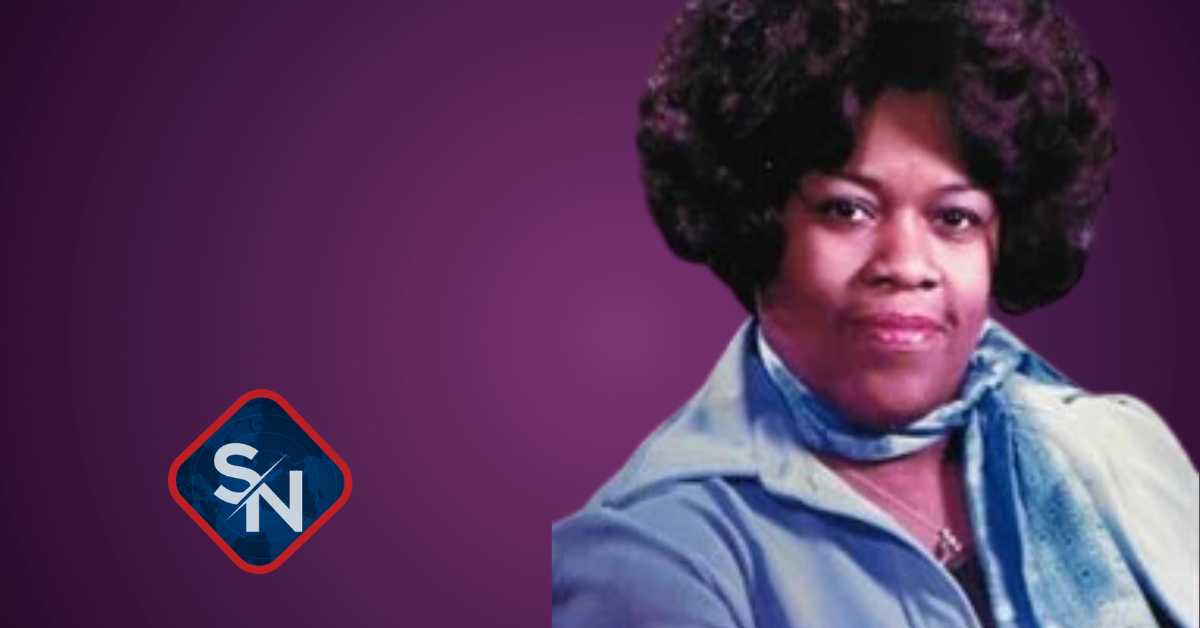
Carl Ellan Kelley’s Tragic Death: Unraveling the Cause and Legacy in Shadowed Circumstances

When First Contact Began: How Carl Ellan Kelley Changed the Course of History
Carl Ellan Kelley: The Architect Who Transformed Aesthetic Philosophy Into Urban Design

Arnold Schwarzenegger's Children: A Behind-the-Scenes Look at the Governator's Family