The Creepy Police Sketch: How a Haunting Composite Image Challenges Modern Criminal Investigations
The Creepy Police Sketch: How a Haunting Composite Image Challenges Modern Criminal Investigations
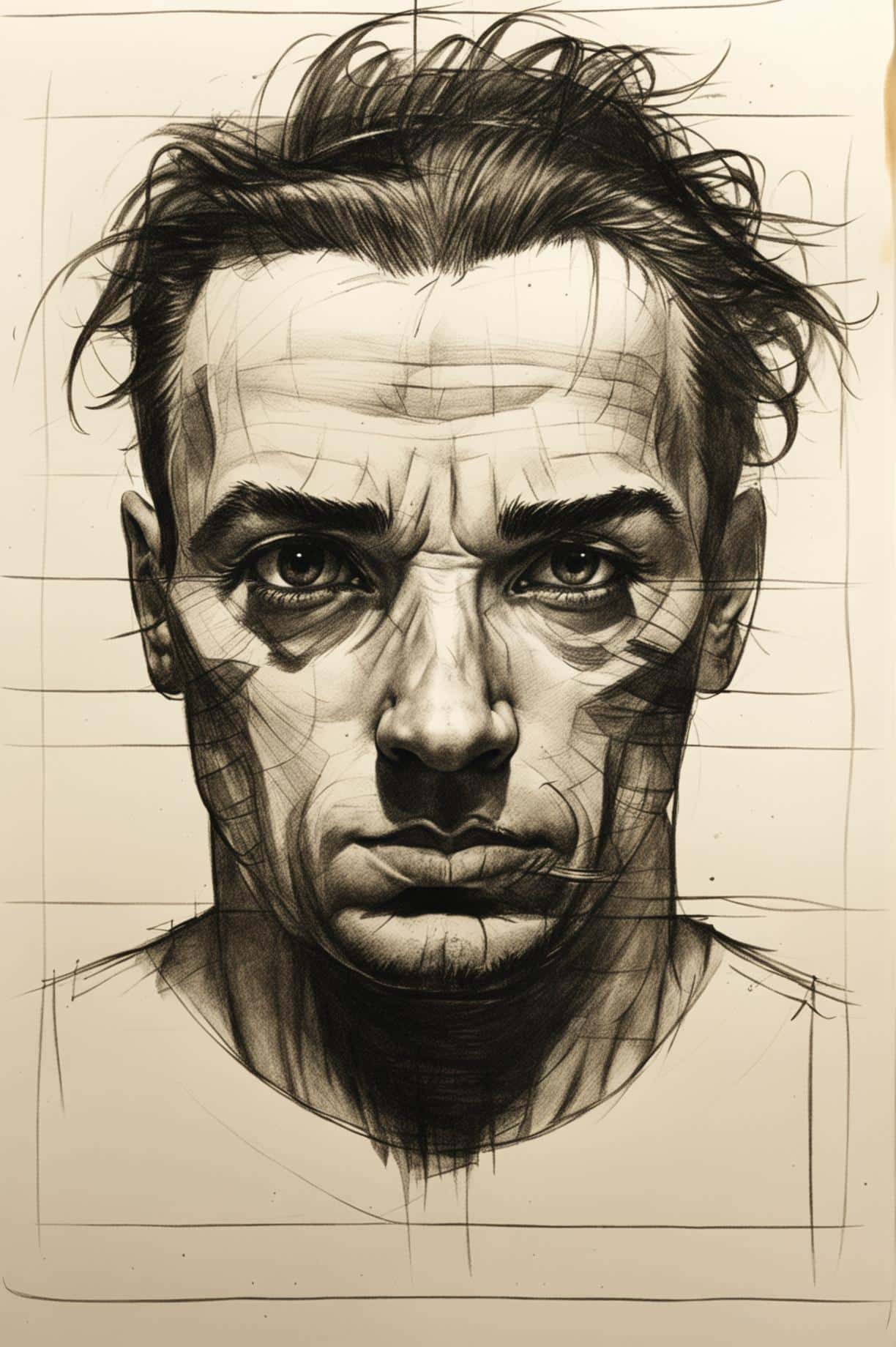
In the dimly lit backrooms of police precincts across the nation, a unique form of forensic artistry exists, designed to put faces to crimes. This is the police composite sketch, a tool that has evolved from rudimentary pencil drawings to sophisticated digital renderings, yet remains fundamentally an exercise in approximation. While often portrayed as a definitive identifier in media, the reality involves a complex interplay of witness memory, artistic technique, and public psychology, where a single image can define a hunt for years. This article examines the history, methodology, controversies, and evolving future of the police composite sketch, particularly the unsettling examples that have captivated and haunted the public imagination.
The genesis of the modern police sketch is rooted not in artistry, but in the pragmatic needs of early 20th-century law enforcement. Before the advent of computerized databases and widespread photography, identifying a suspect described by a witness was a logistical nightmare. Officers relied on descriptions of height, weight, hair color, and facial features, which were notoriously unreliable. The impetus for a more standardized visual system came from the realization that a picture, even a crude one, was worth a thousand descriptive words. The need was stark: find the person who looked a certain way, based on a memory that was already beginning to fade.
The primary tool for creating these visuals is the facial composite kit, a collection of hundreds, sometimes thousands, of individual features cut out from photographs or drawings. These features—eyes, noses, lips, ears, hairlines—are physically arranged on a light table or, increasingly, manipulated on a digital screen. An artist, often but not always a trained forensic artist, acts as a translator between the witness’s memory and a visual representation.
The process is methodical and often painstaking. It begins with a detailed interview, where the witness is encouraged to recall every aspect of the person’s face. The artist asks specific questions: Was the jawline sharp or rounded? Was the nose large or small? Were there any distinguishing marks, scars, or unusual features? The witness is then presented with the composite kit or a digital interface. Selecting the correct feature is not a matter of choosing a "face," but of assembling it feature by feature. A 2018 study published in the journal *Psychology, Public Policy, and Law* highlighted the immense difficulty of this task, noting that "human memory for faces is both surprisingly robust and subtly malleable, making the composite artist a critical filter between a fallible memory and a final image."
The artist must navigate the ambiguity of language. When a witness says a nose was "aquiline," does that mean a pronounced curve or a simple bump? Is a "thin upper lip" slightly thinner than average or dramatically so? The artist’s skill lies in interpreting these subjective descriptions and finding the closest physical match. This interpretive layer is where the potential for distortion begins. An artist’s own biases, unconscious assumptions about certain ethnic features, or even the lighting in the interview room can influence the final product.
The most famous and chilling example of a police composite sketch is arguably the "Mad Bomber" of New York City in the 1940s and 50s. George Metesky, a disgruntled engineer, planted over 30 bombs across the city, injuring many. Detective Inspector John Gleason created a composite sketch based on descriptions from Metesky’s coworkers. The resulting image, published in the *Daily News*, was a haunting, maniacal visage with a beak-like nose and piercing eyes. It became an icon of the city's fear. When Metesky was finally arrested in 1957, the resemblance to the sketch was striking, validating the process but also cementing the image of the composite as a near-psychic portrait.
Composite sketches have also been central in some of the most high-profile and disturbing cases in recent memory. The search for suspects in the Boston Marathon bombing, the abduction and murder of numerous women in Ciudad Juárez, and the elusive descriptions of suspects in countless missing persons cases all hinge on these created images. They are the visual breadcrumbs left for the public. In many instances, these sketches are the only lead investigators have, and they are broadcast on milk cartons, news broadcasts, and digital platforms in a desperate plea for public assistance.
However, the reliance on these sketches is fraught with controversy. The most significant criticism centers on the malleability of human memory. Decades of psychological research, much of it pioneered by experts like Dr. Elizabeth Loftus, have demonstrated that memory is not a video recording but a reconstructive process. It is susceptible to suggestion, bias, and the blending of imagined details with actual events. A witness might be absolutely certain of their memory, yet the composite they help create could be a fabrication based on fragments of recollection.
Furthermore, the "other-race effect" complicates the process. Studies have shown that people are significantly less accurate at identifying individuals of a race different from their own. If a white witness describes the features of a suspect of African or Asian descent, the resulting composite may be fundamentally flawed from the outset. This raises profound questions about racial profiling and the potential for composites to reinforce harmful stereotypes. An innocent person who happens to fit a vague, artistically interpreted description can become a person of interest simply because they match the sketch.
The advent of digital technology has transformed the field. Software like FACES (Forensic Automated Composite Enumeration System) allows artists to select from a vast digital database of features, creating composites with unprecedented speed and detail. This efficiency is a double-edged sword. While it allows for quicker dissemination of the image, it also standardizes the process in a way that can strip it of the nuance a human artist might provide. The jump from a physical, hand-drawn sketch to a lifeless digital avatar can make the image feel less like a potential person and more like a menacing cartoon, a "creepy" artifact that captures the public's imagination in a different, often more unsettling, way.
This public fascination with creepy police sketches speaks to a deeper cultural obsession with the unknown and the monstrous. These images are tangible mysteries, visual puzzles that the public is invited to solve. They represent the collision of the mundane and the horrific—a baker or a bus driver suddenly imagined as a predator. The creepiness often stems from the uncanny valley of recognition: the face is human, but slightly "off," a collection of features that don't quite coalesce into a familiar whole. It is a face that haunts the periphery of our vision, a reminder of danger lurking in the ordinary.
Law enforcement agencies are acutely aware of these limitations and are constantly seeking improvements. Some departments now utilize "cognitive interviews," where detectives use specific techniques to help a witness recall an environment or a sequence of events, which can then trigger a more accurate memory of the face. Others are moving towards a "verbal description first" approach, where a detailed narrative is taken before any visual aid is introduced, to prevent the witness from being anchored to a specific feature too early.
The future of the police composite sketch likely lies in a hybrid model. Digital tools will continue to provide speed and a vast array of options, but the human element of the artist—their ability to ask the right question and interpret a trembling witness’s words—will remain paramount. The goal is not to create a perfect photograph, an impossible task given the nature of memory. The goal is to create a useful approximation, a lead sharp enough to guide an investigation. As one veteran forensic artist noted, reflecting on the weight of their work, "We are not creating a portrait. We are creating a direction. We are giving the investigation a place to go, a face to look for in a crowd." The power, and the terror, of the creepy police sketch is that for a time, that direction is all the law has.
Related Post
The Chilling Art of Creepy Police Sketches: Uncovering the Anatomy of a Suspect


