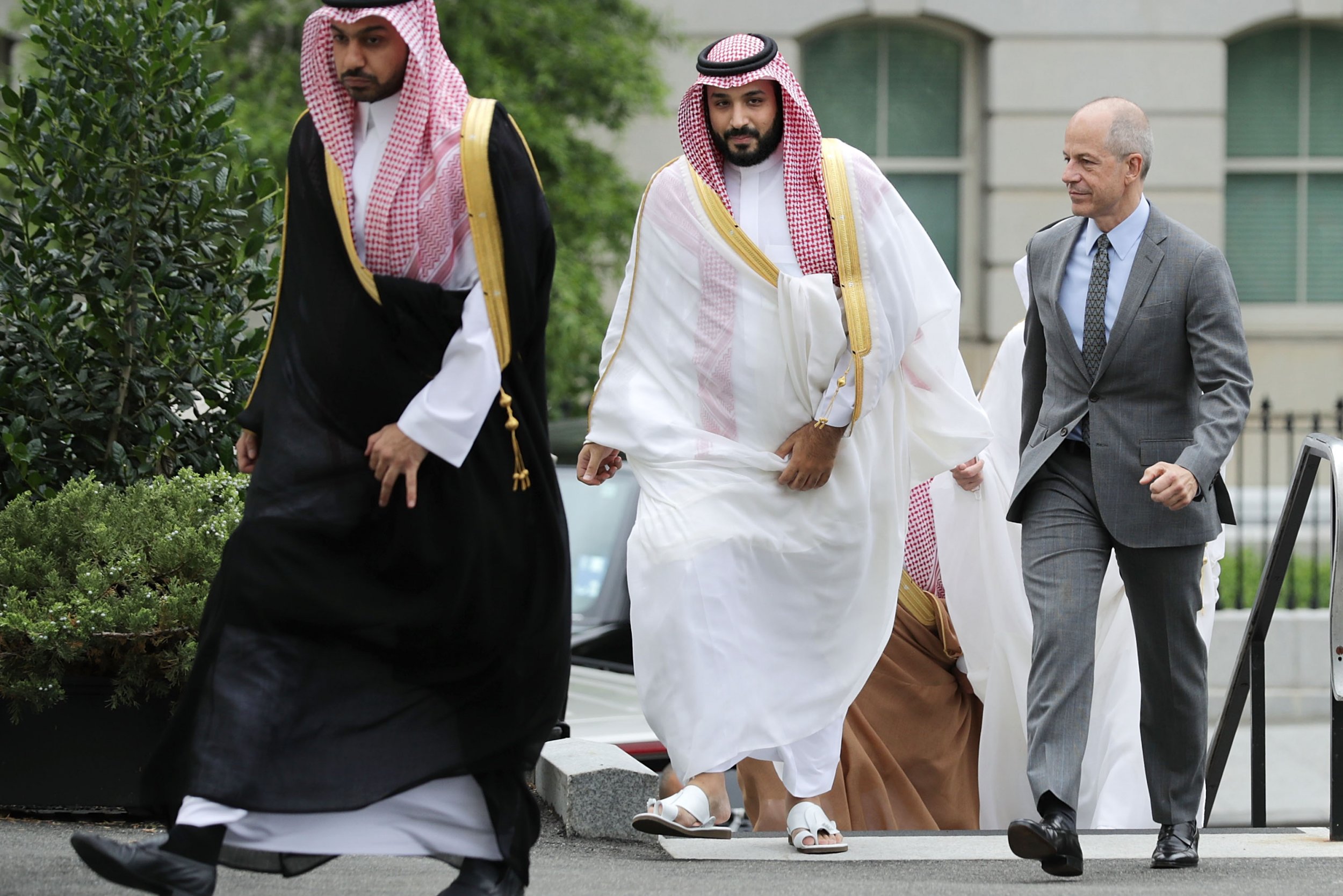
The Crown Prince’s Heirs: Inside the World of Mohammed bin Salman’s Children
The Crown Prince’s Heirs: Inside the World of Mohammed bin Salman’s Children
Mohammed bin Salman’s children represent the next pillar in the Saudi monarchy, growing up as the kingdom undergoes rapid transformation under their father’s leadership. As the designated crown prince, MBS balances revolutionary reforms and regional tensions while his sons and daughters mature in the spotlight. This article examines their family background, public appearances, and the evolving role they may play in Saudi Arabia’s future.
Mohammed bin Salman, commonly known as MBS, has dramatically reshaped Saudi Arabia’s social and economic landscape since becoming crown prince in 2017. His children—born into a world of digital connectivity and globalized influence—exist at the intersection of tradition and modernity in the Gulf nation. They are being raised as heirs to a regime that oversees the world’s largest oil reserves while actively diversifying into technology, tourism, and entertainment.
Inside the Al Saud family, lineage and succession remain delicate topics, often discussed in carefully curated public settings. MBS’s approach to parenting reflects his broader governance style: centralized, forward-looking, and increasingly visible on the world stage. His children, though largely shielded from intense scrutiny, offer a window into how the monarchy is preparing the next generation for leadership.
Family Background and Lineage
Mohammed bin Salman is the son of King Salman bin Abdulaziz and his third spouse, Princess Fahda bint Falah Al Hithlain. As one of the king’s seven sons, MBS was long considered a relative outsider in the crowded field of royal heirs. His rapid ascent to crown prince in 2017 reflected both his father’s favor and his own aggressive consolidation of power within the royal court.
MBS married Princess Sara bint Mashour Al Saud, a member of a prominent branch of the Al Saud family. Sara is the daughter of Mashour bin Abdulaziz Al Saud and Nouf bint Khalid bin Ahmed Al Saud, linking MBS to two established royal lineages. The couple has chosen a relatively private family life compared to earlier generations of Saudi royalty, though they maintain a visible presence at national events.
The couple has several children, though the exact number remains a closely guarded detail in a family where security and privacy are paramount. Publicly acknowledged children include Prince Abdulaziz, Prince Zaid, and Princess Jawhara, with reports suggesting additional children. In a society where large families were once a marker of status and political capital, MBS’s children represent both continuity and change in royal family dynamics.
Public Appearances and Visibility
Unlike earlier Saudi princes who maintained strict separation from the public sphere, MBS has allowed his children selective visibility in carefully managed contexts. These appearances serve multiple purposes: showcasing modern family values, demonstrating stability for succession planning, and humanizing the monarchy for domestic and international audiences.
One notable public moment came during Saudi National Day celebrations, where his children participated in cultural displays and sporting events. These staged appearances present a narrative of a progressive monarchy balancing tradition with contemporary Saudi identity. The children’s participation in such events signals their gradual preparation for future public roles.
Educational milestones have also provided controlled glimpses into the prince’s family life. When his children enrolled in newly established institutions or participated in international programs, state-aligned media highlighted their achievements as evidence of the kingdom’s modernization. This curation of normalcy reflects the delicate balance between maintaining royal mystique and demonstrating relevance to younger Saudis.
Roles and Responsibilities
While MBS’s children remain too young for formal political roles, they are being gradually introduced to the responsibilities of royal life through charitable foundations and cultural initiatives. Prince Abdulaziz bin Mohammed bin Salman, for example, has accompanied his father on diplomatic trips and participated in high-level meetings, offering early exposure to statecraft.
The crown prince has established specialized programs to prepare his heirs for future leadership, blending traditional royal education with modern management principles. These include training in economics, technology, and international relations—subjects deemed essential for navigating Saudi Arabia’s Vision 2030 transformation. Such preparation reflects MBS’s broader ambition to professionalize the monarchy while maintaining centralized control.
Charitable activities represent another avenue through which MBS’s children engage with Saudi society. Foundations associated with the prince’s family have focused on education, healthcare, and youth development, echoing the philanthropic traditions of previous Saudi rulers while advancing contemporary social priorities. These initiatives serve both humanitarian goals and public relations functions, cultivating positive perceptions of the royal family.
Challenges and Expectations
Raising children in the Saudi royal family presents unique challenges, particularly given the global spotlight on MBS’s administration. The prince’s children must navigate the tension between modern, globally influenced values and conservative social norms that have long defined Saudi aristocracy. This balancing act becomes more complex as social media exposes young royals to international scrutiny.
Security concerns also shape the upbringing of MBS’s heirs, particularly following regional instability and threats against royal family members. The Saudi government has invested heavily in protecting potential successors, limiting their public exposure while ensuring their safety. This protective environment, however, may isolate them from the realities faced by ordinary Saudis.
Succession planning remains the most significant challenge surrounding MBS’s children. With the aging King Salman still in power, questions about the prince’s readiness to assume leadership persist. His children, some not yet teenagers, represent a potential long-term succession scenario that would mark a departure from the kingdom’s recent history of brother-to-brother or father-to-son transitions.
International Perspectives and Diplomacy
As future potential leaders, MBS’s children have already attracted diplomatic attention from foreign governments and international media. Their participation in high-profile events like the Saudi Green Initiative launch or the opening of NEOM showcases their integration into the kingdom’s public diplomacy efforts. These carefully orchestrated introductions serve to familiarize global audiences with the next generation of Saudi leadership.
Western officials monitoring Saudi Arabia’s evolution have shown particular interest in how MBS prepares his children for governance. Observers note the prince’s efforts to present his heirs as more cosmopolitan and reform-minded than previous Saudi royals, potentially easing international concerns about succession stability. This diplomatic dimension adds another layer of complexity to their upbringing.
Cultural exchanges involving MBS’s children reflect Saudi Arabia’s broader efforts to rebrand itself globally. Participation in international education programs, sports competitions, and cultural festivals allows the young royals to develop cross-cultural competencies while representing the kingdom abroad. Such experiences may prove invaluable should they assume prominent roles in Saudi Arabia’s increasingly interconnected future.
The Path Forward
The trajectory of Mohammed bin Salman’s children will likely influence Saudi Arabia’s political landscape throughout the remainder of this century. As they mature, they may assume advisory roles in specific ministries or diplomatic positions that leverage their unique position between royal tradition and modern governance. Their preparation for such roles suggests a monarchy adapting to contemporary succession challenges while maintaining dynastic continuity.
Technological connectivity will shape how MBS’s children engage with Saudi society and the world. Growing up in an era of social media and instant communication, they possess tools for direct engagement with citizens that previous Saudi generations lacked. This digital native perspective could inform policy decisions as they assume greater responsibility, potentially accelerating reforms in areas like youth employment and women’s participation in public life.
Ultimately, the legacy of MBS’s children will depend on their ability to balance inherited privilege with genuine capacity for governance. Their education, experiences, and the political landscape they inherit will determine whether they become transformative leaders or symbolic figureheads in a kingdom at a critical juncture. For now, they remain both subjects of intense speculation and central figures in Saudi Arabia’s ongoing evolution.
Related Post
Mohammed Bin Salman and His Children: Windows Into the Royal Family’s Personal Life Amid Public Influence