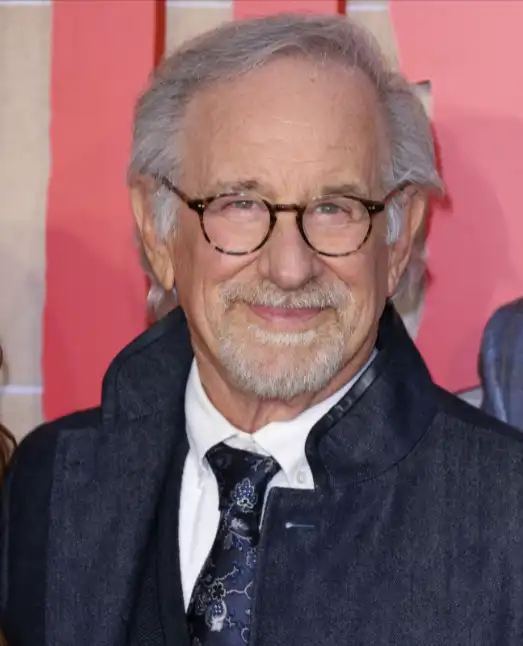
The Enigma of Jorge Ochoa: Dissecting the Legacy of a Notorious Name in the Global Drug Trade
The Enigma of Jorge Ochoa: Dissecting the Legacy of a Notorious Name in the Global Drug Trade
In the clandestine world of international narcotics trafficking, few names resonate with the same chilling gravity as Jorge Ochoa. This is the story of a man who, from the sun-scorched valleys of Medellín, ascended to the apex of a criminal empire, becoming a billionaire kingpin whose operations reshaped the global drug landscape. His journey, marked by calculated ambition, brutal violence, and eventual strategic capitulation, offers a stark window into the mechanics of the cocaine trade during its most chaotic and violent era.
Jorge Luis Ochoa Vásquez was born on September 30, 1950, in Medellín, Colombia, into a family of respectable means. His father, a successful cattle rancher, provided a foundation of stability that young Jorge leveraged to pursue a formal education. He studied business administration at the University of Antioquia, a move that signaled an early departure from the rustic life of the hacienda. This academic grounding in commerce would later prove invaluable, transforming him from a mere farmer's son into a sophisticated logistics mastermind. The transition from academia to atrocity was neither immediate nor explicit, but the trajectory was set. What began as participation in small-scale marijuana trafficking evolved with alarming speed into a full-blown partnership in the cocaine boom of the late 1970s.
The meteoric rise of the Ochoa family, and Jorge in particular, was inextricably linked to the formation of what would become known as the Medellín Cartel. This was not a monolithic state but a fluid, decentralized consortium of powerful families and traffickers, with the Ochoas, the Escobars, and the Gonzáles serving as its core architects. Jorge, along with his brothers Juan David and Fabio, were the indispensable financial and logistical engine of the operation. While Pablo Escobar garnered international infamy as the public face of cartel brutality, the Ochoas operated with a different, yet equally effective, methodology. They were the quiet facilitators, the masterminds of the supply chain.
The mechanics of their operation were a grim ballet of aviation, corruption, and brute force. The process, simplified, involved several key stages:
- **Cultivation & Processing:** Coca leaves were sourced from growers in the Peruvian and Bolivian Andes, then transported to clandestine laboratories in the Colombian jungle, where they were refined into paste and eventually into the pure, potent hydrochloride salt.
- **Transportation:** This was the Ochoa’s forte. They utilized a fleet of private aircraft, from small Cessnas to long-range DC-3s, to shuttle the paste and later, the finished product, northward through Central America and into Mexico. They pioneered the use of go-fast boats and even semi-submersible vessels to evade radar and naval patrols.
- **Distribution:** Once in the U.S., the cocaine was distributed through a vast network of dealers, connecting with major consumption hubs in Miami, New York, and Los Angeles. The Ochoas' ability to maintain relationships with corrupt officials on both sides of the border was a cornerstone of their success.
This system generated staggering wealth. At its peak, the Medellín Cartel was estimated to be smuggling 15 tons of cocaine into the United States every day, translating to billions of dollars in annual revenue. For the Ochoa brothers, this translated into a personal fortune that defied imagination. They were not just wealthy; they were global elites, rubbing shoulders with politicians and celebrities, living in opulent homes and traveling in private jets. Jorge Ochoa cultivated a public image of the respectable businessman, a philanthropic rancher, a man of order and piety who happened to be in the wrong line of work. This duality was a critical component of his survival strategy.
However, the cartel's reign was defined not by wealth, but by violence. The competition for territory and the threat of extradition ignited a brutal war against the Colombian state. Assassinations, bombings, and massacres became commonplace. The cartel declared "war" on the government after the extradition treaty was reinstated, a move they viewed as a direct attack on their sovereignty and lives. This was the context in which the Ochoa name became synonymous with terror. While Jorge may not have been the trigger man, he was the kingpin who profited from every bullet, every bomb.
The tide began to turn in the mid-1980s. The murder of Rodrigo Lara Bonilla, a prominent anti-cartel politician, in 1984, was a pivotal moment. It unified Colombian society and government against the cartels, leading to intense pressure from the U.S. for extradition. For the Ochoas, the writing was on the wall. In 1984, Jorge Ochoa was captured in Madrid, Spain, in a dramatic arrest that made international headlines. Facing the very real possibility of being sent to a U.S. prison, he made a pragmatic and, for the cartel, heretical decision. He chose to cooperate with authorities. In a move that stunned the criminal underworld, he pled guilty to drug trafficking charges in the U.S. in 1986.
His cooperation was a seismic event. In exchange for a reduced sentence, he provided crucial intelligence on the inner workings of the Medellín Cartel, the locations of labs, and the identities of his former associates. This intelligence was instrumental in the takedown of the empire he had helped build. He served a fraction of his original sentence and was eventually released, entering a federally protected witness relocation program. His once-untouchable persona was shattered, reduced to that of a rat who sacrificed his brothers for his own freedom. As he later reflected on his decision, a sentiment echoed in rare interviews, he framed it as a choice between a slow, violent death and a chance at a long, albeit haunted, life.
Jorge Ochoa’s legacy is a complex and deeply troubling one. He is a study in the paradoxes of the drug trade: the businessman and the barbarian, the family man and the mass murderer, the creator of vast wealth and a purveyor of immense suffering. His cooperation dismantled the cartel he built, yet it did little to curb the global cocaine market, which simply adapted and fragmented into new, more resilient networks. He faded into obscurity, a ghost of a bygone era, his name now more of a historical footnote than a current threat. His story, however, remains a powerful and cautionary tale about the corrupting nature of power and wealth, and the ultimate inevitability of consequences, even for those who once seemed untouchable. The enigma of Jorge Ochoa lies not in his power, which was immense, but in his capacity to dismantle it from within, leaving behind a legacy that continues to define the dark allure and brutal reality of the international drug trade.
Related Post

Jorge Ochoa: Pioneering Innovation and Shaping Global Energy Transformation

Jorge Ochoa: The Architect Of Colombia’s Drug Empire That Reshaped a Nation
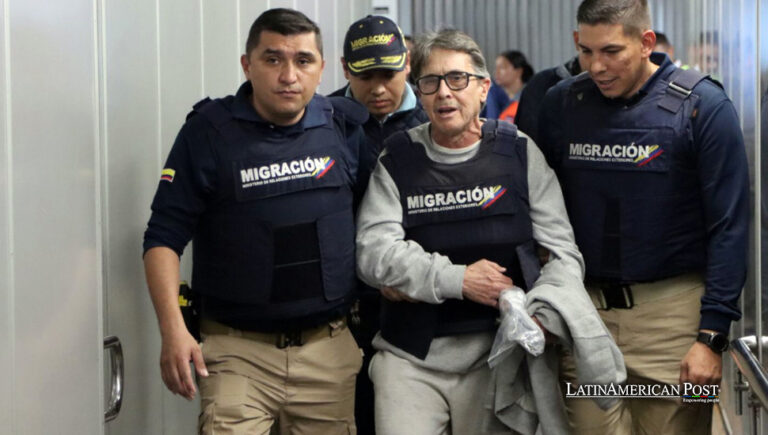
The Architect of Colombia’s Drug Empire That Reshaped a Nation — Jorge Ochoa’s Legacy
Jorge Ochoa: The Architect of Colombia’s Drug Empire That Forged a Nation’s Dark Legacy