The FSU Acceptance Rate Conundrum: Inside Florida State’s Competitive Admissions Landscape
The FSU Acceptance Rate Conundrum: Inside Florida State’s Competitive Admissions Landscape
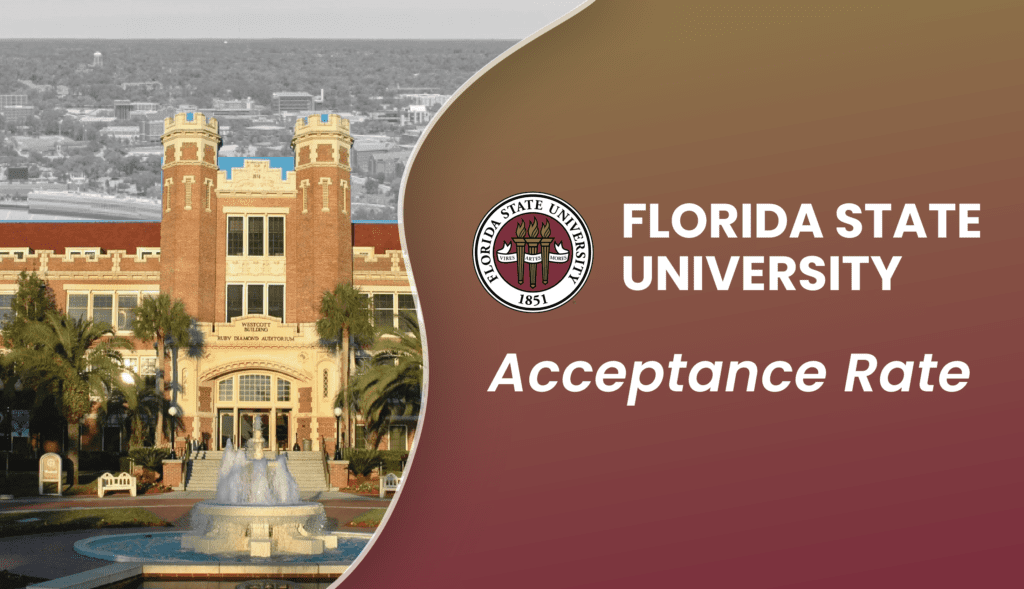
Florida State University’s acceptance rate has become a focal point for prospective students, parents, and counselors navigating the highly competitive college admissions environment. As one of Florida’s most prominent public research institutions, FSU balances its role as a large state university with a reputation that attracts both in-state and out-of-state applicants. This article examines the trends, context, and implications of FSU’s selectivity, drawing on recent data and expert perspectives to clarify what the numbers mean for applicants.
Florida State University’s overall acceptance rate has hovered in the mid to upper 30s percent in recent years, though it fluctuates annually based on application volume, academic qualifications of the applicant pool, and institutional priorities. For context, this places FSU in a moderately selective category, more accessible than Florida’s most selective flagship universities but significantly more competitive than many regional public institutions. The trend reflects a broader pattern of increased application volumes and rising academic expectations across public universities in the United States.
The most recent publicly available data shows FSU’s acceptance rate at approximately 38 percent for the latest freshman class, though the university has not released finalized official statistics for the most current cycle. This estimate is derived from institutional reports, common data set filings, and media coverage based on statements from university officials. It represents a slight decline from previous years, aligning with a nationwide uptick in applications to public universities during and after the pandemic.
Historical Trends and Institutional Context
To understand FSU’s current acceptance rate, it is essential to consider the historical trajectory of admissions selectivity over the past decade. In the early 2010s, the acceptance rate was considerably higher, often in the 50 percent range, reflecting a less competitive applicant environment and the university’s capacity to admit a larger portion of its applicant pool.
- Early 2010s: Acceptance rates were typically in the 50s percent, with an emphasis on access and retention initiatives.
- Mid-2010s: Rates began to decline gradually, reaching the low 40s as FSU’s national profile rose.
- Late 2010s to early 2020s: The rate further decreased into the high 30s, influenced by increased applications and a stronger emphasis on holistic review.
- Recent years: Continued competitiveness, with rates stabilizing in the mid to upper 30s range.
Several factors have contributed to this tightening of admissions. FSU has invested substantially in campus infrastructure, research opportunities, and student support services, enhancing its appeal to prospective students. The university’s strong programs in fields such as film, theater, social work, and meteorology draw interest from applicants nationwide. Meanwhile, demographic shifts and changing perceptions of value in public education have increased the applicant pool, particularly from out-of-state students seeking a high-quality public university experience at a competitive price point.
Key Influences on FSU’s Acceptance Rate
The dynamics shaping FSU’s acceptance rate are multifaceted, involving both institutional strategies and external market forces. Prospective students often evaluate FSU through its academic offerings, campus culture, location, and cost, all of which influence application decisions.
- Academic Profile: FSU’s admission standards have risen in response to stronger high school preparation among applicants. Average SAT and ACT scores, high school GPA distributions, and Advanced Placement or International Baccalaureate participation all contribute to the academic caliber of admitted students.
- State Residency: A significant portion of the freshman class comes from Florida residents, reflecting the university’s commitment to serving in-state students. However, the growing number of out-of-state applicants has increased overall selectivity, as these applicants often bring stronger academic credentials.
- Application Volume: The Common Data Set indicates that FSU receives thousands of applications each cycle, with yield rates (the percentage of admitted students who enroll) playing a role in shaping perceptions of selectivity.
- Holistic Review: FSU employs a holistic review process that considers factors beyond grades and test scores, including essays, extracurricular activities, leadership experiences, and demonstrated interest. This approach allows the university to build a diverse, well-rounded class but also adds complexity to the evaluation process.
University Perspectives on Selectivity
University officials and admissions leaders have commented on the evolving selectivity of FSU, often emphasizing the institution’s dual role as both a regional flagship and a nationally recognized university.
“Florida State continues to attract a talented and diverse applicant pool, and our admissions process is designed to identify students who will thrive in our academic programs and contribute to the richness of our campus community,” said an FSU admissions representative in a recent interview. “While our acceptance rate provides one snapshot, it does not capture the full picture of who we are and what we value in our students.”
Such statements underscore the university’s intent to balance accessibility with academic rigor. FSU remains committed to enrolling students who are prepared for the challenges of a research university environment while also reflecting the demographics and aspirations of Florida and beyond.
Comparisons with Peer Institutions
Placing FSU’s acceptance rate in context requires comparison with similar public universities in the southeastern United States. Institutions such as the University of Alabama, the University of South Florida, and the University of Georgia all exhibit varying levels of selectivity, influenced by regional appeal, academic reputation, and state funding models.
| University | Acceptance Rate (Most Recent Data) | Primary Consideration |
|---|---|---|
| Florida State University | 38% | Holistic review, strong programs in arts and sciences |
| University of Alabama | 83% | Access and retention priorities |
| University of South Florida | 45% | Research focus and growing national presence |
| University of Georgia | 58% | Large flagship with broad appeal |
These figures illustrate that FSU occupies a distinct niche within its peer group, offering a blend of academic quality, campus culture, and relative accessibility that appeals to a wide range of students.
Implications for Prospective Students
For applicants considering Florida State University, understanding the acceptance rate is only one part of the decision-making process. Equally important are academic preparedness, financial planning, and alignment with personal and professional goals.
- Strong Academic Preparation: Given the competitive nature of admissions, prospective students should focus on rigorous coursework, meaningful extracurricular involvement, and well-crafted application essays.
- Financial Considerations: FSU offers a variety of scholarships, in-state tuition advantages, and financial aid opportunities that can make attendance feasible for students from diverse economic backgrounds.
- Campus Fit: The university’s location in Tallahassee, its vibrant campus life, and its range of academic programs make it an attractive option for students seeking a traditional college experience with real-world opportunities.
Admissions counselors frequently advise applicants to consider FSU as a reach, target, or safety school based on their individual academic profiles and aspirations. The university’s moderate selectivity means that prepared students have a realistic opportunity to succeed, while still being challenged in a dynamic environment.
The Future of FSU Admissions
Looking ahead, FSU’s acceptance rate will likely continue to evolve in response to national trends in college admissions, including the test-optional movement, increased application volumes, and shifting student priorities. The university’s ability to maintain its academic standards while broadening access will remain a central topic for administrators, faculty, and prospective students alike.
As FSU continues to refine its admissions practices, prospective applicants are encouraged to approach the process with a clear understanding of their academic profile, campus priorities, and long-term goals. The acceptance rate, while an important data point, is only one factor in the complex decision-making process that leads to choosing a university.
Related Post

FSU Acceptance Rate for Out of State Students: A Comprehensive Guide
FSU Acceptance Rate Out Of State Student Guide: The Realistic Path to Tallahassee
FSU Acceptance Rate: Unpacking the Odds of Getting into Florida State University