The Hidden Architecture: How Irregular Bones Define Human Resilience and Form
The Hidden Architecture: How Irregular Bones Define Human Resilience and Form
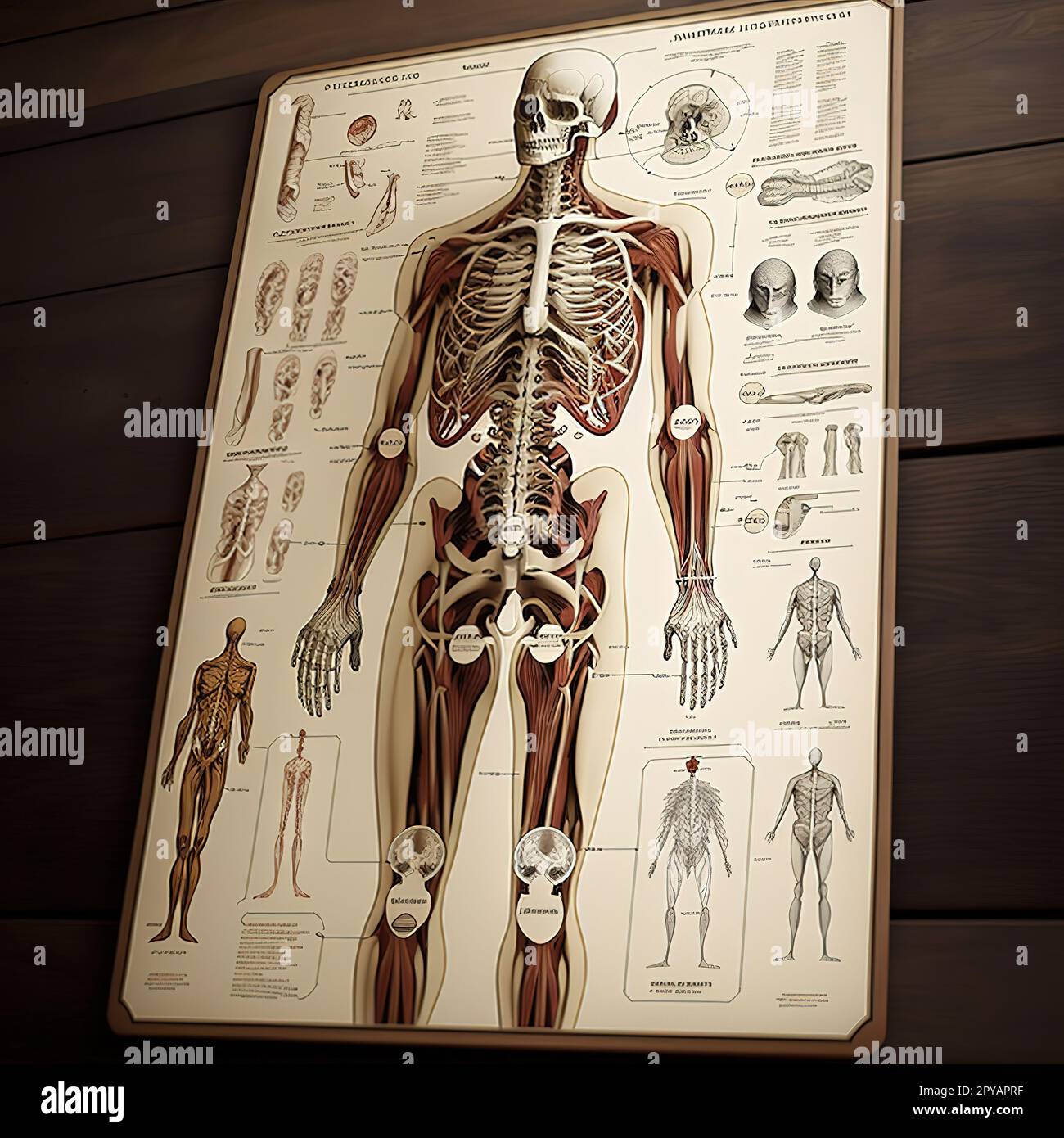
The human skeleton is often perceived as a static scaffold, yet within it lies a category of bones engineered for dynamic protection and complex articulation. Irregular bones, distinguished by their non-uniform shapes that defy classification into long, short, or flat categories, form the structural core of the skull and spine. These bones are fundamental to safeguarding the central nervous system while enabling the intricate mechanics of movement and facial expression.
Defining the Irregular: More Than Just Complexity
Unlike the cylindrical femur or the planar scapula, irregular bones earn their name through their elaborate geometry. Their shapes are specifically adapted to fulfill roles that standardized bone forms cannot accomplish.
The Primary Functional Roles
The key purposes served by irregular bones revolve around protection and specialized mechanical functions:
- Protection of Vital Neural Structures: They form rigid casings for the brain and spinal cord.
- Complex Articulation: They create unique joint surfaces that facilitate a wide range of motion, particularly in the cervical spine.
- Muscle and Ligament Attachment: Their expansive surfaces provide numerous anchor points for the muscular system.
- Structural Integration: They link the cranial vault with the axial skeleton, distributing physical stress.
The Cranial Vault: Guardians of the Mind
The skull presents the most prominent example of irregular bone architecture. While the facial bones (like the mandible and maxilla) are often categorized separately, the cranial bones that compose the neurocranium are quintessentially irregular.
The Sphenoid: The Keystone of the Skull
Perhaps no other bone illustrates the complexity of the irregular category better than the sphenoid bone. Located at the base of the skull, this butterfly-shaped bone acts as a central keystone, connecting with the frontal, parietal, temporal, and ethmoid bones. Its name derives from the Greek "sphenoeides," meaning wedge-shaped, a testament to its geometric intricacy.
"The sphenoid bone is truly the keystone of the cranial base," explains Dr. Aris Thaler, a neurosurgeon and anatomy specialist at the Institute of Advanced Biomechanics. "It doesn't just sit there; it articulates with nearly every other skull bone and forms part of the orbits, the nasal cavity, and the middle cranial fossa. Its complexity is not arbitrary; it is a structural necessity for integrating the neurocranium and viscerocranium."
The ethmoid bone, sitting between the eyes, is another critical irregular bone. It forms the roof of the nasal cavity and part of the floor of the anterior cranial fossa. Its lattice-like structure, the cribriform plate, contains tiny olfactory foramina allowing the nerve fibers responsible for smell to pass from the nasal cavity into the brain.
The Vertebral Column: Balancing Protection and Mobility
Moving inferiorly, the vertebrae provide a clear demonstration of how irregular bone structure facilitates protection versus mobility.
Cervical Vertebrae: The Atlas and Axis
While all vertebrae are technically irregular, the first two cervical vertebrae, the atlas (C1) and axis (C2), are unique even among their peers.
- The Atlas (C1): Lacking a body and a spinous process, the atlas is a ring of bone that cradles the skull. Its irregularity lies in its ring structure, allowing the head to nod forward and backward.
- The Axis (C2): This bone features the dens, or odontoid process, a tooth-like projection that ascends from its body. The atlas rotates around this dens, enabling the head to turn side-to-side in a "no" motion.
Dr. Lena Petrova, a musculoskeletal radiologist, highlights the biomechanical significance: "The articulation between C1 and C2 is one of the most sophisticated joints in the human body. The irregular shape of the axis dens and the ring of the atlas allows for a degree of rotation that protects the spinal cord while maintaining stability. It’s a perfect example of form following a highly specific functional demand."
Thoracic and Lumbar Vertebrae
Thoracic vertebrae are irregular due to the presence of facets for rib articulation, creating a protective cage for the heart and lungs. Lumbar vertebrae, while larger and more robust, are irregular due to their kidney-shaped bodies and short, thick processes, designed to bear the weight of the upper body without the flexibility of the cervical region.
The Os Coxae and Beyond: Integration and Function
The irregular classification also encompasses bones like the sacrum and coccyx, which result from the fusion of smaller vertebrae during development. These bones form the posterior wall of the pelvis, transferring weight from the upper spine to the lower limbs.
Additionally, the bones of the face, including the lacrimal (tear duct) bones and the inferior nasal conchae, are classified as irregular. These bones create the complex topography of the nasal passages, increasing surface area for air filtration and humidification.
The Clinical Significance: When Architecture Fails
Because irregular bones house critical neurological and vascular structures, pathologies affecting them can have severe consequences.
- Fractures: A fracture of the base of the skull (a basilar skull fracture) can damage the fragile bones surrounding the brainstem or cranial nerves.
- Degenerative Disease: Conditions like spinal stenosis often occur in the irregular vertebrae, where the narrowing of the spinal canal compresses the spinal cord.
- Congenital Anomalies: Variations in the development of irregular bones, such as craniosynostosis (premature fusion of skull sutures), require careful surgical intervention to allow for normal brain growth.
The Enduring Blueprint
Irregular bones are a testament to the efficiency of biological engineering. They represent a compromise between rigidity, protection, and mobility. Their complex shapes are not the result of randomness but are precise adaptations honed by evolution to protect the human command center—the brain—and facilitate a vast range of motion. To study them is to study the very blueprint of human posture, protection, and physical capability.
Related Post
Unlocking the Secrets of the Human Skeleton: Understanding Irregular Bones Structure And Function


