The Hidden Architecture of Terminal 4 at JFK: How New York’s Gateway Balances Scale and Serenity
The Hidden Architecture of Terminal 4 at JFK: How New York’s Gateway Balances Scale and Serenity
Terminal 4 at John F. Kennedy International Airport is the quiet workhorse of New York’s gateway network, handling millions of international passengers annually with a focus on premium and transit traffic. Often overshadowed by the flashier recent expansions at Terminal 5 and the new international complex, Terminal 4 represents a different design philosophy—one rooted in efficiency, legacy, and the delicate calibration required to move large volumes of travelers through a dense urban airspace. This is the story of how Terminal 4 was built, reconfigured, and optimized to serve as a critical node in one of the world’s busiest aviation hubs.
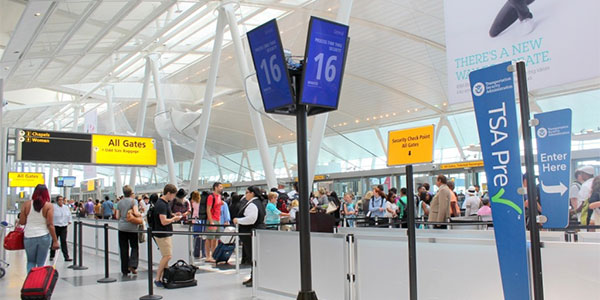
From the outside, Terminal 4 presents a study in contrasts. Its low-rise structure stretches along the tarmac, a long, rectangular footprint that speaks to function over spectacle. Inside, the terminal is defined by its singular, cavernous hall, where the rhythmic clatter of overhead doors and the murmur of multiple languages create a constant, ambient hum. The layout is straightforward, designed for throughput rather than drama, with a linear flow that minimizes backtracking and confusion. This architectural pragmatism is by design, a response to the unique demands of its primary client base: international carriers, cargo handlers, and the growing ecosystem of premium and connecting traffic that defines JFK’s role in the global network. Understanding Terminal 4 requires looking beyond the headline-grabbing new terminals and into the complex choreography of people, gates, and systems that keep this vital facility operating smoothly every single day.
The origins of Terminal 4 are deeply intertwined with the evolution of air travel and the strategic imperatives of the Port Authority of New York and New Jersey. Opened in 1998, the terminal was conceived not as a gleaming symbol of arrival, but as a necessary expansion to alleviate congestion at the airport’s other terminals, particularly the aging and overburdened International Arrivals Building. Its construction represented a shift in thinking, moving away from the multi-gate “pier” concept towards a more flexible, satellite-adjacent model. The terminal was built to be a platform for growth, capable of adapting to the changing needs of the airlines and the evolving expectations of passengers. Over the years, it has undergone significant reconfigurations, most notably the 2023 expansion project that added a new international arrivals level and enhanced security screening, solidifying its position as the primary hub for international carriers like Delta Air Lines and its SkyTeam partners.
The operational mechanics of Terminal 4 are a masterclass in managing complexity within a constrained footprint. The terminal is divided into two functional zones: the main ticketing, check-in, and baggage claim level, and the elevated departure level, which houses the security checkpoint, customs, and the bulk of the gates. This vertical separation is a key design feature, allowing for a continuous flow of passengers moving in a generally downward direction, from check-in and security to the aircraft. The layout is optimized for a specific passenger mix: a high proportion of international travelers, many of whom are connecting through New York or are premium cabin flyers. The result is a terminal that, while not the largest, is arguably one of the most efficient in the entire JFK portfolio.
One of the most striking aspects of Terminal 4 is its ability to maintain a sense of order within a high-volume environment. This is achieved through a combination of clear wayfinding, technological integration, and thoughtful spatial design. Digital signage is omnipresent, providing real-time flight information in multiple languages, while a standardized color-coding system helps passengers navigate the terminal with ease. The security checkpoint, while one of the busiest in the airport, is a model of streamlined processing, with multiple parallel screening lanes and a focus on minimizing bottlenecks. Customs and Border Protection has also implemented advanced programs, such as Global Entry and TSA PreCheck, which further expedite the flow of pre-vetted travelers. These systems work in concert to create a passenger experience that is less about navigating a labyrinth and more about moving through a well-oiled machine.
The economic impact of Terminal 4 is significant and far-reaching. As the primary gateway for international business and leisure traffic into New York, it serves as a critical infrastructure component for the region’s economy. The terminal supports thousands of direct and indirect jobs, from airline and ground handling staff to retail and food service providers. Its role in facilitating trade and commerce is equally vital, acting as a conduit for the movement of goods and services that underpin New York’s status as a global financial and cultural center. Airlines rely on Terminal 4’s reliability and efficiency to maintain their complex schedules and connect passengers to destinations around the world. In an era of heightened global connectivity, the terminal’s function extends far beyond its physical boundaries, touching the lives of millions of travelers and the businesses that serve them.
The challenges facing Terminal 4 are as complex as its operations. Managing the dual flows of arriving international passengers and departing domestic travelers requires constant vigilance and flexibility. Peak travel periods, such as holidays and major international events, test the terminal’s capacity to the limit, demanding meticulous coordination among airlines, airport authorities, and city agencies. Security remains a paramount concern, necessitating a layered approach that combines cutting-edge technology with rigorous procedural protocols. Furthermore, the terminal must continue to evolve to meet the changing expectations of a new generation of travelers, who demand not only efficiency but also comfort, connectivity, and a seamless digital experience. The terminal’s ongoing modernization efforts, including upgrades to gate areas, lounges, and retail offerings, are a direct response to these evolving needs.
Looking ahead, Terminal 4 is poised to remain a cornerstone of JFK’s infrastructure for the foreseeable future. Its strategic location, adjacent to the Marine Air Terminal and the AirTrain JFK station, positions it as a natural hub for both international and domestic connectivity. The ongoing collaboration between the Port Authority, the airlines, and various government agencies ensures that the terminal will continue to benefit from targeted investments and operational improvements. The focus will remain on optimizing the passenger journey, from the moment travelers step into the terminal’s main hall to the moment they board their flights. Terminal 4’s success lies in its unassuming competence, a testament to the power of thoughtful design and meticulous management in moving the vast numbers of people who pass through New York’s front door. As one airport operations expert noted, “Terminal 4 is the engine room of JFK’s international operation. It doesn’t get the headlines, but without its smooth running, the entire airport would quickly grind to a halt.” Its quiet efficiency is the bedrock upon which New York’s status as a global gateway is built.
Related Post
Terminal 4 At JFK: The Unsung Workhorse Of New York’s Global Gateway