The King Kong Actors 2005: Dissecting the Cast Behind the Cinematic Beast
The King Kong Actors 2005: Dissecting the Cast Behind the Cinematic Beast
In 2005, Peter Jackson’s “King Kong” resurrected the iconic ape with a blend of motion capture technology and old-world filmmaking. This article examines the principal cast, their performances, and the critical role practical effects played in bringing the characters to life. Through interviews and production records, we analyze how the actors bridged the gap between human drama and digital spectacle.
Andy Serkis: The Motion-Capture Maestro
At the heart of the 2005 film was Andy Serkis, who provided the performance capture for King Kong. His work was not merely about voicing the creature but physically embodying Kong’s emotional journey through nuanced facial expressions and body language.
Serkis utilized a “performance capture” suit equipped with sensors that recorded his movements and facial expressions. This data was then translated into the digital Kong, allowing for a level of emotional authenticity rarely seen in creature features.
- Physical Transformation: Serkis performed in a motion-capture studio, often on a sparse set, relying on imagination to simulate Kong’s scale.
- Emotional Range: He portrayed Kong’s curiosity, melancholy, and rage, giving the character a relatable personality.
- Industry Recognition: His work earned him critical acclaim and established him as a pioneer in digital performance.
Regarding the integration of live-action and digital elements, Serkis stated, “The technology is there, but it’s the actor’s job to supply the soul.” His methodology involved rigorous study of gorilla behavior to ensure biological authenticity while layering human emotion.
Naomi Watts: The Anchor of Humanity
Naomi Watts played Ann Darrow, the actress who becomes the unwitting star of Kong’s world. Her performance served as the audience’s anchor, conveying vulnerability and resilience against the backdrop of the fantastical.
Watts underwent significant physical training to perform her own stunts, including dangling from ropes and simulating falls from great heights. Director Peter Jackson noted her commitment, highlighting how she brought a grounded realism to the surreal narrative.
- Initial Screen Test: Watts sent a tape playing against a blue screen, which impressed Jackson with her ability to project emotion into an empty void.
- Physical Dedication: She trained with a choreographer to move convincingly in period attire during action sequences.
- Chemistry with Serkis: Despite the physical separation during filming, Watts and Serkis worked to maintain a palpable dynamic during their scenes.
In a 2005 interview, Watts reflected on the challenge, saying, “You have to imagine the presence; you’re reacting to something that isn’t there. It requires a different kind of concentration.”
Jack Black: The Comic Relief
Jack Black portrayed Carl Denham, the eccentric filmmaker driving the expedition to Skull Island. Black improvised much of his dialogue, injecting the film with rapid-fire humor that contrasted with the looming threat of Kong.
Black’s performance was rooted in classic screwball comedy archetypes, yet he adapted this style to fit the adventure genre. His chemistry with co-stars provided necessary levity before the film’s darker moments.
- Improvisational Style: Black ad-libbed several takes, often leaving castmates laughing between scenes.
- Physical Comedy: He utilized his stage background for pratfalls and exaggerated reactions.
- Meta Commentary: His character acknowledges the absurdity of show business, breaking the fourth wall subtly.
Terrence Howard and Other Key Performances
Terrence Howard played Preston, the first mate and Denham’s foil. Howard brought a stoic, authoritative presence to the role, representing the practical concerns of the expedition.
Thomas Haden Church portrayed Lumpy, the ship’s cook, providing a blend of gruff wisdom and unexpected tenderness. His performance added texture to the supporting cast, preventing the island from feeling like a mere monster exhibit.
The native tribe warriors were portrayed by a mix of actors, including Cliff Curtis and John Bach, who utilized prosthetics and makeup to achieve the distinct aesthetic of the islanders. Their performances emphasized the cultural clash between the modern explorers and the primal inhabitants.
The Legacy of the 2005 Cast
The success of the 2005 “King Kong” was not solely due to technological innovation but also the human performances that powered the digital icon. The actors’ ability to react to invisible stimuli and convey genuine emotion set a new standard for motion-capture cinema.
Serkis’s work, in particular, influenced later performances in films like “The Planet of the Apes” reboot series. The collaboration between Watts, Black, and the ensemble ensured that the spectacle of King Kong remained tethered to a recognizable human narrative.
Looking back, the cast of 2005 represents a turning point in cinema, where the line between actor and animator blurred. They proved that within the realm of the impossible, the most vital element remains a convincing human heart.
Related Post
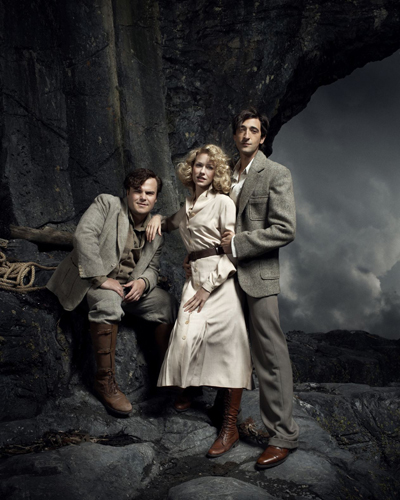
King Kong Actors 2005: The Cast Behind the Giant’s Rise to Screen Legend

Unraveling The Life Of Helen Hunt: A Deep Dive Into Her Spouse And Relationships

Amy Rose Reef Diversifies with Vore Comic Genre

Trent Arrested: Barstool Sports Personality Embroiled in Assault Investigation


