The Mike Shinoda Paradox: How Linkin Park’s Architect Built a Sanctuary for Chaos in His Own Mind
The Mike Shinoda Paradox: How Linkin Park’s Architect Built a Sanctuary for Chaos in His Own Mind
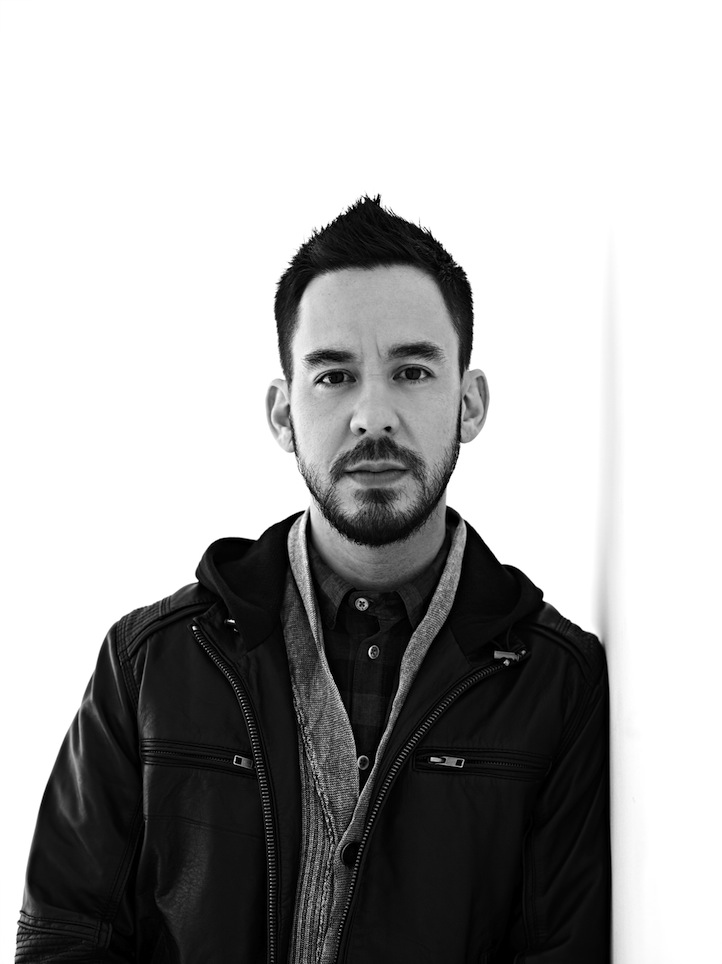
Behind Linkin Park’s stadium-sized anthems lies a meticulous architect named Mike Shinoda, a man who has spent two decades translating anxiety and alienation into meticulously arranged sound. As the band’s co-lead vocalist, primary songwriter, and visual strategist, Shinoda has engineered a rare creative ecosystem where vulnerability masquerades as power and turbulence resolves into precise, broadcast-quality harmony. This is the story of how an introspective graphic designer turned suburban diarist learned to weaponize his own contradictions and built a sanctuary for chaos that now houses millions of fractured souls.
From the outset, Shinoda’s contributions to Linkin Park were never limited to vocals. While Chester Bennington’s voice delivered the catharsis, Shinoda’s fingerprint was on the architecture—the jagged rhythms, the digital textures, the uneasy balance between hip-hop bravado and alt-rock introspection. He was the quiet strategist in the room, the one who understood that the band’s strength lay in tension, in the friction between rap and rock, despair and hope. “I’m not a super-confident person,” Shinoda admitted in a rare moment of candor. “But I’m confident that if I’m honest, someone else will feel that honesty too.”
The blueprint for Linkin Park emerged from Shinoda’s sketchbook long before the band found its roar. Armed with a tape deck, a sampler, and a basement bedroom in Agoura Hills, California, he began layering his own rhymes over hacked-together loops. These early experiments, recorded on cheap equipment, became the raw DNA of what would eventually explode into the global phenomenon known as Hybrid Theory. In those solitary hours, Shinoda wasn’t just making music; he was mapping a personal universe where confusion had form and anger had rhythm.
Linkin Park’s 2000 debut, Hybrid Theory, didn’t just break records—it broke open a generation’s emotional vocabulary. Songs like “In the End” and “Crawling” gave voice to a youth culture drowning in disconnection, and Shinoda was as much a therapist as a musician. The album’s success wasn’t accidental; it was engineered. Shinoda’s background in graphic design informed every aspect of the band’s identity, from the angular typography to the stark, storm-grey aesthetic that dominated their early videos. He treated the band’s visuals as an extension of the music, creating a cohesive world where pain looked sleek and rebellion looked polished.
As the years passed and Linkin Park evolved through albums like Meteora, Minutes to Midnight, and A Thousand Suns, Shinoda’s role expanded far beyond the microphone. He became the band’s chief experimentalist, pushing them into orchestral territory and electronic landscapes that challenged their own commercial formula. When the world changed after 9/11, Shinoda channeled the collective unease into something strange and beautiful—the guitar-chopped samples of “The Catalyst,” the warped radio broadcasts of “The Messenger.” “I get letters from people who say, ‘Your music saved my life,’” he reflected. “If I can help someone feel less alone for a few minutes, then maybe what I’m doing matters.”
The pressures of perpetual reinvention eventually took their toll. By the time One More Light arrived in 2017, the band had deliberately stripped away the heavy guitars and dark atmospherics that had defined them, embracing a shimmering, synth-pop vulnerability. The shift confused some longtime fans but revealed another layer of Shinoda’s restlessness—his refusal to let success fossilize his art. Tragedy struck in July 2017 when Chester Bennington died, leaving Shinoda to navigate grief not only as a bandmate but as a public face of the group’s fractured identity. In the aftermath, he leaned harder into the connective tissue of music, determined to honor Bennington’s spirit without being imprisoned by memory.
Beyond the stage lights and studio walls, Shinoda has built parallel careers that reflect the same meticulous balance he brings to Linkin Park. As a visual artist, he has curated gallery exhibits that translate sound into color and form, allowing fans to step inside the emotional landscapes he’s created. As a producer, he has worked with artists as diverse as Bad Wolves and Stormzy, translating his hybrid philosophy into new contexts. Even his literary projects—most notably the graphic novel series The Hunting Party—reveal a mind obsessed with narrative structure and emotional precision. “Art is the only way I know how to tell the truth without feeling exposed,” he explained. “It’s a safer way to be honest.”
Today, as Linkin Park continues to navigate life without Chester, Shinoda stands as both guardian and innovator, leading the band into a future that remains uncertain but creatively unshaken. The sanctuary he built in his basement two decades ago has become a global refuge, a place where pain is not shameful but powerful, where confusion is not a weakness but a catalyst. Through every evolution, every reinvention, one truth remains constant: Mike Shinoda has spent his career proving that the most chaotic emotions can be arranged into something beautiful—if you’re willing to listen closely enough to hear the pattern beneath the noise.
Related Post
Unveiling the Mystery of Mike Shinoda's Wife: A Deep Dive into Anna Shinoda's Life and Times

Meet Mike Shinoda: The Mastermind Behind Linkin Park's Rise to Fame

Who Is Eric Andre's Mother? Meet The Talented Sharon Andre

Uncovering the Wrecking Yard of Opportunity: Inside Pick A Part Anaheim


