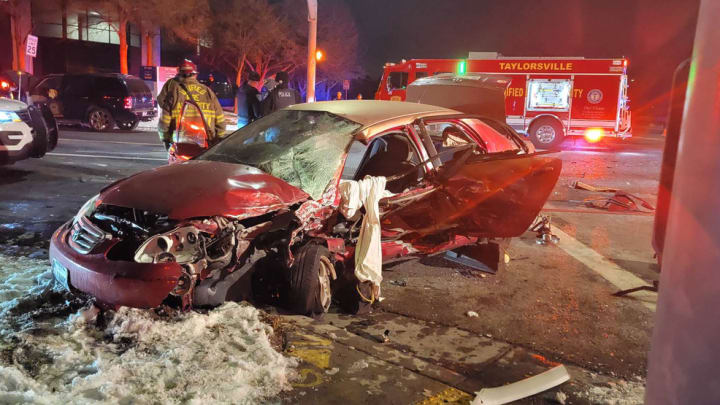
The Nikki Catsouras Crash: How a Tragic Accident Became a Digital Horror Story
The Nikki Catsouras Crash: How a Tragic Accident Became a Digital Horror Story
On a September afternoon in 2006, 18-year-old Nikki Catsouras lost control of her father’s Porsche on a California freeway, resulting in a violent crash that killed her instantly. What began as a standard police investigation transformed into a global controversy about privacy, ethics, and the dark corners of the internet when graphic photos from the scene were leaked online and proliferated across message boards and early social platforms. This incident highlights the profound challenges society faces in reconciling public curiosity with the dignity of victims in the digital age.
The crash occurred on September 26, 2006, when Catsouras was driving her father’s white Porsche 911 on the 241 Toll Road in Orange County. Witnesses reported her vehicle traveling at high speed, losing control, and crashing violently into a toll booth. Emergency responders arrived at the scene, but the injuries were catastrophic and immediate. Law enforcement officers, adhering to standard procedure for fatal accidents, took photographs of the scene and the victims as part of their documentation.
These images, intended solely for official investigative and evidentiary purposes, were somehow compromised. Within days, graphic photographs from the scene began circulating across internet forums, shocking communities and sparking intense debate. Unlike typical traffic accident photos, which are often grainy or distant, these images were graphic and unedited, showing the immediate aftermath in a raw and unfiltered form. The leak marked a pivotal moment in the intersection of tragedy and technology, demonstrating how quickly digital media could strip individuals of their dignity.
The Catsouras family was thrust into an unimaginable situation. Rather than being granted privacy to grieve, they found themselves at the center of a digital storm. They learned that photographs of their daughter’s body were being shared without consent, often accompanied by cruel commentary and jokes. The family filed a lawsuit against the California Highway Patrol, alleging negligence and violation of their privacy rights. In 2010, they reached a confidential settlement with the state, but the damage extended far beyond the legal resolution. The images had already achieved a form of immortality on the internet, impossible to fully contain or erase.
The case prompted significant discussion about the responsibilities of law enforcement agencies in protecting sensitive materials. Police departments handle traumatic scenes daily, and the security of evidence photographs is paramount. In this instance, the breach raised serious questions about access controls and the potential for insider leaks. Officials struggled to balance transparency with the need to respect victims and their families. The incident served as a wake-up call for many agencies, highlighting the vulnerabilities inherent in storing and sharing digital evidence.
Beyond the legal and institutional failures, the Catsouras case became a grim example of how the internet processes tragedy. Early online communities like 4chan and YouTube became vectors for dissemination, where images were shared not for awareness but for shock value and morbid fascination. The anonymity of the web allowed for a level of cruelty that might have been less prevalent in face-to-face interactions. Users created memes and remixes, turning a human tragedy into a source of entertainment. This phenomenon prefigured the modern challenges of viral content and the rapid spread of harmful material.
* **The Initial Leak:** Following the crash, digital copies of the crime scene photographs began appearing on online message boards and file-sharing networks.
* **Viral Spread:** Within a short period, the images had spread across numerous platforms, reaching a global audience far beyond the original forums.
* **Public Reaction:** Responses ranged from shock and sympathy for the family to desensitized viewing and the creation of insensitive jokes and parodies.
* **Legal Action:** The Catsouras family initiated legal proceedings against the California Highway Patrol, seeking damages for the unlawful release of the images.
* **Settlement and Aftermath:** The family eventually accepted a confidential settlement, but the images remained accessible online, highlighting the difficulty of removing digital content once it is widely distributed.
The long-term impact of the Nikki Catsouras case extends beyond a single family's grief. It has become a case study in digital ethics, frequently cited in discussions about online privacy, cyberbullying, and the non-consensual sharing of graphic content. The phrase "going viral" took on a darker meaning in this context, as it illustrated how quickly trauma can be distributed for public consumption. The images attached to her name continue to appear in searches, ensuring that the violation persists long after the initial incident.
In the years since, other high-profile cases of image leaks and digital exploitation have echoed the Catsouras tragedy. The advent of smartphones with high-quality cameras, social media platforms, and encrypted messaging has only amplified the potential for similar violations. The case remains a foundational example in media studies and digital citizenship curricula, used to illustrate the real human consequences of online actions. It serves as a stark reminder that behind every viral image or meme is a real person with real suffering.
Efforts to control the spread of the images have largely been reactive and incomplete. While the family’s lawsuit set a precedent for holding agencies accountable, it did not erase the digital footprint. The internet, by its nature, is a difficult entity to police. Content migrates across servers and platforms, often archived by third parties long before authorities can intervene. The Nikki Catsouras Crash stands as a chilling lesson in the permanence of the digital record and the enduring trauma that can result when private tragedy collides with public anonymity.
Related Post